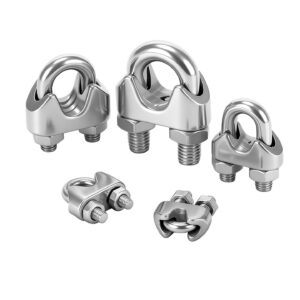
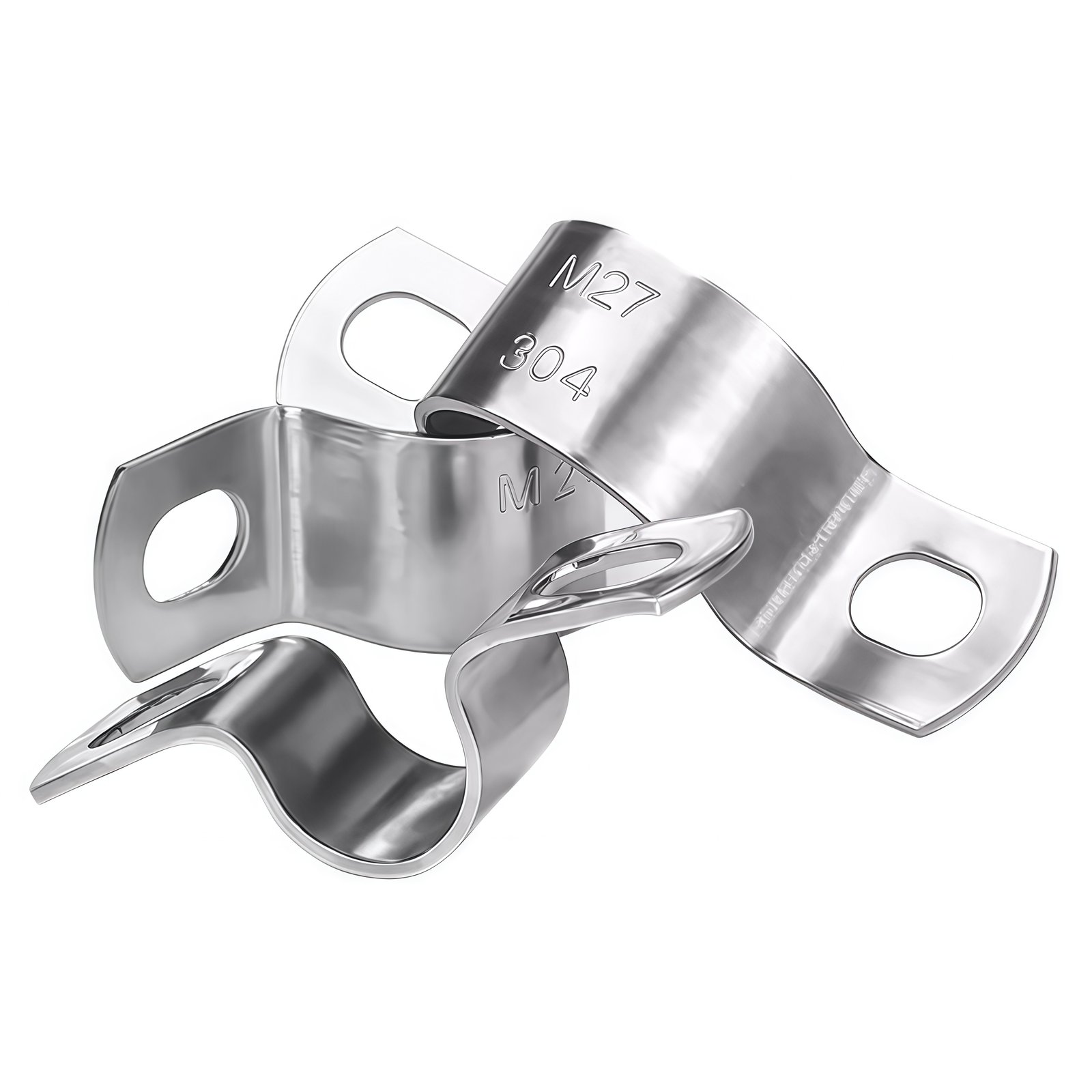
Youjia Metals supplies stainless steel saddle clamps for pipe, tube, conduit and cable-support assemblies. SS304, SS316, strap width, thickness, inside radius, mounting-hole layout and finish can be manufactured from an approved drawing or confirmed sample.
This is a custom hardware product page. Clamp dimensions, installation spacing, fasteners, substrate and design load must be confirmed for the actual assembly; no universal load rating is implied by material grade or appearance.
Stainless Steel Saddle Clamp Product Overview
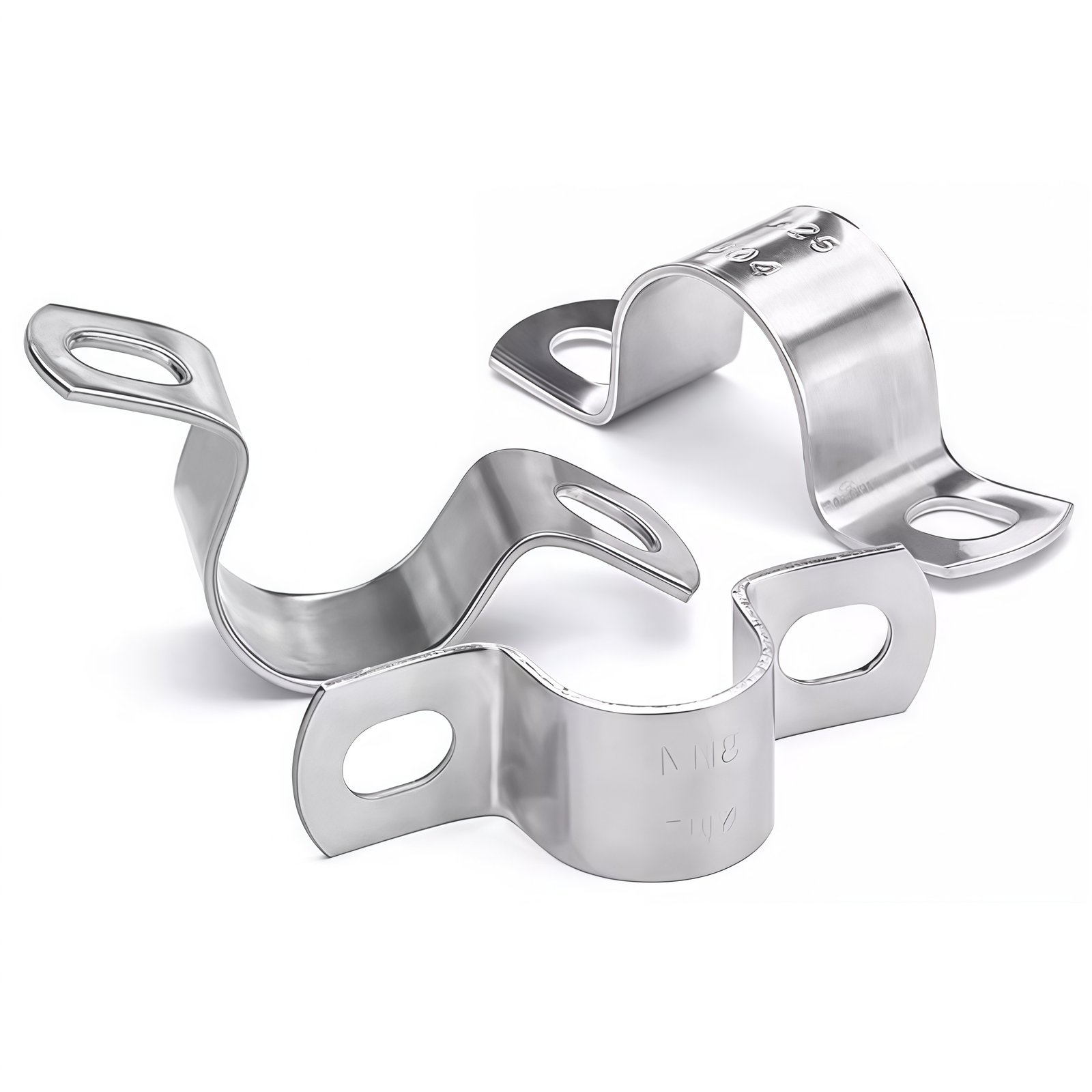
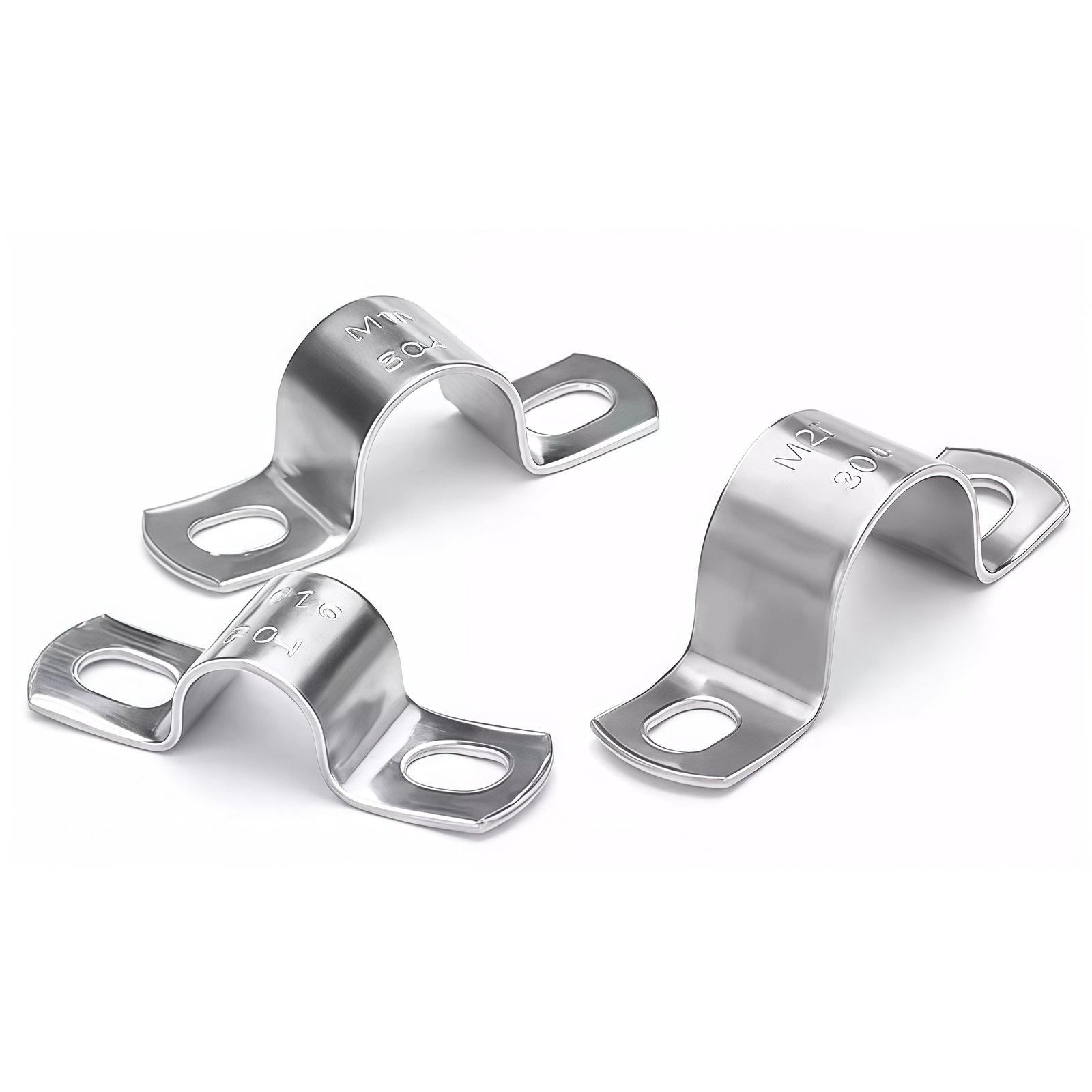
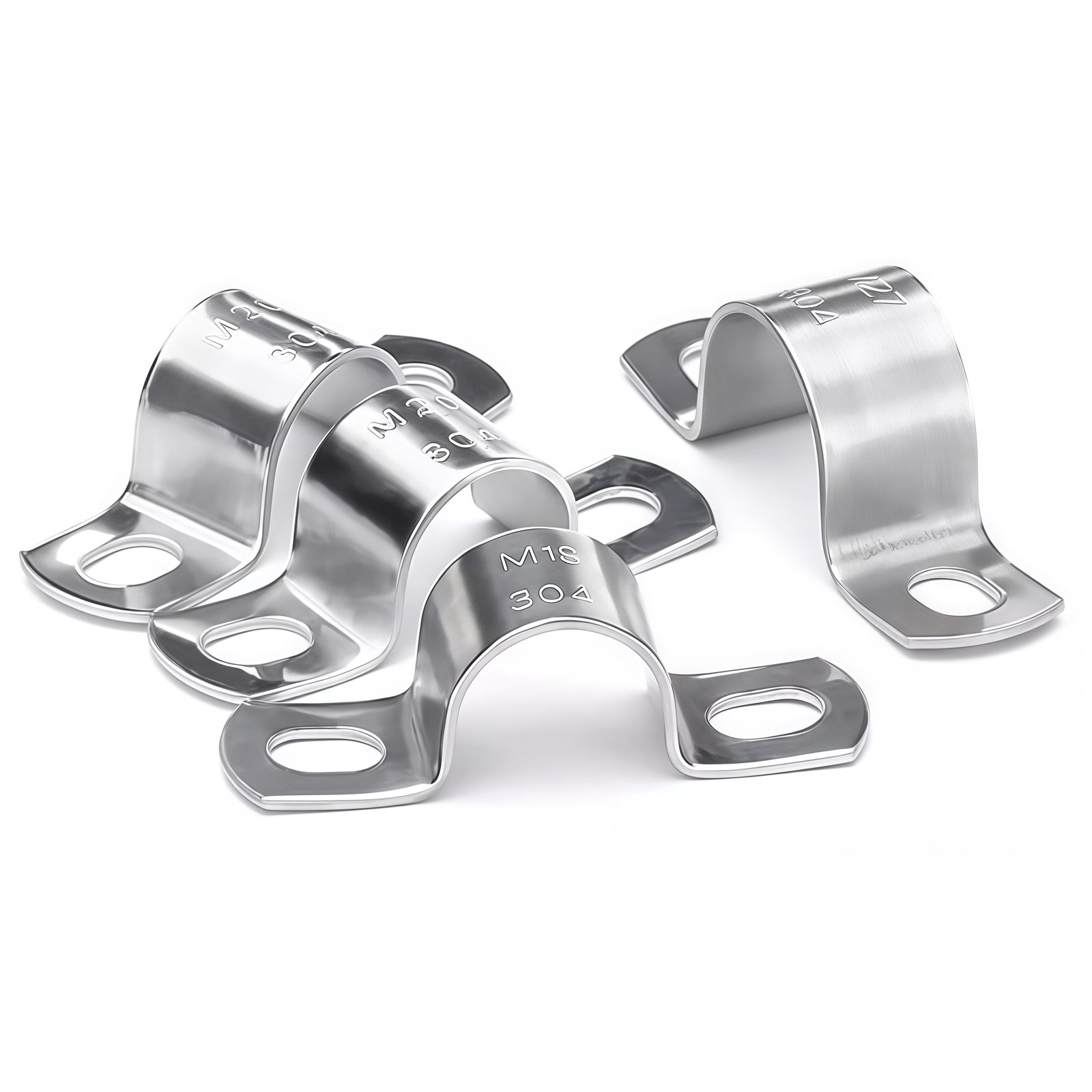
A stainless steel saddle clamp, also called a pipe strap or two-hole pipe clip in some markets, is a formed metal component used to retain a round pipe, tube, conduit or cable against a supporting surface. Its radius, strap width, thickness and mounting-hole positions must match the supported item and the installation method.
Unlike a hose clamp that tightens around a flexible hose connection, a saddle clamp generally acts as part of a fixed support arrangement. It may locate the supported component, limit movement or organize routing. Whether it can carry a specified load depends on the complete system—including the clamp, mounting fasteners, substrate, spacing, pipe material, temperature, vibration and installation quality.
One-Hole, Two-Hole and Drawing-Based Clamp Types
Two-Hole Saddle Clamp
A symmetrical strap with mounting holes on both sides. Buyers should specify centre distance, hole diameter, leg geometry, inside radius and required installation fastener.
One-Hole Pipe Clip
A compact mounting option for selected conduit, cable or tube routing. Orientation and anti-rotation requirements should be reviewed with the installation drawing.
Lined Saddle Clamp
A liner may be requested where separation, cushioning or surface protection is required. Liner material, thickness, temperature and chemical compatibility must be specified.
Custom Formed Strap
Offset legs, non-standard radii, slotted holes or special widths can be considered when a standard clamp does not fit the equipment layout.
Custom Pipe Saddle Specifications
| Specification Item | Information to Confirm |
|---|---|
| Supported Component | Pipe, tube, conduit or cable material and actual outside diameter. |
| Clamp Geometry | Inside radius/diameter, strap width, thickness, leg height and overall length. |
| Mounting Holes | Hole diameter, centre distance, round or slotted form and edge distance. |
| Material | SS304, SS316 or another approved grade; state material-document requirements. |
| Surface Condition | Deburred, polished, brushed, passivated or project-specific finish. |
| Liner | None or specified liner material, thickness and attachment method. |
| Installation | Substrate, fastener type, orientation, support spacing and available clearance. |
| Service Environment | Indoor, outdoor, coastal, washdown, chemical exposure, temperature and vibration. |
| Inspection | Dimensional report, material document, appearance check, fit sample or stated test. |
| Order Data | Prototype and production quantity, drawing revision, packaging and destination. |
Dimensions and tolerances are manufactured to the approved drawing. We do not claim a universal size range or an unsupported micrometre-level tolerance. Tight tolerances should be applied only to functional features that require them, because unnecessary precision can increase tooling, inspection and unit cost.
SS304 and SS316 Saddle Clamp Materials
SS304 saddle clamps may be suitable for many general industrial, architectural and outdoor installations. SS316 saddle clamps contain molybdenum and are often considered for environments with greater chloride exposure. The correct grade depends on the full service environment, cleaning, temperature, crevices, contact materials and maintenance.
Stainless steel is corrosion resistant, not “100% rust proof.” Salt deposits, contamination, stagnant moisture and incompatible chemicals can affect the surface. If material selection is uncertain, review our guide to SS304 vs SS316 stainless steel hardware and send the exposure information with your RFQ.
Where galvanic contact is possible, the project engineer should consider the clamp, pipe, mounting fastener and substrate together. Material grade alone cannot confirm the life of the installed support.
Pipe Outside Diameter, Fit and Mounting Design
The supported component’s actual outside diameter is the starting point for saddle geometry. A clamp that is too tight can mark or deform a softer tube; a clamp that is too loose may not locate the component as intended. Allowance may also be needed for coatings, insulation, liners or thermal movement.
- Measure the actual OD: do not convert nominal pipe size without checking the applicable pipe specification.
- Define the support function: retention, guidance and rigid restraint are different requirements.
- Confirm fasteners: hole size and spacing must suit the selected screws, bolts or anchors.
- Check the substrate: thin sheet, masonry, timber and structural steel require different mounting decisions.
- Plan spacing: clamp spacing belongs to the piping or cable-support design, not the clamp photograph.
For mounting fasteners and related components, see our industrial fastener range. Custom brackets and stamped mounting parts are available through our custom hardware parts category.
Pipe, Conduit and Cable-Support Applications
A stainless steel pipe saddle clamp can be reviewed for machinery pipework, electrical conduit, cable routing, outdoor equipment, architectural hardware, marine equipment and general industrial assemblies. The application determines the grade, geometry, liner, mounting method and documentation.
For marine or coastal projects, SS316 may be considered after reviewing chloride exposure and maintenance. For process or hygienic systems, cleaning, surface finish and crevice conditions require separate review; this page does not claim sanitary certification. For pressure piping, the clamp should be specified by the responsible piping engineer as part of the complete support design.
Although this product is listed within stainless steel rigging hardware, a saddle clamp is primarily a mounting/support component. It should not be described or used as lifting hardware unless the exact design has been engineered and documented for that purpose.
Stamping, Forming and Quality Inspection
The likely manufacturing route may include blanking or laser cutting, punching, forming, deburring, polishing, passivation and inspection. The route depends on geometry, thickness, quantity, finish and tolerance. A sample may be produced before mass production when tooling or fit needs confirmation.
Critical inspection points can include material grade, thickness, inside radius, strap width, hole diameter, centre distance, formed-leg height, burr condition and surface appearance. If a dimensional report, material certificate, passivation document, coating check or third-party inspection is required, specify the acceptance criteria and sampling plan before quotation.
Our custom metal stamping capability supports formed brackets, clips and mounting hardware when the part is suitable for sheet-metal production. Machining or other secondary work is evaluated only where the drawing requires it.
OEM Saddle Clamp Order Process
- Send the drawing or sample data: include actual OD, clamp dimensions, material, environment and quantity.
- Review the application: clarify support function, mounting surface, fasteners, movement, vibration and documentation.
- Confirm manufacturing: tooling, material, forming route, tolerances, finish, sample plan and packaging are quoted.
- Approve the sample: verify fit and critical dimensions against the released drawing.
- Produce and inspect: use the approved revision and agreed inspection plan.
- Pack and ship: protect the finish and label batches according to confirmed buyer requirements.
RFQ Checklist for Bulk and Custom Orders
- Pipe, tube, conduit or cable actual outside diameter
- Inside radius, strap width, thickness and overall dimensions
- Mounting-hole diameter, centre distance and fastener information
- SS304, SS316 or required material specification
- Surface finish, liner and edge requirements
- Substrate, installation orientation and service environment
- Required design load or support function defined by the project engineer
- Inspection, testing, marking and material-document requirements
- Prototype quantity, production quantity, destination and requested schedule
MOQ and lead time are confirmed after tooling, material, quantity, inspection and packaging are reviewed. No fixed stock, automatic discount or universal delivery promise is stated on this page.
Frequently Asked Questions
Can you manufacture a saddle clamp with custom hole spacing?
Yes. Send the drawing with hole diameter, centre distance, strap geometry, material, quantity and installation information for review.
How do I choose between SS304 and SS316?
Use the actual exposure conditions. SS316 is often considered for greater chloride exposure, while SS304 may suit many general environments. Temperature, chemicals, contact materials and maintenance also matter.
Can I order by nominal pipe size?
Provide the actual outside diameter and applicable pipe specification. Nominal size alone may not define the clamp radius accurately.
Does the saddle clamp have a standard load rating?
Not universally. Capacity depends on clamp geometry, material, fasteners, substrate, spacing and load direction. Any required rating or test must be defined for the exact product.
Can you supply a liner?
A liner can be reviewed when its material, thickness, temperature, chemical compatibility and attachment method are specified.
What files can I send?
PDF, DWG, DXF, STEP or IGS files can be reviewed where available. The approved drawing revision controls production.
Request a Custom Saddle Clamp Quote
Send the supported component OD, clamp drawing, material grade, mounting details, quantity and inspection requirements for manufacturing review.
Send Your DrawingView Rigging Hardware