Black Oxide Fasteners Guide
Complete guide to black oxide fasteners. Learn about the black oxide coating process, advantages, limitations, and applications for industrial fasteners.
Introduction: Understanding Black Oxide Fasteners
Black oxide fasteners are steel fasteners treated with a chemical conversion coating that produces a distinctive black finish. This surface treatment is one of the most widely used finishing processes for industrial fasteners, valued for its combination of aesthetic appeal, mild corrosion protection, and minimal dimensional change.
Unlike plating processes that deposit a layer of metal onto the surface, black oxide is a conversion coating that transforms the outer layer of the steel itself into magnetite (Fe₃O₄). This means the coating is integral to the base metal rather than a separate layer, providing unique advantages in terms of dimensional stability and thread fit. For custom fasteners requiring precise tolerances, black oxide is often the preferred surface treatment.
At Youjia Metals, we manufacture a comprehensive range of black oxide fasteners including screws, bolts, nuts, washers, and custom components. The required process specification, substrate, post-treatment and inspection method should be confirmed for each order. Standards or customer-specific requirements are applied only when they are stated on the approved drawing or purchase document.
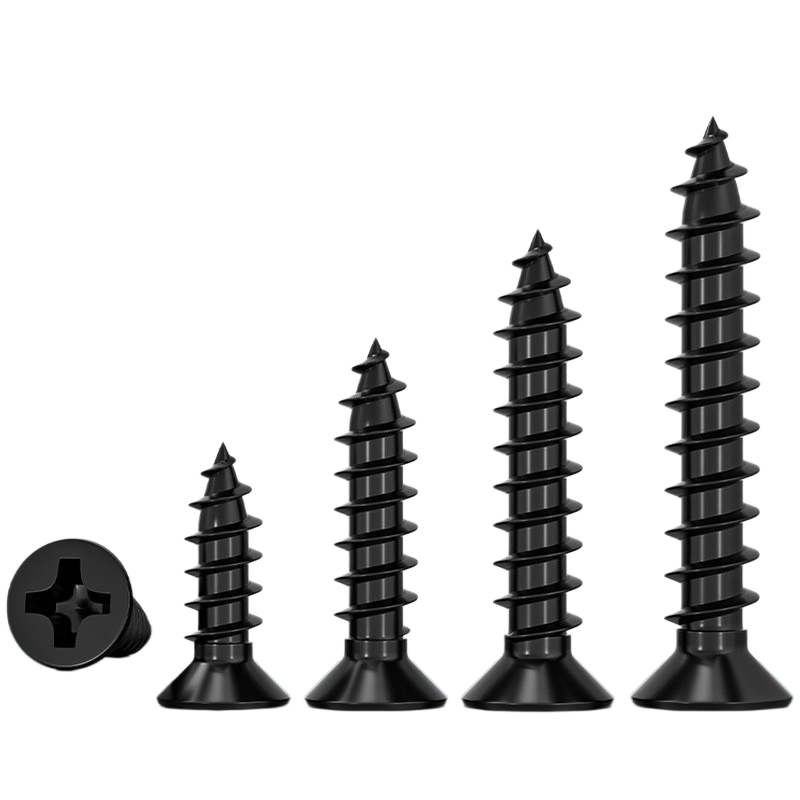
Key Insight: Black oxide fasteners are not primarily a corrosion-resistant coating. Their value lies in providing an attractive black appearance with minimal dimensional change, mild lubricity, and light-absorbing properties. For severe corrosion environments, consider zinc plating, hot dip galvanizing, or stainless steel alternatives.
What Is Black Oxide Coating?
Black oxide coating, also known as blackening, gun bluing, or black passivation, is a chemical conversion process that transforms the surface layer of iron or steel into magnetite (Fe₃O₄). The resulting coating is extremely thin — typically only 1-3 micrometers (0.00004-0.0001 inches) — which makes it one of the thinnest fastener coatings available. This minimal thickness is one of the primary advantages of black oxide fasteners, as it preserves dimensional accuracy and thread fit.
The Black Oxide Process
The black oxide coating process for fasteners involves several carefully controlled stages:
- Cleaning and Degreasing: Fasteners are thoroughly cleaned in alkaline solutions to remove oils, grease, cutting fluids, and other contaminants from the surface. This step is critical for achieving uniform coating coverage.
- Pickling: The fasteners are immersed in an acid solution (typically hydrochloric or sulfuric acid) to remove rust, scale, and any surface oxidation that would interfere with the coating reaction.
- Rinsing: Thorough water rinsing between each stage prevents contamination of subsequent process baths.
- Black Oxide Immersion: The fasteners are immersed in a hot (140-150°C / 285-300°F) alkaline oxidizing solution containing sodium hydroxide, sodium nitrite, and sodium nitrate. The chemical reaction converts the surface iron to magnetite (Fe₃O₄), producing the characteristic black color.
- Post-Treatment: After rinsing, fasteners receive supplemental treatments to enhance corrosion resistance and appearance. Common post-treatments include oil, wax, or acrylic sealers.
Types of Black Oxide Coating
Several variations of the black oxide process are used in fastener manufacturing:
- Hot Black Oxide (Alkaline): The most common method, using hot alkaline salt baths at 140-150°C. Produces a deep black finish suitable for most steel fasteners. This is the standard process for industrial fasteners.
- Cold Black Oxide: A room-temperature process using copper-selenium or copper-arsenic based solutions. Produces a thinner, less durable coating but is suitable for applications where heat treatment cannot be used. Less common for fasteners.
- Thermal Black Oxide: Achieved by heating steel in an oxygen-controlled atmosphere at elevated temperatures. Produces a uniform blue-black oxide without chemical immersion. Used for specialized applications.
Post-Treatment Options
The corrosion resistance and appearance of black oxide fasteners depend significantly on the post-treatment applied:
- Oil (Most Common): Immersion in rust-preventive oil after black oxide treatment. The oil penetrates the porous magnetite layer, providing lubrication and mild corrosion protection. This is the most economical and widely used post-treatment.
- Wax: Application of protective wax provides better moisture resistance than oil alone, with a drier feel. Suitable for applications where oil residue is undesirable.
- Acrylic Lacquer: A clear acrylic sealant provides the best corrosion resistance and a dry, clean surface. Used for fasteners in mildly corrosive environments where oil or wax is not acceptable.
- Project-Specific Sealer: Other sealers may be evaluated when oil or wax is not suitable. The chemistry, appearance, corrosion test and regulatory requirements must be agreed before production.
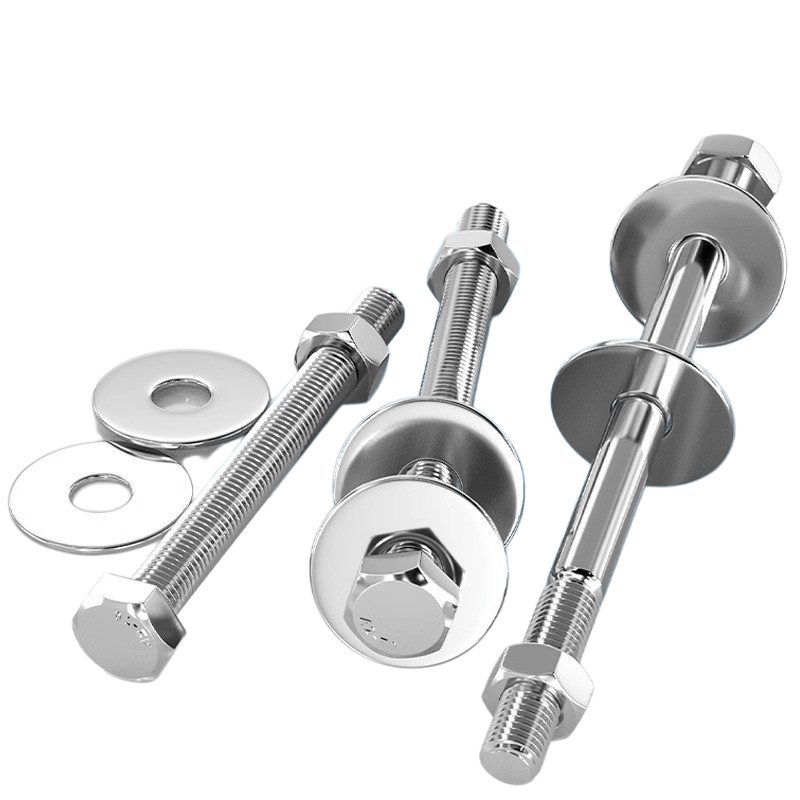
Process Note: Black oxide is a conversion coating, not a deposited coating. The magnetite layer is formed from the base metal itself, which means the coating thickness is inherently limited and cannot be increased beyond approximately 3 μm. This makes black oxide ideal for precision industrial fasteners where dimensional accuracy is critical.
Advantages of Black Oxide Fasteners
Black oxide fasteners offer a unique combination of benefits that make them the preferred choice for specific applications. Understanding these advantages helps engineers and procurement professionals determine when black oxide is the optimal surface treatment.
Minimal Dimensional Change
A significant advantage of black oxide is its minimal dimensional build compared with deposited or heavy protective coatings. Actual surface change and acceptance limits depend on the specified process, substrate and measurement method. This means:
- Thread dimensions remain within specification after coating
- No need for oversize nuts or undersize bolts
- Pre-coated thread gauges can be used for final inspection
- Close-tolerance assemblies maintain proper fit
- No risk of coating buildup in threaded holes or recesses
Attractive Black Appearance
The deep, matte black finish of black oxide fasteners provides a professional, high-quality appearance that is valued in many applications:
- Uniform, non-reflective black finish that does not fade or discolor
- Aesthetic consistency across production batches
- Professional appearance for visible fasteners in consumer products
- Complements modern industrial and architectural design aesthetics
- Black finish hides tool marks, surface imperfections, and material variations
Improved Lubricity
The post-treatment oil or wax applied to black oxide fasteners provides natural lubrication that offers several benefits:
- Smoother installation and torque application
- Reduced risk of thread galling during assembly
- Easier disassembly for maintenance and repair
- Reduced friction in moving parts and adjustment mechanisms
- Compatible with anti-seize compounds for demanding applications
Light Absorption
The black oxide surface absorbs light rather than reflecting it, which is beneficial in specific applications:
- Optical Equipment: Fasteners inside camera lenses, telescopes, and microscopes where light reflection could cause glare or image artifacts.
- Theater and Stage Lighting: Hardware for lighting fixtures and stage equipment where reflected light could create unwanted visual effects.
- Automotive Interiors: Fasteners in instrument panels and cabin components where reflected light could distract the driver.
- Electronics: Fasteners inside electronic enclosures where light reflection could interfere with sensors or displays.
No Hydrogen Embrittlement Risk
Unlike electroplating processes (zinc plating, nickel plating), the black oxide process does not introduce hydrogen into the steel. This eliminates the risk of hydrogen embrittlement, which is a critical advantage for high-strength fasteners (Grade 10.9 and above) that are susceptible to hydrogen-induced delayed fracture. No post-plating baking is required, reducing processing time and cost.
Cost Effectiveness
Black oxide fasteners are one of the most economical surface treatment options available:
- Lower processing costs compared to electroplating or galvanizing
- No expensive post-treatment baking required
- Minimal waste treatment requirements compared to metal plating processes
- Batch processing capability for high-volume production efficiency
- Reduced total cost compared to stainless steel for indoor applications
Temperature Resistance
The magnetite coating is stable at elevated temperatures, maintaining its properties and appearance:
- Stable up to approximately 480°C (900°F) in dry conditions
- No risk of coating degradation or discoloration at normal operating temperatures
- Suitable for engine compartment and under-hood automotive fasteners
- Compatible with high-temperature assembly processes
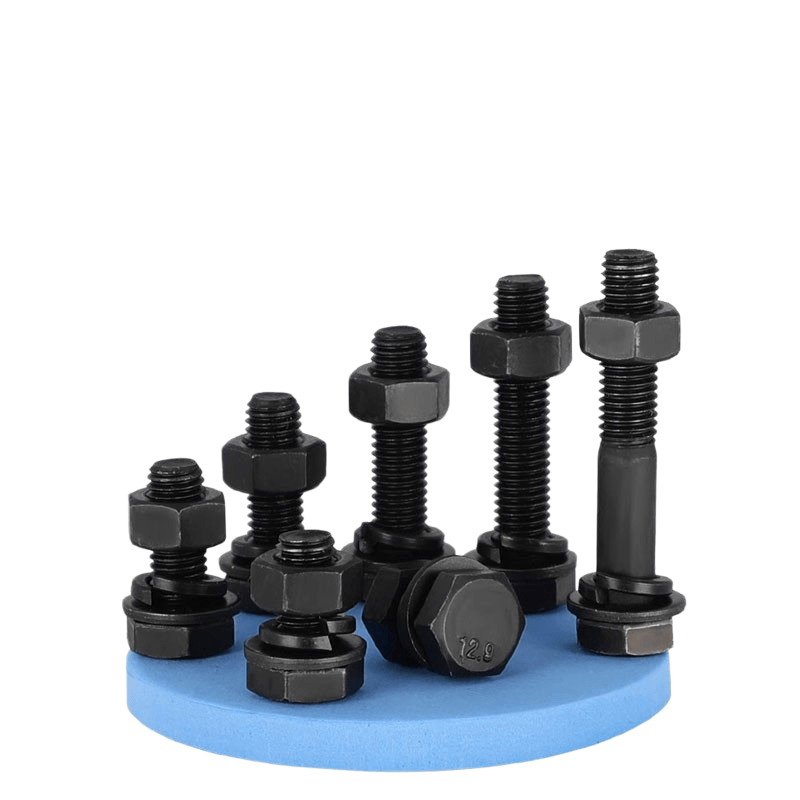
Limitations of Black Oxide Fasteners
While black oxide offers many advantages, it is important to understand its limitations:
- Limited Corrosion Resistance: Black oxide alone provides limited corrosion protection. Practical performance depends strongly on the sealer, substrate, preparation, handling and exposure. Outdoor or humid applications require a project-specific coating review and an agreed test method.
- Limited Wear Protection: Black oxide is a conversion finish with minimal dimensional build. It can be scratched or worn during handling and installation, so abrasion requirements should be reviewed separately.
- Oil Residue: Oil-post-treated black oxide fasteners have a greasy surface that may be undesirable in clean environments. Wax or acrylic alternatives address this but at higher cost.
- Surface Preparation Sensitivity: The quality of the black oxide finish depends heavily on proper surface preparation. Contaminated or poorly cleaned fasteners will have uneven or blotchy coating.
- Material Limitations: Standard black oxide is formulated for ferrous metals (iron and steel). Stainless steel and non-ferrous metals require different blackening processes.
Advantage Summary: Black oxide fasteners excel when dimensional precision, attractive appearance, lubricity, and cost-effectiveness are primary requirements. They are not suitable as a standalone corrosion protection for outdoor or humid environments. For corrosive conditions, consider zinc plating, galvanizing, or stainless steel fasteners.
Applications of Black Oxide Fasteners
The unique properties of black oxide fasteners make them the preferred choice across a wide range of industries and applications. Understanding where black oxide excels helps engineers and designers specify the optimal fastener finish.
Automotive Applications
The automotive industry is one of the largest consumers of black oxide fasteners:
- Engine and Powertrain: Fasteners for engine blocks, cylinder heads, transmission cases, and exhaust manifolds where high-temperature stability and non-reflective appearance are valued.
- Chassis and Suspension: Control arm bolts, bushing hardware, and bracket fasteners where the black appearance blends with underbody components.
- Interior Trim: Seat frames, dashboard components, and interior panel fasteners where the black finish is aesthetically pleasing and non-reflective.
- Electrical Systems: Battery terminals, grounding hardware, and sensor housing fasteners where light absorption is beneficial.
Electronics and Optics
The non-reflective properties of black oxide make it ideal for precision equipment:
- Optical Instruments: Camera lenses, binoculars, microscopes, and telescopes where internal fasteners must not reflect light.
- Consumer Electronics: Smartphones, laptops, tablets, and wearable devices where black fasteners complement product aesthetics.
- Sensors and Detectors: Infrared sensors, motion detectors, and LiDAR systems where light-absorbing fasteners prevent interference.
- Medical Devices: Imaging equipment, surgical instruments, and diagnostic devices where non-reflective, clean surfaces are required.
Optical and Specialized Equipment
Black oxide is the traditional and preferred finish for firearms hardware:
- Optical Fixtures: Screws, pins and mounting hardware where reflected light should be reduced.
- Measurement Equipment: Dark-finish components used inside fixtures, instruments and test assemblies.
- Specialized Industrial Assemblies: Drawing-based fasteners where appearance, fit and the selected sealer are reviewed together.
Industrial Machinery
Black oxide fasteners are widely used in industrial equipment:
- Machine Tools: Fasteners for lathes, milling machines, grinders, and CNC equipment where oil-post-treated black oxide provides both lubrication and appearance.
- Pumps and Valves: Internal fasteners where the black finish provides mild corrosion resistance with lubricity for assembly and maintenance.
- Electric Motors: Housing bolts, end cover screws, and terminal hardware where the black appearance is professional and non-reflective.
- Automation Equipment: Robotic arms, conveyor systems, and packaging machinery where fasteners require periodic adjustment.
Architecture and Furniture
The aesthetic appeal of black oxide supports design-forward applications:
- Furniture Hardware: Screws and bolts for modern and minimalist furniture designs where visible fasteners are part of the aesthetic.
- Architectural Fixtures: Door hardware, cabinet hinges, and decorative elements where the matte black finish complements contemporary design.
- Lighting Fixtures: Internal fasteners for chandeliers, sconces, and recessed lighting where non-reflective hardware prevents glare.
- Signage and Displays: Mounting hardware for signs, displays, and exhibits where black fasteners are less visible.
Black Oxide vs Other Coatings: Quick Comparison
| Property | Black Oxide | Zinc Plating | Hot Dip Galvanizing |
|---|---|---|---|
| Corrosion Resistance | Minimal | Moderate | Excellent |
| Dimensional Change | Negligible | Minimal | Significant |
| Appearance | Matte black | Bright silver | Gray metallic |
| Lubricity | Good (oiled) | Moderate | Poor |
| Temperature Resistance | Up to 480°C | Up to 200°C | Up to 300°C |
| H₂ Embrittlement Risk | None | Yes (baking needed) | None |
| Relative Cost | Low | Low-Medium | Higher |
Application Rule: Use black oxide fasteners for indoor applications where appearance, dimensional precision, and lubricity are primary requirements. For outdoor or corrosive environments, choose zinc plating, hot dip galvanizing, or stainless steel fasteners instead.
How to Specify Black Oxide Fasteners for an RFQ
A useful quotation request should identify the fastener before it identifies the finish. Send the part type, thread system, diameter, length, head style, material or property class, drawing revision and quantity. Then specify black oxide as the required surface treatment and state whether an oil, wax, dry sealer or another approved post-treatment is needed. If the sealer is not known, describe the handling, cleanliness, storage and exposure conditions so the options can be reviewed.
Do not use the phrase black oxide fasteners as a substitute for a corrosion requirement. If corrosion performance matters, provide the test method, acceptance criteria, sample preparation and post-treatment condition. A salt-spray duration copied from another project may not represent the actual service environment. For outdoor, marine, chemical or continuously humid exposure, compare black oxide with zinc plating, galvanizing, stainless steel or another engineered protection system.
Information Buyers Should Provide
- Fastener standard or controlled drawing and revision
- Base material, grade or property class
- Thread, dimensions, tolerances and critical fit features
- Required black oxide process or approved alternative
- Post-treatment, surface feel and residue restrictions
- Application environment and mating materials
- Inspection, corrosion-test and document requirements
- Order quantity, packaging, labeling and destination
For related coating decisions, compare our zinc-plated vs galvanized bolts guide and the carbon steel vs stainless steel bolts buyer guide. Product and drawing enquiries can be sent through the contact form.
Inspection, Packaging and Storage
Inspection should match the order specification. Typical checks can include part identity, dimensions, thread verification, visual appearance and confirmation of the agreed post-treatment. Colour alone is not a complete acceptance criterion because substrate condition, lighting and sealer can change the observed appearance. When a controlled cosmetic requirement exists, use an approved sample or documented viewing condition.
Packaging should prevent abrasion and preserve the selected sealer. Oil-treated parts may require compatible bags, liners or corrosion-control materials, while dry-sealed parts may need separation to protect visible surfaces. State any cleanliness restrictions before production. During storage, keep packaging dry and avoid unnecessary opening or contact with materials that remove the protective film. The supplier and buyer should agree on packaging quantity, label content and traceability before shipment rather than relying on a generic “export package” description.
Conclusion and Recommendations
Black oxide fasteners occupy a specific and valuable niche in the fastener market. While they do not provide the corrosion resistance of zinc plating or galvanizing, their unique combination of dimensional stability, attractive appearance, lubricity, and cost-effectiveness makes them the optimal choice for many indoor and controlled-environment applications.
When to Choose Black Oxide Fasteners
- Indoor applications where corrosion exposure is minimal
- Applications requiring precise dimensional control and thread fit
- Visible fasteners where a professional black appearance is desired
- Optical, electronic, or sensor equipment where light absorption is needed
- Firearms and defense applications requiring traditional black finish
- High-temperature environments where plating coatings would degrade
- Applications where hydrogen embrittlement risk must be eliminated
- Cost-sensitive applications where appearance matters more than corrosion protection
When to Choose Alternatives
- Zinc Plating: For mild outdoor applications requiring moderate corrosion protection at low cost
- Hot Dip Galvanizing: For structural and outdoor applications requiring long-term corrosion protection
- Stainless Steel: For corrosive environments where maintenance-free service life is required
- Phosphate and Oil: For applications requiring corrosion protection with break-in lubrication properties
At Youjia Metals, we manufacture black oxide fasteners and industrial fasteners with a full range of surface treatments including black oxide, zinc plating, hot dip galvanizing, and specialized coatings. Our engineering team provides complimentary surface treatment selection guidance to ensure optimal performance for every application.
Need black oxide fasteners for your project? Contact our team for material recommendations, custom manufacturing options, and competitive quotations.
Quick consultation
📋 Request Quote
Free technical advice
🔧 Industrial Fasteners
View our capabilities
⚙️ Surface Treatments
All coating options