Ultimate Guide to Solar PV Mounting Solutions: Ensuring Stability and Longevity
In the rapidly evolving renewable energy sector, the efficiency of a solar power system depends not only on the panels themselves but also on the solar PV mounting solutions that hold them in place. As the global demand for clean energy continues to surge, more homeowners, businesses, and utility companies are investing in solar power projects—from small residential rooftop setups to large-scale commercial solar farms. However, many overlook a critical component of solar system success: high-quality solar PV mounting hardware. The right solar panel mounting systems, solar roof hooks, PV mounting brackets, and solar fasteners are not just accessories; they are the foundation that ensures structural integrity, long-term performance, and maximum energy production for 25+ years, which is the standard lifespan of most solar panels.
Whether you are an EPC contractor, a solar installer, a project developer, or a homeowner looking to go solar, understanding the ins and outs of solar PV mounting solutions is essential. This comprehensive guide will walk you through everything you need to know—from the different types of solar mounting systems and the best materials for PV hardware to key features to look for in a supplier, common installation challenges, and how to choose the right solution for your specific project. We’ll also share expert insights from Youjia Metals, a leading manufacturer of custom OEM solar mounting components, to help you make informed decisions that boost your project’s efficiency, durability, and ROI.
By the end of this guide, you’ll be equipped with the knowledge to select the best solar PV mounting solutions, avoid costly mistakes, and ensure your solar system stands the test of time—even in the harshest weather conditions. Let’s dive in.
Why Quality Solar PV Mounting Hardware Matters (And What Happens When You Cut Corners)
Solar PV mounting hardware is the unsung hero of any solar power system. While solar panels get most of the attention for their energy-generating capabilities, the mounting system is responsible for securing those panels to roofs, ground, or other surfaces, protecting them from extreme weather, and optimizing their angle for maximum sun exposure. The importance of quality PV mounting hardware cannot be overstated—here’s why:
1. Structural Safety and Durability
Solar systems are exposed to a wide range of environmental stressors, including high wind loads, heavy snow, rain, hail, extreme temperatures, and even saltwater in coastal areas. Poor-quality solar PV mounting components—such as flimsy aluminum rails, low-grade steel fasteners, or poorly designed roof hooks—can lead to structural failure. This not only damages the solar panels but also poses a safety risk to buildings, people, and property. For example, a weak solar roof hook could pull away from a roof during a storm, causing panels to fall and potentially injuring someone or damaging the building’s structure.
According to industry data, over 15% of solar system failures are caused by faulty mounting hardware—not panel defects. This is why most global EPC contractors prioritize high-strength stainless steel fasteners, anodized aluminum brackets, and corrosion-resistant solar PV accessories in their procurement. These components are designed to withstand 25+ years of outdoor exposure, ensuring your solar system remains secure and functional for its entire lifespan.
2. Maximizing Energy Production
The angle and orientation of solar panels directly impact their energy output. A well-designed solar PV mounting system allows you to tilt panels to the optimal angle for your geographic location, ensuring they receive maximum sunlight throughout the day. For example, in the Northern Hemisphere, the optimal tilt angle is typically equal to your latitude, plus or minus 10 degrees depending on the season. Ground-mounted solar solutions often offer more flexibility in tilt angle than rooftop systems, allowing for even greater energy production.
Poorly designed mounting systems, on the other hand, may not allow for optimal tilt, or may shift over time due to weather or wear, reducing the system’s efficiency. This translates to lower energy production, which means lower savings on electricity bills for homeowners and lower ROI for commercial projects. High-quality solar panel mounting systems are engineered to maintain their position and angle, ensuring consistent energy output year after year.
3. Avoiding Costly Repairs and Replacements
Investing in cheap, low-quality solar PV mounting hardware may save you money upfront, but it will cost you far more in the long run. Faulty components often require frequent repairs or full replacements, which can be expensive—especially for large-scale commercial or utility projects. For example, replacing a set of corroded solar fasteners on a 100-panel commercial system can cost thousands of dollars in labor and materials, not to mention the lost energy production during the repair period.
In contrast, quality solar PV mounting solutions from a reputable manufacturer like Youjia Metals are built to last, reducing the need for repairs and replacements. This not only saves you money but also minimizes downtime and ensures your solar system continues to generate energy consistently.
4. Compliance with International Standards and Certifications
Most countries and regions have strict standards for solar PV mounting systems, including wind load resistance, snow load resistance, and fire safety. For example, solar PV mounting systems sold in the European Union must comply with the EN1090 certification, which ensures they meet strict safety and quality requirements for steel and aluminum structures. In the United States, systems must meet the International Building Code (IBC) and local building codes, which specify minimum requirements for structural integrity.
Low-quality mounting hardware often fails to meet these standards, which can lead to code violations, project delays, and even legal liability. By choosing quality solar PV mounting solutions that are certified to meet international standards, you can ensure your project is compliant and avoid costly penalties.
Types of Solar PV Mounting Solutions: Which One Is Right for Your Project?
Solar PV mounting solutions come in a variety of types, each designed for specific applications, surfaces, and project sizes. The key is to choose the type that best fits your project’s needs—whether it’s a residential rooftop, a commercial building, a ground-mounted solar farm, or a specialized application like carports or floating solar. Below is a detailed breakdown of the most common types of solar PV mounting systems, their key features, advantages, and ideal use cases.
1. Rooftop Solar Mounting Systems
Rooftop solar mounting systems are the most common type of solar mounting solution, used for both residential and commercial buildings. They are designed to attach solar panels to the roof of a building without damaging the roof’s structure or waterproofing. Rooftop systems are further divided into two main categories: rail-based systems and rail-less systems. Additionally, the type of roof (tile, metal, flat concrete, etc.) will determine the specific solar roof hooks and PV mounting brackets needed.
a. Rail-Based Rooftop Mounting Systems
Rail-based rooftop solar mounting systems are the standard for most residential and commercial rooftop projects. They consist of aluminum or steel rails that are attached to the roof using solar roof hooks, and solar panels are then mounted onto the rails using clamps or brackets. This design offers flexibility in panel placement and allows for easy adjustment of the panel angle.
Key Components of Rail-Based Systems:
- Solar Roof Hooks: These are the primary fasteners that attach the rails to the roof. They are available in different designs to fit different roof types—for example, tile roof hooks are designed to fit under roof tiles without damaging them, while metal roof hooks are designed to attach to metal roofing panels. High-quality solar roof hooks are made from SUS304/316 stainless steel to resist corrosion and ensure a secure fit.
- Rails: Typically made from AL6005-T5 aluminum or stainless steel, rails provide a stable base for mounting solar panels. Aluminum rails are lightweight yet strong, making them ideal for rooftop applications where weight is a concern. They are also anodized to resist corrosion and UV damage.
- Clamps and Brackets: These are used to attach solar panels to the rails. They come in different sizes to fit different panel thicknesses and are often adjustable to ensure a secure fit. PV mounting brackets may also be used to adjust the angle of the panels for optimal sun exposure.
- Flashings and Seals: These are critical for preventing water leakage. Flashings are installed around solar roof hooks and other roof penetrations to create a waterproof seal, while seals are used between panels and rails to prevent water from seeping into the roof.
Key Advantages of Rail-Based Rooftop Systems:
- Minimizes roof penetration: Solar roof hooks are designed to attach to the roof’s rafters or structural supports, minimizing the number of holes drilled into the roof and reducing the risk of leaks.
- Flexible panel placement: Rails allow for easy adjustment of panel spacing and angle, making it easy to fit panels on irregularly shaped roofs.
- Easy installation: Pre-assembled components reduce on-site labor time, making installation faster and more efficient.
- Compatible with most roof types: Rail-based systems can be adapted to fit tile, metal, flat concrete, and asphalt shingle roofs.
Ideal Use Cases: Residential homes, small to medium commercial buildings, and any rooftop with sufficient space and structural capacity to support solar panels.
b. Rail-Less Rooftop Mounting Systems
Rail-less rooftop solar mounting systems (also known as direct-mount systems) are a newer, more streamlined option that eliminates the need for rails. Instead, solar panels are attached directly to the roof using specialized solar roof hooks and clamps. This design is lighter and more cost-effective than rail-based systems, making it ideal for roofs with weight restrictions.
Key Advantages of Rail-Less Rooftop Systems:
- Lightweight: Without rails, the system is lighter, reducing the load on the roof. This is ideal for older buildings or roofs with limited structural capacity.
- Cost-effective: Eliminating rails reduces material costs, making the system more affordable.
- Faster installation: With fewer components, rail-less systems can be installed more quickly than rail-based systems.
- Sleeker appearance: Rail-less systems have a more low-profile design, which is aesthetically pleasing for homeowners and businesses.
Ideal Use Cases: Residential homes with lightweight roofs, commercial buildings with weight restrictions, and projects where cost and installation speed are top priorities.
c. Rooftop Mounting Systems by Roof Type
The type of roof you have will determine the specific solar PV mounting solutions you need. Below is a breakdown of the most common roof types and the corresponding mounting hardware:
| Roof Type | Recommended Mounting Hardware | Key Considerations | Advantages |
|---|---|---|---|
| Tile Roof (Clay/Concrete) | Tile roof hooks, rail-based systems, flashings | Avoid damaging roof tiles; ensure hooks are placed on rafters; use waterproof flashings | Durable roof type; hooks fit seamlessly under tiles; minimal roof penetration |
| Metal Roof (Corrugated/Tin) | Metal roof hooks, rail-less systems, clamp-on brackets | Choose hooks that attach to roof seams without drilling; ensure compatibility with metal type | Easy installation; no roof penetration; compatible with rail-less systems |
| Flat Concrete Roof | Ballasted mounting systems, concrete footings, tilt-up brackets | Ensure ballast weight is sufficient to resist wind; avoid damaging roof membrane | Flexible panel placement; no roof penetration; ideal for commercial buildings |
| Asphalt Shingle Roof | Asphalt roof hooks, rail-based systems, flashings | Drill holes carefully; use flashings to prevent leaks; replace shingles if damaged | Most common residential roof type; easy to adapt to mounting systems |
2. Ground-Mounted Solar Solutions
Ground-mounted solar solutions are designed for large-scale utility projects, commercial solar farms, and residential properties with sufficient land. Unlike rooftop systems, ground-mounted systems are installed directly on the ground, using robust steel or aluminum structures to support solar panels. They offer greater flexibility in panel placement, tilt angle, and system size, making them ideal for projects that require high energy production.
Ground-mounted solar systems are further divided into two main categories: fixed-tilt systems and tracking systems. Additionally, they can be designed to handle challenging terrains such as rocky, uneven, or sloped land.
a. Fixed-Tilt Ground-Mounted Systems
Fixed-tilt ground-mounted systems are the most common type of ground-mounted solar solution. They consist of steel or aluminum frames that are anchored to the ground using concrete footings, and solar panels are mounted onto the frames at a fixed angle. The angle is typically set to the optimal tilt for the project’s geographic location, ensuring maximum sun exposure throughout the year.
Key Components of Fixed-Tilt Systems:
- Foundations: Concrete footings, ground screws, or pile-driven foundations are used to anchor the system to the ground. The type of foundation depends on the soil type and project size—for example, ground screws are ideal for soft soil, while pile-driven foundations are used for rocky soil.
- Frames: Steel or aluminum frames provide a stable base for mounting solar panels. Steel frames are more durable and suitable for large-scale projects, while aluminum frames are lightweight and easier to install.
- Rails and Clamps: Similar to rooftop systems, fixed-tilt systems use rails and clamps to attach solar panels to the frames. Rails are often made from AL6005-T5 aluminum or stainless steel, while clamps are adjustable to fit different panel sizes.
- Windbreaks and Anchors: For large-scale systems, windbreaks and additional anchors may be used to resist high wind loads and prevent the system from shifting.
Key Advantages of Fixed-Tilt Ground-Mounted Systems:
- High durability: Robust steel frames and foundations can withstand extreme weather conditions, including high winds and heavy snow.
- Easy maintenance: Panels are mounted at a comfortable height, making it easy to clean, inspect, and repair them.
- Optimal energy production: Fixed tilt angle is set to maximize sun exposure, ensuring consistent energy output.
- Scalable: Fixed-tilt systems can be easily scaled up to accommodate large-scale projects, such as utility-scale solar farms.
Ideal Use Cases: Utility-scale solar farms, commercial solar projects, residential properties with large land areas, and projects in areas with consistent sunlight.
b. Tracking Ground-Mounted Systems
Tracking ground-mounted systems are a more advanced option that uses motors and sensors to adjust the angle of solar panels throughout the day, following the sun’s path. This allows panels to receive maximum sunlight at all times, increasing energy production by 10-25% compared to fixed-tilt systems. There are two main types of tracking systems: single-axis trackers and dual-axis trackers.
Single-axis trackers adjust the panels along one axis (typically east-west), following the sun’s movement from morning to evening. Dual-axis trackers adjust along two axes (east-west and north-south), following the sun’s path both daily and seasonally. While dual-axis trackers offer higher energy production, they are more expensive and require more maintenance than single-axis trackers.
Key Advantages of Tracking Ground-Mounted Systems:
- Higher energy production: By following the sun’s path, tracking systems maximize sunlight exposure, increasing energy output by 10-25%.
- Ideal for high-latitude regions: In regions with shorter days or lower sun angles, tracking systems can significantly improve energy production.
- Better ROI: While tracking systems are more expensive upfront, the increased energy production can lead to a higher ROI over the system’s lifespan.
Key Considerations for Tracking Systems:
- Higher cost: Tracking systems are more expensive than fixed-tilt systems, both in terms of materials and installation.
- More maintenance: Motors and sensors require regular maintenance to ensure they function properly.
- Energy consumption: Tracking systems require a small amount of energy to power the motors, which can slightly reduce net energy production.
Ideal Use Cases: Utility-scale solar farms, commercial projects with high energy demands, and regions with variable sun angles or shorter days.
3. Specialized Solar PV Mounting Solutions
In addition to rooftop and ground-mounted systems, there are several specialized solar PV mounting solutions designed for unique applications. These include:
a. Carport Solar Mounting Systems
Carport solar mounting systems are designed to attach solar panels to carport roofs, providing both shade for vehicles and energy production. They are ideal for commercial properties, parking lots, and residential homes with carports. Carport systems typically use rail-based or rail-less mounting hardware, and can be designed to fit both new and existing carports.
Key Advantages: Dual-purpose (shade + energy), uses existing space, no additional land required, easy to install.
b. Floating Solar Mounting Systems
Floating solar mounting systems (also known as floating PV) are installed on bodies of water, such as lakes, reservoirs, and ponds. They are ideal for regions with limited land space, and can also help reduce water evaporation. Floating systems use buoyant materials (such as plastic or foam) to support solar panels, and are anchored to the bottom of the body of water to prevent movement.
Key Advantages: Uses unused water space, reduces water evaporation, cooler operating temperatures for panels (improving efficiency), no land acquisition required.
c. BIPV (Building-Integrated Photovoltaics) Mounting Systems
BIPV mounting systems integrate solar panels directly into the building’s structure, such as roofs, walls, or facades. Unlike traditional rooftop systems, BIPV panels replace conventional building materials (such as roof tiles or siding), making them both functional and aesthetically pleasing. BIPV systems require specialized mounting hardware that is compatible with the building’s structure and design.
Key Advantages: Aesthetically pleasing, replaces conventional building materials, saves space, integrates seamlessly with the building’s design.
Material Excellence: Stainless Steel vs. Aluminum for Solar PV Mounting Hardware
The material used for solar PV mounting hardware is critical to its durability, corrosion resistance, and performance. The two most common materials used for solar mounting components are stainless steel and aluminum—each with its own advantages and ideal applications. At Youjia Metals, we specialize in manufacturing solar PV accessories using high-quality SUS304/316 stainless steel and AL6005-T5 aluminum, ensuring our products meet the highest industry standards.
Stainless Steel: The Gold Standard for Corrosion Resistance
Stainless steel is a popular choice for solar PV mounting hardware, especially for components that are exposed to harsh environments (such as coastal areas, humid climates, or areas with heavy rainfall). The most common types of stainless steel used in solar mounting systems are SUS304 and SUS316.
SUS304 Stainless Steel
SUS304 stainless steel is the most widely used type of stainless steel in solar PV mounting hardware. It contains 18% chromium and 8% nickel, which gives it excellent corrosion resistance, durability, and strength. SUS304 is ideal for solar fasteners, solar roof hooks, and PV mounting brackets that are used in moderate environments (such as inland areas with low humidity).
Key Features of SUS304 Stainless Steel:
- Excellent corrosion resistance against water, air, and mild chemicals.
- High strength and durability, able to withstand extreme temperatures and weather conditions.
- Easy to fabricate and machine, making it ideal for custom OEM components.
- Cost-effective compared to SUS316, making it a popular choice for most solar projects.
SUS316 Stainless Steel
SUS316 stainless steel is a higher-grade stainless steel that contains 16% chromium, 10% nickel, and 2% molybdenum. The addition of molybdenum gives it superior corrosion resistance, especially against saltwater and harsh chemicals. SUS316 is ideal for solar PV mounting hardware used in coastal areas, marine environments, or areas with high humidity.
Key Features of SUS316 Stainless Steel:
- Superior corrosion resistance against saltwater, chlorine, and harsh chemicals.
- Higher strength and durability than SUS304, making it ideal for harsh environments.
- Resistant to pitting and crevice corrosion, which is common in coastal areas.
- Ideal for solar fasteners, roof hooks, and brackets in coastal or marine projects.
Aluminum: Lightweight and Versatile
Aluminum is another popular choice for solar PV mounting hardware, especially for rails, frames, and large structural components. The most common type of aluminum used in solar mounting systems is AL6005-T5, which is a high-strength aluminum alloy that is ideal for structural applications.
AL6005-T5 Aluminum
AL6005-T5 aluminum is a heat-treated aluminum alloy that offers excellent strength, lightweight, and corrosion resistance. It is often used for solar rails, frames, and PV mounting brackets, as it is easy to fabricate and install, and can withstand 25+ years of outdoor exposure. AL6005-T5 is also anodized to further enhance its corrosion resistance and UV protection.
Key Features of AL6005-T5 Aluminum:
- Lightweight: Aluminum is 30% lighter than steel, making it ideal for rooftop systems where weight is a concern.
- High strength: Despite its lightweight, AL6005-T5 aluminum has a high tensile strength, making it suitable for structural components.
- Excellent corrosion resistance: Anodized aluminum resists corrosion, UV damage, and weathering.
- Easy to fabricate: Aluminum can be cut, drilled, and shaped easily, making it ideal for custom solar mounting components.
- Cost-effective: Aluminum is more affordable than stainless steel for large structural components, such as rails and frames.
Stainless Steel vs. Aluminum: Which Is Right for Your Project?
The choice between stainless steel and aluminum depends on your project’s specific needs, including the environment, application, and budget. Below is a comparison table to help you decide:
| Feature | Stainless Steel (SUS304/316) | Aluminum (AL6005-T5) | Best For |
|---|---|---|---|
| Corrosion Resistance | Excellent (SUS316 is superior for coastal areas) | Good (anodized for enhanced protection) | Stainless Steel: Coastal/humid environments; Aluminum: Inland/moderate environments |
| Weight | Heavy (3x heavier than aluminum) | Lightweight | Stainless Steel: Ground-mounted systems; Aluminum: Rooftop systems |
| Strength | High (SUS316 is stronger than SUS304) | High (lightweight but strong) | Stainless Steel: Heavy-load applications; Aluminum: Standard-load applications |
| Cost | Higher (especially SUS316) | Lower | Stainless Steel: High-budget projects; Aluminum: Cost-sensitive projects |
| Fabrication | More difficult (harder to cut/drill) | Easy (easy to cut/drill/shape) | Stainless Steel: Custom fasteners/hooks; Aluminum: Rails/frames |
Key Features of High-Performance Solar PV Mounting Systems
When evaluating solar PV mounting solutions, it’s important to look for key features that ensure durability, performance, and ease of installation. Not all mounting systems are created equal—low-quality systems may cut corners on materials, design, or certification, leading to costly issues down the line. Below are the essential features to look for in high-performance solar PV mounting systems, whether you’re choosing a rooftop, ground-mounted, or specialized system.
1. Durability: 25+ Years of Outdoor Performance
Solar panels have a lifespan of 25+ years, so your mounting system should match that longevity. High-performance solar PV mounting systems are designed to withstand 25+ years of outdoor exposure, including extreme temperatures, high winds, heavy snow, rain, and UV radiation. This means using high-quality materials (such as SUS304/316 stainless steel and AL6005-T5 aluminum), corrosion-resistant finishes (such as anodizing or galvanizing), and robust design that can handle environmental stressors.
Look for mounting systems that are tested to meet international standards for durability, such as the IEC 61215 standard for solar panel mounting systems. This standard ensures that the system can withstand extreme weather conditions and maintain its structural integrity for its entire lifespan.
2. Easy Installation: Pre-Assembled Components and Universal Design
Installation costs are a significant portion of any solar project, so choosing a mounting system with easy installation features can save you time and money. High-performance solar PV mounting systems typically include pre-assembled components, such as pre-drilled rails, pre-attached clamps, and easy-to-install solar roof hooks. This reduces on-site labor time and minimizes the risk of installation errors.
Additionally, look for systems with a universal design that is compatible with all major solar panel brands and sizes. This flexibility ensures that you can use the same mounting system for different projects, reducing the need to purchase specialized components for each project. For example, Youjia Metals’ solar PV mounting components are designed to be compatible with all standard solar panel sizes, making them ideal for both residential and commercial projects.
3. Universal Compatibility: Works with All Major Solar Panel Brands
Solar panels come in a variety of sizes and weights, so your mounting system should be compatible with the panels you choose. High-performance solar PV mounting systems are designed to accommodate a wide range of panel sizes, from small residential panels (60-cell, 72-cell) to large commercial panels (144-cell, 156-cell). They also support different panel weights, ensuring that the system can handle the load of the panels without structural failure.
Look for mounting systems that are tested to support the maximum weight of your chosen panels, plus additional loads from wind, snow, and other environmental factors. For example, if you’re using heavy commercial panels, choose a system with robust rails and brackets that can handle the extra weight.
4. Certification: Meets International Standards
Certification is a key indicator of quality in solar PV mounting systems. High-performance systems are certified to meet international standards for safety, durability, and performance. Some of the most important certifications to look for include:
- EN1090 Certification: Required for solar mounting systems sold in the European Union, this certification ensures that the system meets strict safety and quality requirements for steel and aluminum structures. It covers factory production control,
- UL Certification: Required for solar mounting systems sold in the United States, UL certification ensures that the system meets safety standards for fire, wind, and snow load resistance.
- IEC 61215 Certification: This international standard ensures that the mounting system is compatible with solar panels and can withstand extreme weather conditions.
- AS/NZS 1170 Certification: Required for solar mounting systems sold in Australia and New Zealand, this certification ensures that the system can withstand local wind and snow loads.
By choosing a certified solar PV mounting system, you can ensure that your project is compliant with local codes and standards, and that the system is safe and durable.
5. Corrosion Resistance: Protection Against Harsh Environments
Corrosion is one of the biggest threats to solar PV mounting systems, especially in coastal areas, humid climates, or areas with heavy rainfall. High-performance mounting systems are designed to resist corrosion using high-quality materials and protective finishes.
For example, stainless steel components (SUS304/316) are naturally corrosion-resistant, while aluminum components are anodized to create a protective layer against corrosion and UV damage. Additionally, some systems use galvanized steel for ground-mounted components, which provides an extra layer of protection against rust.
Look for mounting systems that are tested for corrosion resistance in harsh environments, such as salt spray testing for coastal applications. This ensures that the system will remain durable and functional even in the most challenging conditions.
6. Adjustable Tilt Angle: Maximizing Energy Production
The tilt angle of solar panels directly impacts their energy output. High-performance solar PV mounting systems allow for adjustable tilt angles, so you can optimize the angle for your geographic location. This is especially important for rooftop systems, where the roof angle may not be optimal for sun exposure.
Some mounting systems offer fixed tilt angles that are pre-set to the optimal angle for your region, while others offer adjustable tilt brackets that allow you to change the angle seasonally (e.g., steeper angle in winter to capture more sunlight). For ground-mounted systems, adjustable tilt angles are even more important, as they allow you to maximize energy production throughout the year.
7. Waterproof Design: Preventing Roof Leaks
For rooftop solar mounting systems, waterproof design is critical to prevent roof leaks. High-performance systems include flashings, seals, and other waterproof components that create a tight seal around roof penetrations (such as solar roof hooks). This prevents water from seeping into the roof and causing damage to the building’s structure.
Look for mounting systems with pre-installed flashings and seals that are compatible with your roof type. For example, tile roof systems should include flashings that fit under roof tiles, while metal roof systems should include clamp-on flashings that attach to roof seams without drilling.
Common Challenges in Solar PV Mounting Installation (And How to Overcome Them)
Installing solar PV mounting systems can be challenging, especially for rooftop projects or projects in harsh environments. Below are some of the most common challenges and expert tips from Youjia Metals to help you overcome them.
1. Roof Damage and Leaks
One of the most common challenges in rooftop solar installation is damaging the roof or causing leaks. This often happens when installers drill too many holes, use improper flashings, or fail to seal roof penetrations properly. To overcome this challenge:
- Use solar roof hooks that minimize roof penetration: Choose hooks that attach to the roof’s rafters or structural supports, reducing the number of holes drilled into the roof.
- Use high-quality flashings and seals: Invest in flashings that are specifically designed for your roof type, and ensure they are installed correctly to create a waterproof seal.
- Hire experienced installers: Choose installers who have experience with your roof type and can ensure proper installation without damaging the roof.
2. Structural Capacity Issues
Another common challenge is ensuring that the roof or ground can support the weight of the solar system. Rooftop systems can add significant weight to a building, especially for large commercial projects. To overcome this challenge:
- Conduct a structural assessment: Before installing the system, have a professional engineer assess the roof or ground to ensure it can support the weight of the panels and mounting hardware.
- Choose lightweight materials: Use aluminum rails and lightweight mounting components to reduce the overall weight of the system.
- Distribute the weight evenly: Use a mounting system that distributes the weight of the panels evenly across the roof or ground, reducing stress on any single point.
3. Extreme Weather Conditions
Extreme weather conditions, such as high winds, heavy snow, and hail, can pose a threat to solar PV mounting systems. To overcome this challenge:
- Choose a system with high wind and snow load ratings: Look for mounting systems that are tested to withstand the maximum wind and snow loads in your region.
- Use robust anchoring: For ground-mounted systems, use concrete footings or ground screws to anchor the system securely to the ground. For rooftop systems, use additional anchors to resist high winds.
- Invest in impact-resistant components: Choose panels and mounting hardware that are resistant to hail and other impacts.
4. Compatibility Issues
Compatibility issues between mounting systems and solar panels are common, especially when using components from different manufacturers. To overcome this challenge:
- Choose a universal mounting system: Look for systems that are compatible with all major solar panel brands and sizes.
- Work with a single supplier: Choose a supplier that offers both mounting hardware and panels, or a supplier that can ensure compatibility between components.
- Verify compatibility before installation: Before installing the system, verify that the mounting hardware is compatible with your chosen panels.
5. Installation Time and Cost
Installation time and cost can be significant, especially for large-scale projects. To overcome this challenge:
- Choose a system with pre-assembled components: Pre-assembled rails, clamps, and hooks reduce on-site labor time and costs.
- Hire a professional installation team: Experienced installers can complete the installation more quickly and efficiently, reducing labor costs.
- Opt for a rail-less system: Rail-less systems are faster to install than rail-based systems, reducing installation time and costs.
How to Choose the Right Solar PV Mounting Solutions Supplier
Choosing the right supplier for your solar PV mounting solutions is just as important as choosing the right system. A reputable supplier will provide high-quality components, expert support, and competitive pricing, ensuring your project is a success. Below are the key factors to consider when choosing a solar PV mounting solutions supplier.
1. Quality and Certification
The first and most important factor to consider is the quality of the supplier’s products. Look for a supplier that uses high-quality materials (such as SUS304/316 stainless steel and AL6005-T5 aluminum) and offers products that are certified to meet international standards (EN1090, UL, IEC 61215, etc.). A reputable supplier will be happy to provide certification documents and test reports to verify the quality of their products.
2. Customization Capabilities
Every solar project is unique, so you need a supplier that can provide custom OEM solar mounting components to meet your specific needs. Whether you need custom solar roof hooks, PV mounting brackets, or rails, look for a supplier with in-house manufacturing capabilities and a team of engineers who can design custom solutions.
At Youjia Metals, we specialize in custom OEM solar mounting components, with capabilities including stamping, precision CNC machining, and anodizing. Our team of engineers works closely with clients to design custom solutions that fit their project’s unique requirements, from small residential projects to large-scale commercial solar farms.
3. Experience and Expertise
Choose a supplier with extensive experience in the solar industry. An experienced supplier will have a deep understanding of solar PV mounting solutions, installation challenges, and industry trends, and can provide expert advice to help you choose the right system for your project. Look for a supplier that has worked on projects similar to yours, whether it’s residential, commercial, or utility-scale.
4. Customer Support
Good customer support is essential when working with a solar PV mounting solutions supplier. Look for a supplier that offers responsive customer support, including technical assistance, installation guidance, and after-sales support. A reputable supplier will be available to answer your questions and resolve any issues that arise during the project.
5. Pricing and Value
While price is an important factor, it should not be the only consideration. Look for a supplier that offers competitive pricing without compromising on quality. A low price may indicate low-quality components, which can lead to costly repairs and replacements down the line. Instead, focus on value—choose a supplier that offers high-quality products, expert support, and competitive pricing.
6. Global Reach and Logistics
If you’re working on international projects, choose a supplier with global reach and reliable logistics capabilities. A supplier with international distribution networks can ensure that your components are delivered on time and in good condition, regardless of your project’s location. Look for a supplier that has experience shipping to your region and can handle customs and import requirements.
Partner with Youjia Metals: Your Trusted Solar PV Mounting Solutions Manufacturer
As a professional fasteners and metal processing manufacturer with over 10 years of experience in the solar industry, Youjia Metals is your trusted partner for high-quality solar PV mounting solutions. We specialize in providing custom OEM solar mounting components, including solar roof hooks, PV mounting brackets, solar fasteners, rails, and clamps, all manufactured using high-quality SUS304/316 stainless steel and AL6005-T5 aluminum.
Our Commitment to Quality
At Youjia Metals, quality is our top priority. All our solar PV mounting components are manufactured in our state-of-the-art facility, using advanced production equipment and strict quality control processes. We ensure that every component meets international standards, including EN1090, UL, and IEC 61215, and we provide certification documents and test reports to verify the quality of our products. Our components are designed to withstand 25+ years of outdoor exposure, ensuring your solar system remains secure and functional for its entire lifespan.
Custom OEM Solutions
We understand that every solar project is unique, which is why we offer custom OEM solar mounting components tailored to your specific needs. Our team of experienced engineers works closely with you to design components that fit your project’s requirements, whether it’s a residential rooftop system, a commercial solar farm, or a specialized application like carports or floating solar. We offer a wide range of customization options, including material selection, size, shape, and finish, ensuring that our components integrate seamlessly with your project.
Comprehensive Product Range
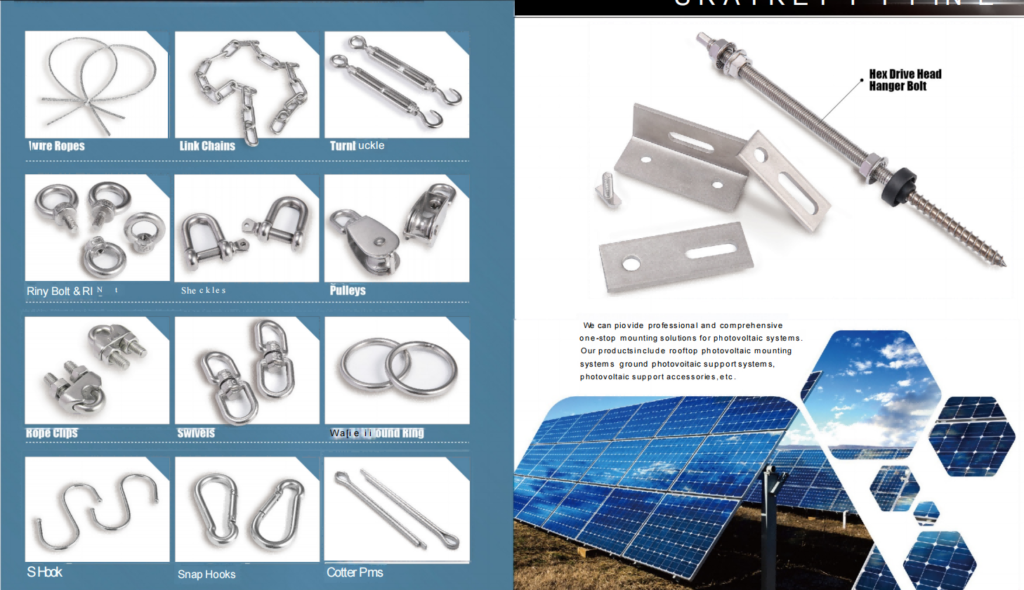
We offer a comprehensive range of solar PV mounting components, including:
- Solar Roof Hooks: Available in SUS304/316 stainless steel, designed for tile, metal, flat, and asphalt shingle roofs.
- PV Mounting Brackets: Custom brackets for rooftop and ground-mounted systems, made from stainless steel or aluminum.
- Solar Fasteners: T-bolts, hex bolts, nuts, and washers, available in SUS304/316 stainless steel and aluminum.
- Solar Rails: AL6005-T5 aluminum rails, available in various sizes and lengths, compatible with all major solar panel brands.
- Solar Clamps: Adjustable clamps for attaching panels to rails, available in stainless steel or aluminum.
Expert Support and Service
At Youjia Metals, we are committed to providing our clients with the highest level of support and service. Our team of experts is available to provide technical assistance, installation guidance, and after-sales support, ensuring that your project runs smoothly from start to finish. We also offer competitive pricing and reliable logistics, ensuring that your components are delivered on time and in good condition, regardless of your project’s location.
Conclusion: Invest in Quality Solar PV Mounting Solutions for Long-Term Success
Solar PV mounting solutions are the foundation of any successful solar power system. They ensure the structural integrity of your system, maximize energy production, and protect your investment for 25+ years. By choosing high-quality mounting systems, using the right materials, and partnering with a reputable supplier like Youjia Metals, you can ensure your solar project is a success.
Whether you’re working on a residential rooftop, a commercial solar farm, or a specialized application, this guide has provided you with the knowledge to choose the right solar PV mounting solutions for your project. From understanding the different types of mounting systems and materials to overcoming installation challenges and choosing the right supplier, you now have the tools to make informed decisions that will boost your project’s efficiency, durability, and ROI.
Don’t cut corners on solar PV mounting hardware—invest in quality, and you’ll reap the benefits for years to come. Contact Youjia Metals today to learn more about our custom OEM solar mounting components, download our product catalog, or get a free quote for your project.
Call to Action
Ready to upgrade your solar project with premium solar PV mounting solutions? Contact Youjia Metals today to speak with our technical team and get a free quote. We offer custom OEM solutions, high-quality components, and expert support to ensure your project’s success. Download our product catalog to learn more about our full range of solar PV mounting components, and take the first step toward a more efficient, durable, and profitable solar system.