SS304 vs SS316 Stainless Steel Chain
A practical material-grade guide for marine, outdoor and industrial welded-chain orders.
When comparing SS304 vs SS316 stainless steel chain, do not select a grade by appearance alone. The two grades can look almost identical. Ask for the specified grade, dimensional requirements and any material documentation needed for your project.
What Is the Difference Between SS304 and SS316 Chain?
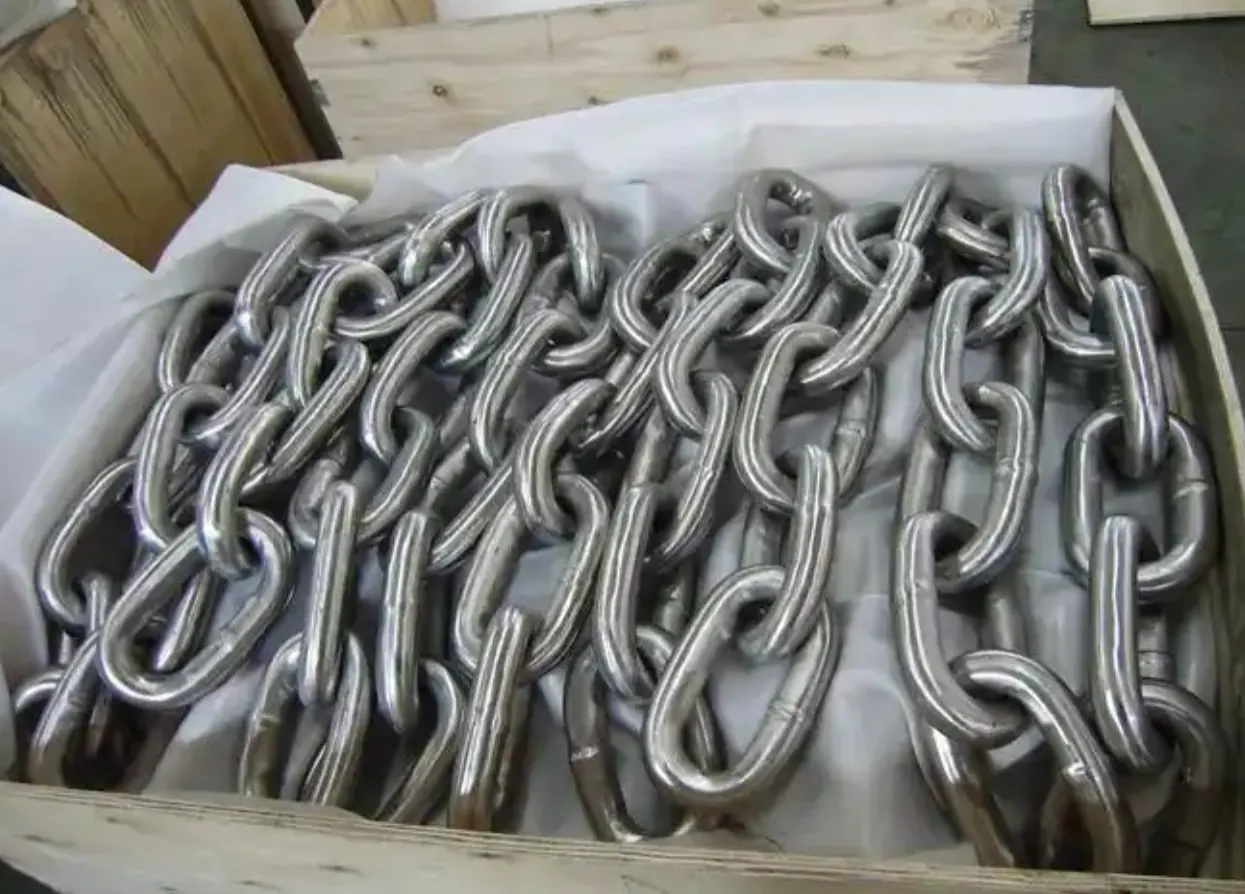
Both SS304 and SS316 are austenitic stainless steels used for fabricated hardware. Their main purchasing difference is corrosion behaviour. SS316 includes molybdenum, which improves resistance to localized corrosion caused by chlorides compared with SS304 in many service conditions.
This does not mean SS316 can be placed in every saltwater or chemical environment without inspection. Deposits, stagnant water, crevices, temperature, surface contamination and contact with dissimilar metals can all affect performance. The British Stainless Steel Association notes that 316 grades are widely used for marine applications but are not corrosion-proof in all seawater conditions.
SS304 vs SS316 Stainless Steel Chain Comparison
| Selection factor | SS304 welded chain | SS316 welded chain |
|---|---|---|
| General corrosion resistance | Suitable for many general industrial and atmospheric environments | Generally higher resistance in chloride-containing and more demanding environments |
| Marine and coastal exposure | Requires careful environmental review and maintenance planning | Often preferred, but still requires correct design, cleaning and inspection |
| Indoor industrial use | Often a practical option when chlorides and aggressive chemicals are limited | May be selected when washdown, chemicals or contamination justify the upgrade |
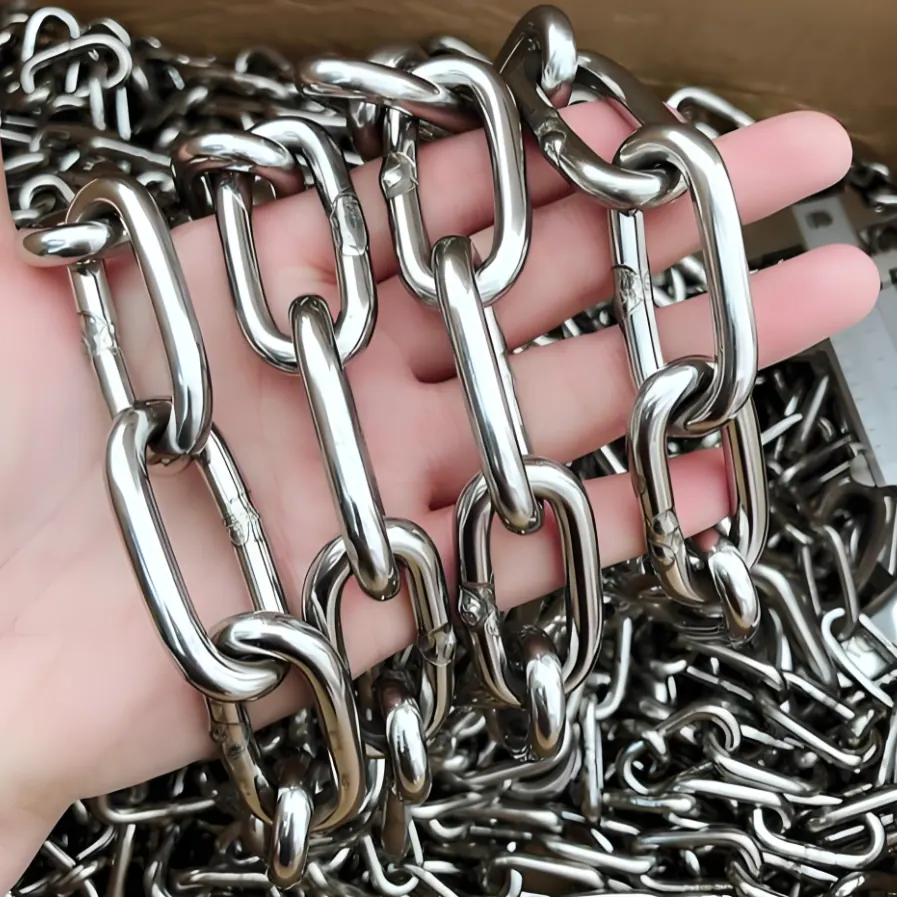
| Appearance | Visually similar to SS316 | Visually similar to SS304 |
| Grade verification | Confirm through purchasing documents and any agreed material verification; visual inspection is insufficient | |
| Price and availability | Confirm at quotation because raw-material cost, size, quantity and market conditions change | |
Material Selection by Service Environment
A useful grade decision starts with the real exposure rather than a broad label such as “outdoor” or “marine.” An indoor chain in a dry warehouse faces a very different environment from a chain near a chlorinated washdown line. Likewise, coastal air, direct salt spray, intermittent seawater splash and permanent immersion should not be treated as the same condition.
| Environment question | Why it matters | Information to provide |
|---|---|---|
| Is chloride present? | Chlorides can increase the risk of localized pitting and crevice corrosion. | Salt source, concentration if known, exposure frequency and cleaning method |
| Can deposits dry on the chain? | Evaporation may concentrate salts on sheltered surfaces. | Wet/dry cycle, drainage, ventilation and accessibility for cleaning |
| Are there tight crevices? | Restricted oxygen and trapped deposits can make local corrosion more severe. | Connector geometry, link contact areas and assembly drawing |
| What metals touch the chain? | Dissimilar-metal contact can affect galvanic corrosion behaviour. | Materials of hooks, pins, frames, fasteners and mounting points |
| Is the chain safety-critical? | Material choice cannot replace load, test and inspection requirements. | Applicable standard, working conditions and responsible engineering approval |
These questions help distinguish a general-purpose SS304 enquiry from a project where SS316, another alloy or a different design should be evaluated. The final decision remains subject to the buyer’s service conditions and technical review.
When to Consider SS304 Welded Chain
SS304 welded chain may be considered for indoor equipment, general industrial assemblies, architectural hardware and outdoor applications with moderate exposure. It can be a practical choice when the project does not involve persistent salt deposits, aggressive chemicals or frequent chloride washdown.
Before specifying SS304, document the environment, cleaning method, expected contact materials and inspection schedule. If the chain is replacing an existing item, compare the original grade and failure history rather than changing material only to reduce initial cost.
When to Consider SS316 Welded Chain
SS316 welded chain is commonly evaluated for coastal locations, marine hardware, humid outdoor equipment and industrial environments where chloride exposure is a concern. Its molybdenum content generally improves resistance to chloride-related pitting compared with SS304.
Use the phrase “marine grade stainless steel chain” carefully. It usually refers to SS316 or a related grade, but it is not a complete engineering specification. Continuous immersion, warm seawater, crevices and poor maintenance can still cause corrosion. Project suitability should be confirmed from actual service conditions.
Which Stainless Steel Chain Is Better for Saltwater?
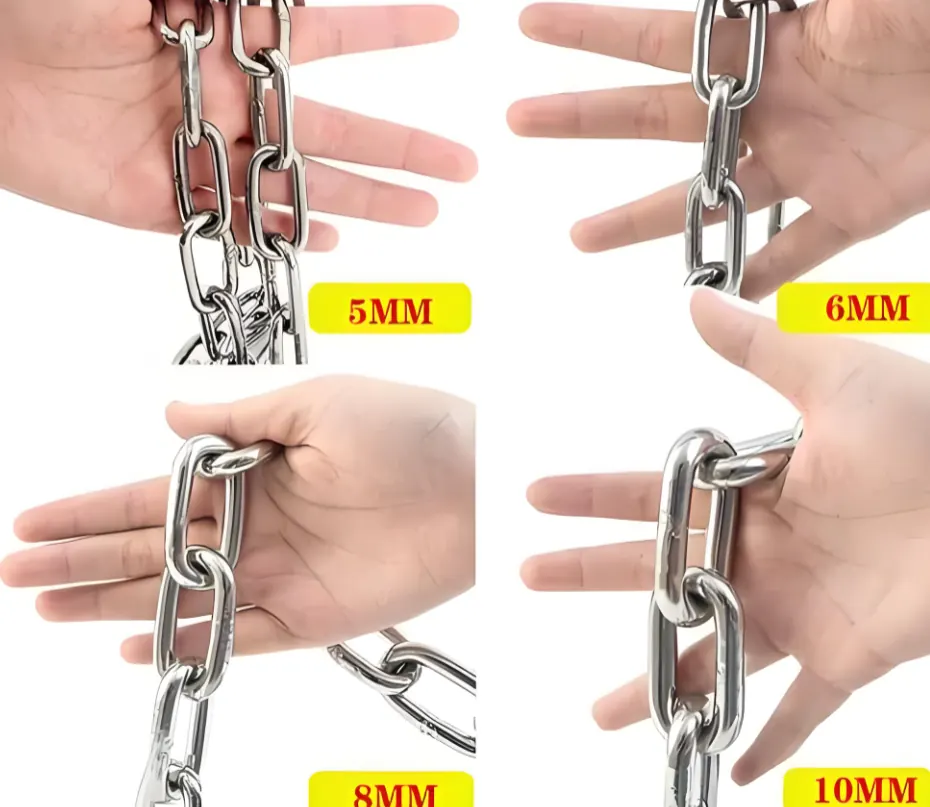
SS316 is generally the stronger candidate when choosing between 304 and 316 stainless steel chain for saltwater or coastal exposure, but “better” does not mean universally suitable. The engineering review should consider whether exposure is splash, tidal, submerged or intermittent; whether salt can dry and concentrate; whether crevices trap deposits; and whether the chain contacts carbon steel, aluminum or other metals.
For safety-critical, lifting, anchoring or equipment-calibrated applications, material selection is only one part of the specification. Confirm chain dimensions, manufacturing standard, working requirements, testing and inspection with the responsible engineer and equipment supplier.
SS304 vs SS316 Chain Cost and Service-Life Considerations
Buyers often ask whether the extra material cost of SS316 is justified. A useful comparison should include more than the initial unit price. Consider inspection frequency, cleaning access, replacement difficulty, production downtime and the consequence of corrosion at the installation point. A lower purchase price may not represent a lower lifecycle cost when the environment is aggressive or replacement access is difficult.
At the same time, specifying SS316 for every application is not automatically economical. In a controlled indoor environment with limited chlorides, SS304 may meet the project requirement. Ask suppliers to quote against the same dimensions, finish, documentation and packaging so the material comparison is meaningful. Current prices and lead times should always be confirmed at quotation; they should not be assumed from an older order.
Chain Dimensions and Material Grade Must Be Specified Together
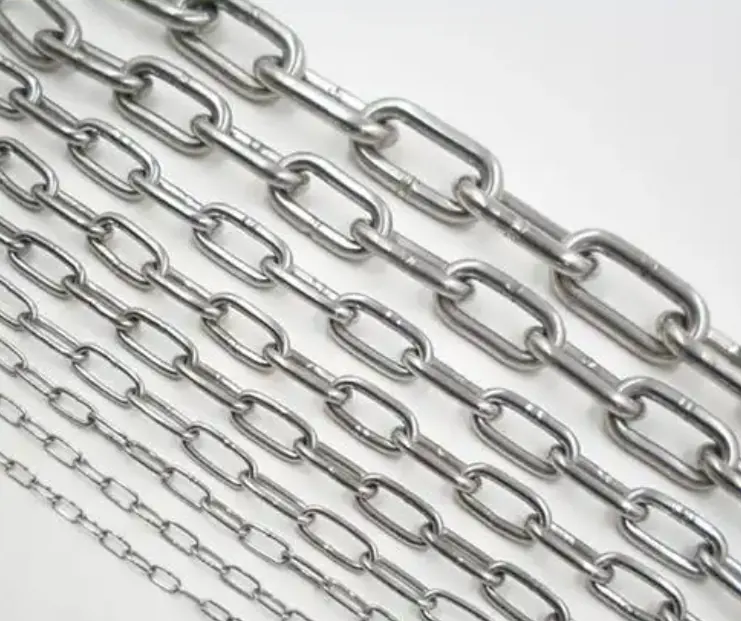
An order stating only “SS316 chain” is incomplete. The supplier also needs wire diameter, inside link length, inside width, pitch, total length, link count and chain form. Use our stainless steel chain dimension guide to record D, P and W correctly.
For a new OEM order, attach a drawing showing the measurement references. For a replacement order, provide measurements from several intact links, photos with a scale and the original equipment information where available.
Surface Condition, Welding and Fabrication
Material grade is not the only factor affecting corrosion behaviour. Welding heat tint, embedded iron contamination, rough surfaces and poorly cleaned crevices can reduce performance. Discuss the required surface condition, cleaning and any project-specific passivation expectations during quotation.
If a particular standard, finish or inspection method is required, state it in the RFQ. Do not assume that all “polished” chains use the same preparation process or achieve the same surface condition.
How to Verify SS304 or SS316 Chain
Write the exact grade and relevant standard designation in the order.
State which documents are required before quotation and production.
Agree on dimensions, appearance and any grade-verification method appropriate to the project.
Confirm how batch identification should appear on documents, packaging or labels.
A magnet test or visual comparison is not a reliable standalone method for distinguishing SS304 from SS316. Use an agreed verification approach when grade identity is important.
Maintenance and Inspection for Stainless Steel Chain
Stainless steel benefits from a clean surface and access to oxygen that supports its passive film. Regularly remove salt, dirt and process deposits using a cleaning method compatible with the application. Avoid carbon-steel brushes or contaminated tools that can transfer iron particles to the stainless surface.
Inspection intervals should reflect the severity of exposure and the consequence of failure. Look for staining, pitting, crevice attack, deformation, weld damage and dimensional wear. Pay particular attention to link contact points and sheltered areas where deposits remain. If corrosion or distortion is found, do not rely on cosmetic cleaning alone; assess whether the chain remains suitable for service under the applicable inspection procedure.
Record the installed grade, batch documents, dimensions and inspection results. This information makes future replacement enquiries more accurate and prevents a worn sample from becoming the only technical reference.
Common Purchasing Mistakes
State the exact grade, dimensions, application and required documents. “Marine grade” is not a complete specification.
SS304 and SS316 can look alike. Agree on documentation or verification before production.
Fabrication, heat tint, contamination and surface condition can influence corrosion performance.
Make sure suppliers quote the same grade, size, length, finish, testing and packaging scope.
Working requirements depend on the complete chain design, standard, manufacturing and test evidence.
Confirm dimensions, mating hardware and equipment requirements even when only the material changes.
Information to Send for a Chain Quotation
| RFQ item | Buyer information |
|---|---|
| Material | SS304, SS316 or request for engineering review |
| Environment | Indoor, outdoor, coastal, splash, submerged, washdown or chemical exposure |
| Dimensions | Wire diameter, inside length, inside width, pitch and outside dimensions |
| Chain form | Short link, long link, calibrated or drawing-based |
| Order details | Total length, link count, quantity, finish and packaging |
| Application | Connection, securing, equipment matching or another specified use |
| Documents | Required inspection, material or project-specific records |
For the full purchasing workflow, read how to specify stainless steel welded chain for OEM orders. You can also review our SS304 and SS316 stainless steel welded chain product page and related stainless steel rigging hardware.
To request a quotation, send the grade, dimensions, quantity, application, environment and documentation requirements through the Youjia Metals contact page.
Material Designation and Purchase Documents
Write the required grade on the drawing and purchase order instead of relying on a general description such as “stainless chain.” For an SS304 stainless steel chain, identify the accepted material designation or equivalent standard used by the project. Do the same for an SS316 stainless steel chain. If substitutions are allowed, state who has authority to approve them and what evidence must accompany the request.
Documentation should match the risk and traceability needs of the order. A commercial order confirmation may be enough for a general non-critical assembly, while another project may require a material certificate, heat reference, dimensional report or agreed verification method. These documents are not automatically included with every chain order. Buyers should list each required record in the RFQ so the supplier can confirm availability, cost and traceability before quotation.
Material documentation identifies the supplied grade, but it does not establish a working load, lifting approval or equipment compatibility. Mechanical performance, proof testing and application-specific certification are separate requirements. Keeping these requirements separate prevents a material certificate from being treated as evidence for a function it does not cover.
Link Geometry and Equipment Compatibility
Two chains made from the same stainless steel grade can behave differently in an assembly because their link geometry is different. Wire diameter, inside length, inside width, outside width and weld profile affect how a chain passes through guides, connects to fittings or engages with equipment. The material decision therefore cannot be separated from the dimensional drawing.
Measure the chain using an agreed method and reference points. Our guide to measuring stainless steel chain dimensions explains how buyers can record wire diameter, pitch and width. If the project compares compact and elongated links, review the short-link versus long-link stainless steel chain guide before approving a replacement.
A nominal size should not be assumed to fit a wheel, sprocket or windlass. Calibrated equipment can require controlled pitch and dimensional consistency. When DIN terminology appears in the enquiry, confirm what the equipment manufacturer requires and review our DIN 763 vs DIN 766 chain guide. The standard reference, material grade and dimensional drawing should agree with one another.
Welding, Secondary Operations and Surface Condition
Welded chain quality depends on more than the base alloy. The order should describe the required link shape, weld location, acceptable weld profile and any limits on sharp projections or visible grinding. If a fitting, end link, plate or connector is added, identify the joining method and the material of every component. Dissimilar materials or contaminated tooling can change corrosion behaviour even when the chain links are stainless steel.
Surface terms such as polished, bright, matte, cleaned or passivated should not be used as interchangeable descriptions. A visual finish controls appearance; a cleaning or passivation requirement addresses surface condition through a defined process. State the required outcome, reference sample or applicable procedure. When appearance matters, request an approved sample under representative lighting rather than relying only on a finish name.
Fabrication can leave heat tint, scale, abrasive residue or transferred iron on the surface. Inspection criteria should identify whether these conditions are acceptable and how they will be evaluated. The required cleaning route depends on the agreed process and application; it should not be invented after production or assumed from the phrase “marine grade.”
Sample Approval and Production Control
A sample is useful when the buyer must confirm fit, link movement, surface appearance or packaging before a larger order. The sample request should use the same drawing revision, material designation and key dimensions intended for production. If a prototype is made by a different route, record the differences so it is not mistaken for a complete mass-production approval.
During sample review, check dimensions at the agreed points, inspect weld areas and test the chain in the actual non-safety-critical assembly where appropriate. Record acceptance results and any approved deviations. Photographs can support the record, but they do not replace dimensional data or material documentation.
For repeat production, define what must remain consistent: material, wire size, pitch, internal width, finish, total length, end configuration and packaging. The supplier should work from the approved revision. The buyer should communicate drawing changes before production and avoid using an informal email description that conflicts with the purchase order.
Cleaning, Inspection and Maintenance Planning
Choosing SS316 instead of SS304 does not remove the need for cleaning and inspection. Salt, process deposits and dirt can remain in link contact areas and sheltered weld regions. The maintenance plan should consider exposure frequency, drainage, accessibility and whether deposits can dry and concentrate on the chain.
Inspection should look for staining, pitting, crevice attack, deformation, wear at link contact points, damaged welds and changes in mating hardware. The appropriate inspection interval depends on the application and environment. A supplier cannot set a universal interval without knowing the system, operating conditions and consequence of failure.
If corrosion or wear is discovered, investigate the environment and assembly rather than assuming that a simple material upgrade will solve every cause. Review cleaning chemicals, contact with other metals, trapped moisture, temperature, loading and movement. Replacement decisions for safety-related equipment must follow the responsible engineer and applicable rules.
Packaging, Identification and Bulk Supply
Packaging requirements affect both handling and traceability. Specify whether chain should be supplied by piece, coil, bundle or custom length, and state the acceptable unit length and quantity tolerance. Ask for separation or protective wrapping when polished surfaces must be protected from abrasion during transport.
Labels can identify the purchase order, material grade, nominal size, length, quantity and drawing revision. If heat or batch traceability is required, include it in the RFQ and confirm how labels relate to the supplied documentation. Do not assume that every bulk package carries the same level of traceability.
For export orders, provide destination, package handling restrictions and any requested pallet or case format. Lead time should be confirmed after material, dimensions, quantity, inspection and packaging are reviewed. Avoid promises of guaranteed stock or fixed delivery before the technical specification is approved.
Final Buyer Decision Checklist
Before approving SS304 or SS316 stainless steel chain, confirm that the material decision and the chain specification describe the same product. Check the exact grade designation, link drawing, dimensional tolerances, total length, end-link arrangement, surface requirement, quantity and packaging. Identify whether the chain will be used indoors, outdoors, near the coast, in direct splash, under immersion or around process chemicals. Record how often the assembly can be cleaned and inspected.
Next, separate corrosion requirements from mechanical and equipment requirements. A more corrosion-resistant grade does not automatically provide the correct pitch, working requirement or sprocket fit. For calibrated equipment, confirm the original manual, mating geometry and approval process. For safety-related service, state the applicable standard, required test evidence and inspection responsibility before the supplier quotes.
Finally, compare quotations on an equal basis. Confirm that every supplier is quoting the same grade, dimensions, finish, documentation, testing and delivery scope. If an item is not confirmed, mark it clearly as subject to drawing review rather than accepting an assumption. A complete RFQ makes the SS304-versus-SS316 decision easier to evaluate and reduces the risk of receiving a visually similar but technically unsuitable chain.
References and Technical Confirmation
This selection guide is based on general stainless-steel corrosion principles. For project decisions, consult the applicable material standard and service requirements. Useful technical references include the British Stainless Steel Association guidance on 304 and 316 in seawater and worldstainless.
Frequently Asked Questions
Is SS316 stainless steel chain always better than SS304?
No. SS316 generally offers better chloride corrosion resistance, but SS304 may be appropriate for less aggressive environments. Select the grade from actual exposure, maintenance and project requirements.
Is SS316 chain completely rust-proof in seawater?
No. SS316 is not corrosion-proof. Crevices, deposits, temperature, stagnant seawater and contamination can still cause corrosion.
Can I identify SS304 and SS316 chain by appearance?
No. They can look very similar. Use purchasing records and an agreed material-verification method when grade identity matters.
Which stainless chain should I use near the coast?
SS316 is commonly evaluated for coastal and chloride exposure, but distance from the sea alone is not enough. Consider salt deposition, cleaning, shelter, temperature and contact materials.
Does SS316 chain have a higher working load than SS304?
Grade name alone does not establish working load. Link dimensions, manufacturing route, standard, heat treatment and testing must also be confirmed.
What information is needed for an SS304 or SS316 chain quotation?
Provide grade, D/P/W dimensions, chain type, total length, quantity, application, environment, finish, packaging and documentation requirements.
Is SS316 worth the additional cost?
It may be justified where chloride exposure, cleaning difficulty or replacement consequences increase lifecycle risk. For mild environments, SS304 may be sufficient. Compare the complete project requirement rather than material price alone.
Can I use a magnet to distinguish SS304 from SS316?
No. Magnetic response can be affected by cold working and is not a reliable standalone grade-identification method. Use agreed documentation or suitable material verification.
Does polishing make SS304 equivalent to SS316?
No. Surface condition can influence corrosion behaviour, but it does not change SS304 into SS316 or add molybdenum. Grade and finish must be specified separately.
What should be inspected after installation?
Inspect for deposits, staining, pitting, crevice corrosion, deformation, weld damage and dimensional wear according to the application’s inspection procedure.