DIN 763 vs DIN 766 Stainless Steel Chain
A practical guide to long-link, calibrated and application-specific chain selection for industrial buyers.
Buyers comparing DIN 763 vs DIN 766 stainless steel chain should start with the mating equipment and the required dimensions, then specify material grade, finish, total length, testing and documentation separately. A chain may look similar in a product photograph yet be unsuitable because its pitch or link width does not match the equipment. Likewise, ordering “DIN 766 stainless steel” without a grade such as SS304 or SS316 leaves an important material question unanswered.
This guide explains how the standards differ, what calibrated chain means, when long-link chain may be preferred, which measurements belong in an RFQ and how to avoid confusing dimensional standards with load certification. It is written for procurement teams who need a clear technical conversation with a chain supplier, not a universal approval for safety-critical use.
What Are DIN 763 and DIN 766 Chains?
DIN 763 and DIN 766 are commonly referenced when buyers describe round steel link chain geometry. DIN 763 is associated with long-link, tested, non-calibrated chain. “Long link” means the inside length is relatively long compared with the wire diameter. “Non-calibrated” means the chain is not defined primarily for precise engagement with a pocket wheel or matching mechanism in the way a calibrated chain is.
DIN 766 is associated with calibrated, tested round steel link chain. Calibrated chain is manufactured with tighter control of the dimensions that affect engagement. It may be requested where the chain must pass through, sit in or interact with a matching device. That does not mean every item sold under a DIN 766 description will fit every windlass, wheel or machine. Equipment drawings, pitch, inside dimensions and tolerances still need confirmation.
Both descriptions are separate from the base alloy. A supplier may discuss stainless versions in SS304 or SS316, but the material designation and the dimensional standard must appear as separate RFQ fields. If a drawing, equipment manual or existing chain provides a different requirement, that project document should govern the purchasing discussion.
DIN 763 vs DIN 766 Comparison
| Selection point | DIN 763 chain | DIN 766 chain |
|---|---|---|
| General form | Long-link round steel chain | Calibrated round steel link chain |
| Dimensional emphasis | Longer link geometry; not primarily calibrated for mechanical engagement | Controlled dimensions for more consistent engagement with compatible equipment |
| Typical buying reason | General connection, suspension, barrier, retaining or industrial hardware applications subject to project review | Applications where pitch and link consistency must match an approved wheel, pocket or mechanism |
| Material grade | Must be specified separately, such as SS304 or SS316 when available | Must be specified separately, such as SS304 or SS316 when available |
| Corrosion resistance | Depends on alloy, fabrication, surface condition, environment and maintenance—not the DIN number alone | |
| Load information | Must come from the applicable product standard, supplier documentation, test scope and engineering decision | |
| Equipment fit | Usually evaluated from dimensions and attachment needs | Requires confirmation against the exact mating equipment and tolerance requirements |
The table is a selection summary rather than a dimensional chart. Published size tables can differ by supplier, material route and declared compliance. Send the required dimensions or the original equipment reference and ask the supplier to confirm the proposal in writing.
Why Link Calibration Matters
Chain links that interact with mechanical equipment do more than carry tension. They enter a pocket, contact a wheel, change direction and transfer motion through repeating geometry. Small variations in pitch, inside length, outside width or weld profile can change how smoothly the chain seats. If the chain rides high, jams, skips or contacts the equipment unevenly, wear may increase and the assembly may not function as intended.
A calibrated chain is produced with dimensional consistency as a central requirement. That does not remove the need for incoming inspection. Buyers should define which dimensions are critical, how they will be measured and whether a specified number of consecutive links must be checked. For replacement work, measurements from a worn chain can be misleading because pitch may have increased and contact areas may have changed. The original manual, drawing or an unworn reference is usually more useful.
Calibration also does not create universal compatibility. Two systems described with the same nominal chain diameter can have different pocket geometry or tolerance expectations. Before ordering DIN 766 chain, provide the equipment brand and model when permitted, the existing chain designation, photographs of the wheel or pocket, and the required dimensional table. The supplier can then confirm what is within its manufacturing scope and what remains subject to a trial fit.
When DIN 763 Long-Link Chain May Be Considered
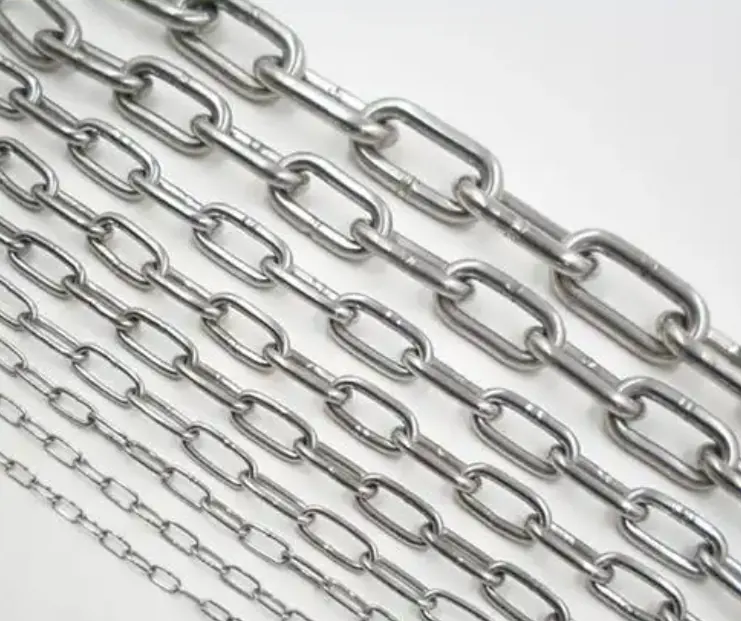
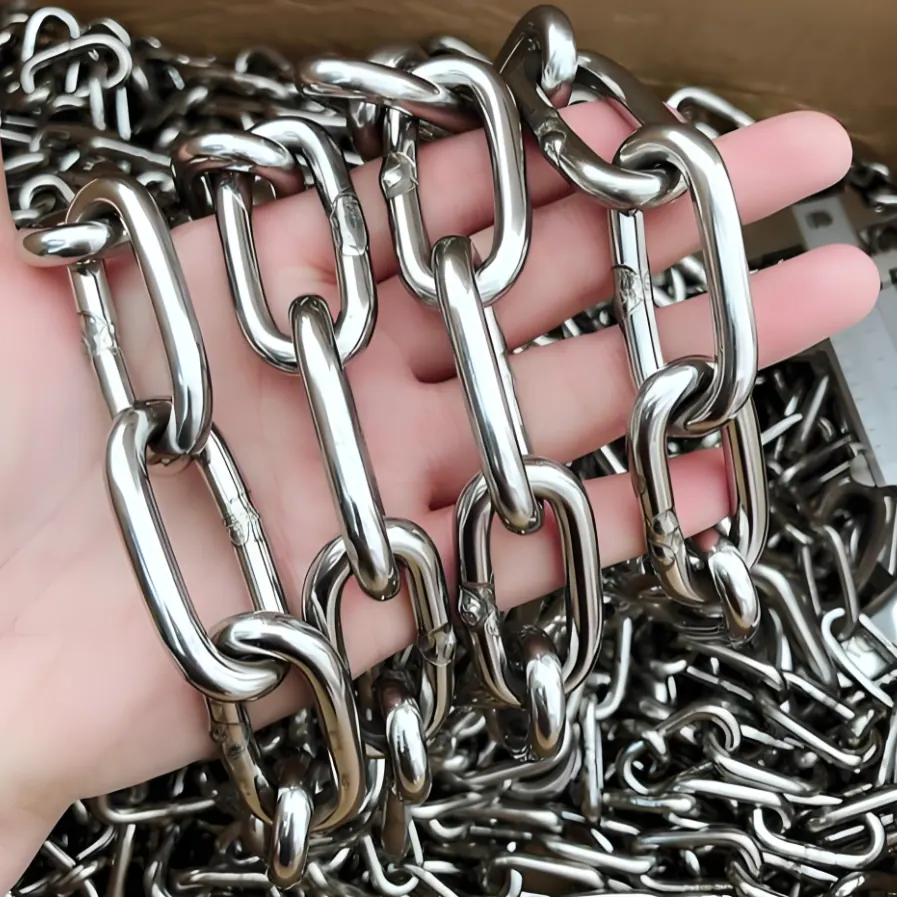
DIN 763 long-link chain is often considered when a longer internal opening is useful for connecting hardware, passing fasteners or reducing weight for a given overall length. The extended link can provide more room for hooks, pins, shackles or attachment points, but suitability depends on the actual geometry of those components. The longer shape also changes how the chain bends, stacks and contacts adjacent hardware.
General industrial examples may include barriers, retaining assemblies, equipment guards, hanging hardware, architectural connections and custom assemblies. These are application categories, not automatic approvals. The buyer must state whether the chain is decorative, positioning, retaining, load-supporting or part of a safety-related system. If a working requirement applies, it should be documented independently from the link style.
Long-link chain should not be selected for a calibrated wheel merely because the nominal wire diameter appears correct. A long pitch may not seat in equipment designed for shorter calibrated links. Conversely, a buyer who does not need wheel engagement may find that a calibrated chain adds unnecessary restrictions. The correct decision follows the interface: identify what the chain touches, how it moves and which dimensions control the assembly.
When DIN 766 Calibrated Chain May Be Considered
DIN 766 calibrated chain may be evaluated when chain geometry must repeat consistently for a compatible pocket wheel, windlass or other mechanism. Procurement should begin with the equipment requirement rather than with a generic web table. Record the nominal diameter, pitch, inside length, inside width, outside width and any required tolerance across multiple links.
For a new system, the equipment designer should define the approved chain. For a replacement, use the equipment manual, original certificate or manufacturer information where available. If only a sample is available, select unworn links, clean them and measure several locations. Wear, elongation, deformation and corrosion can change dimensions. A supplier cannot reliably reverse-engineer the original requirement from one visibly worn link.
Ask whether a pre-production sample or short trial length can be reviewed before mass production. Define who will approve the fit and what the acceptance criteria are. A trial can reduce risk, but it does not replace the engineering review or required tests. If the application involves anchoring, lifting or personnel safety, the responsible authority must also confirm material, grade, traceability, proof testing and inspection obligations.
DIN 763 and DIN 766 Chain Dimensions
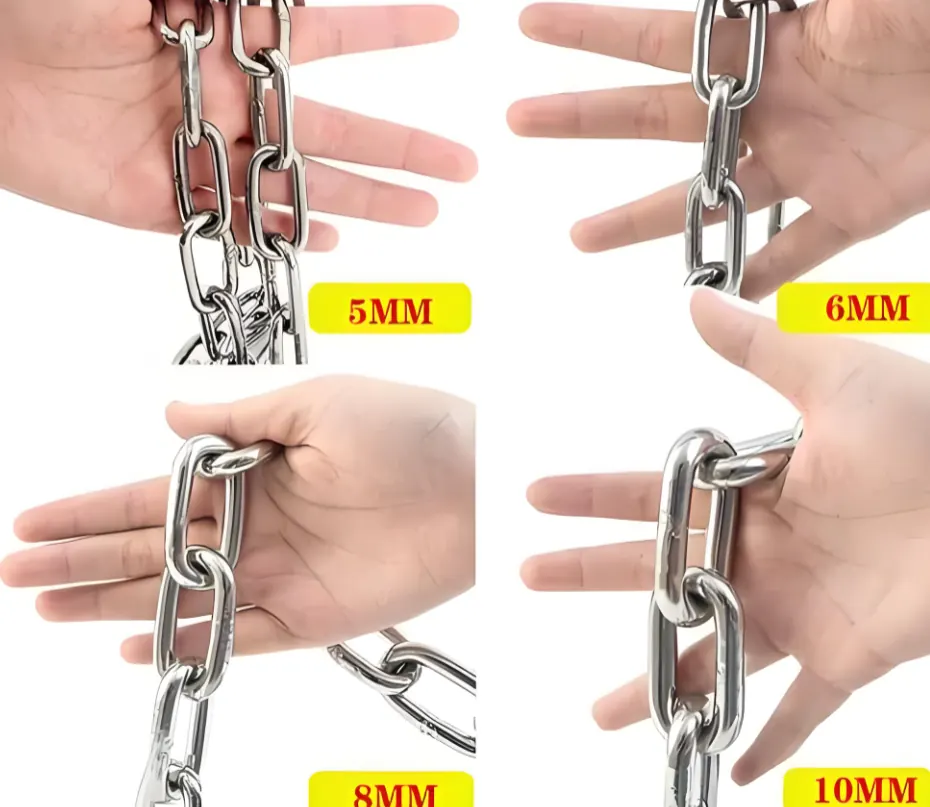
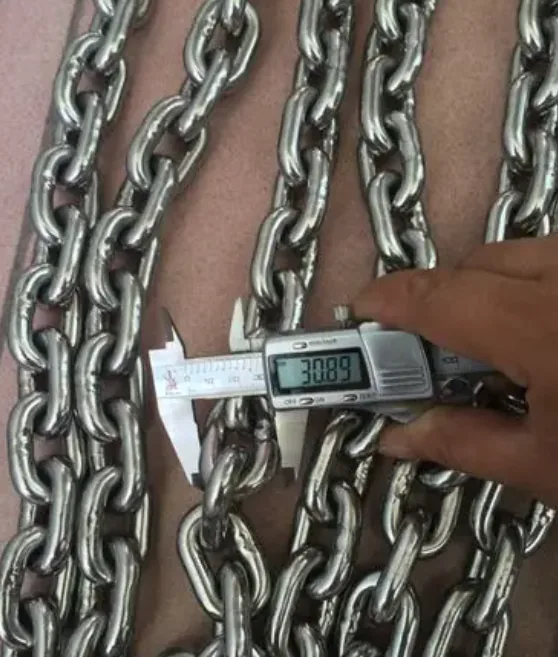
The most useful chain drawing identifies the wire diameter and the dimensions that describe the link opening and repeat pitch. On Youjia Metals guides, buyers will often see D, P and W used as practical reference symbols. Always include a marked sketch because symbol conventions can differ between drawings and catalogues.
| Dimension | What to record | Why buyers should confirm it |
|---|---|---|
| Wire diameter (D) | Diameter of the round bar or wire forming the link | Affects link geometry, weight and the complete mechanical specification |
| Pitch (P) | Repeat distance between corresponding points on adjacent links | Critical for calibrated equipment and multi-link fit |
| Inside length | Clear internal length of one link | Controls space for mating hardware and helps distinguish link proportions |
| Inside width (W) | Clear internal width at the measurement location defined on the drawing | Affects connector clearance and equipment engagement |
| Outside width | Maximum external width of the link | Important for guides, channels and confined assemblies |
| Length over multiple links | Measured span across an agreed number of consecutive links under an agreed condition | Provides a better check of accumulated pitch than one link alone |
| Total chain length | Finished length, link count or both, including end-link requirements | Prevents disputes caused by different length measurement methods |
Our detailed stainless steel chain dimensions guide explains D, P and W measurement practice. When asking for DIN 763 or DIN 766 chain, attach that dimensional information to the RFQ instead of relying on a product name alone.
SS304 and SS316 Material Options
DIN 763 and DIN 766 describe chain-related requirements; they do not mean SS304 or SS316. If stainless steel is required, state the grade clearly. SS304 is commonly evaluated for general industrial, indoor and moderate outdoor service. SS316 contains molybdenum and generally offers better resistance to chloride-related pitting than SS304, so it is often considered for coastal, marine and demanding washdown environments.
Neither grade is corrosion-proof. Salt deposits, crevices, stagnant moisture, elevated temperature, contamination from carbon steel tools and contact with dissimilar metals can change performance. A polished appearance is not proof of grade. Specify the required material documentation and any agreed grade-verification method before production.
Material choice also does not establish working load or equipment fit. An SS316 chain can have the wrong pitch for a mechanism, and an SS304 chain can be dimensionally correct while being unsuitable for the environment. Treat grade, geometry, mechanical requirement, finish and documentation as separate approval points. For a detailed corrosion comparison, see SS304 vs SS316 stainless steel chain.
Short Link, Long Link and Calibrated Are Not Interchangeable Terms
“Short link” and “long link” describe link proportions. “Calibrated” describes dimensional control for consistent engagement. These terms answer different questions. A short-looking chain is not automatically DIN 766, and a long-link chain is not automatically DIN 763 unless the supplier declares the relevant specification and the product matches it.
Procurement teams sometimes copy a competitor’s wording into an RFQ, creating a combination that does not match the equipment. The safer process is to record the standard shown in the original documentation, add the critical dimensions and state the application. If the standard is unknown, say so. Ask the supplier to propose a drawing-based chain rather than assigning a DIN number without evidence.
Our article on short-link vs long-link stainless steel chain focuses on geometry and buyer selection. Use that guide together with this standards comparison when planning a new OEM assembly.
Surface Finish, Welding and Corrosion Control
Stainless chain performance depends on more than alloy designation. Link forming, welding, heat tint removal, cleaning and surface condition can influence the final product. A buyer who requires a particular finish should define the desired appearance, cleaning expectation and corrosion environment instead of using the word “polished” without a reference.
Mechanical polishing can make the surface brighter and smoother, while passivation is a chemical treatment intended to remove free iron contamination and support the passive surface condition. These are different processes. If passivation, pickling, electropolishing or a particular roughness is required, identify the applicable specification and acceptance method. Do not assume that a standard chain quotation includes every treatment.
Inspect weld areas, because incomplete cleaning or transferred iron can lead to staining even when the base material is stainless steel. Ask for consistent weld profile and define whether sharp projections, discoloration or visible grinding marks are acceptable. For decorative or customer-facing applications, approve a representative finish sample before production.
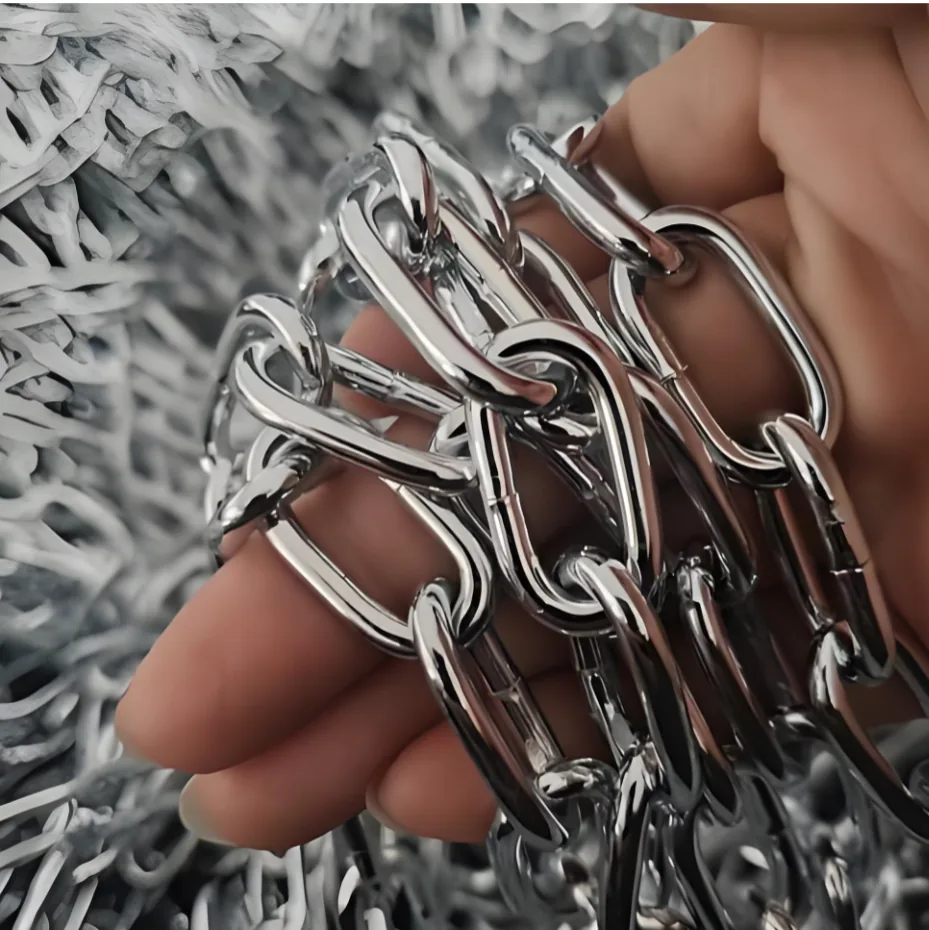
Applications and Selection Boundaries
Long-link chain may offer useful clearance for pins, hooks and custom attachments. Confirm the actual connection geometry.
Calibrated chain may be required where pitch and link shape interact with a compatible wheel or mechanism.
SS316 may be considered for chloride exposure, but material choice does not replace dimensional and load review.
Define whether the chain is decorative, positioning, restraining or safety-related before selecting a specification.
Use the machine drawing, mating component geometry and inspection plan as the main purchasing references.
Do not copy dimensions from one worn link. Use original documentation or multiple unworn measurements.
The application name alone cannot approve a chain. “Marine chain,” “anchor chain,” “lifting chain” and “industrial chain” can imply very different standards. State the function and consequence of failure. Where a regulatory or equipment-specific requirement applies, obtain confirmation from the responsible engineer or manufacturer.
Working Load, Proof Test and Breaking Force
Working load, proof test and breaking force are not interchangeable. A working load is an allowed service value defined under a particular product specification and design context. Proof testing applies a defined test force to demonstrate conformity with the relevant requirement. Breaking force describes failure under a test method and must not be treated as an allowable service load.
A web listing that shows one strength value without the chain standard, material condition, test method and safety context is not enough for engineering selection. Ask for the supplier’s declared product specification and which values are supported by test records. Confirm whether the test applies to every finished chain, a sample from a batch or a material coupon.
For lifting, overhead suspension, anchoring or safety restraints, additional standards and certification may apply. Do not select DIN 763 or DIN 766 chain solely because the nominal diameter resembles an existing item. The complete assembly—including connectors, end links, fasteners and attachment points—must be evaluated.
How to Check an Existing Chain
When replacing a chain without reliable paperwork, begin with documentation search. Check the machine manual, drawing register, purchase history, packaging labels and maintenance records. Photograph any markings and the mating equipment. Record the chain’s function and whether the system still operates normally.
Clean several representative links before measuring. Use suitable tools to record wire diameter, inside length, inside width, outside width and length over multiple links. Measure more than one location and separate visibly worn links from relatively intact links. If the chain engages with a wheel, document the wheel pockets and any signs of riding, skipping or uneven contact.
Material grade cannot be confirmed by color. If grade matters, use traceable documents or an agreed material verification method. Do not assume that a non-magnetic response proves SS316. Cold work and fabrication can affect magnetic response in austenitic stainless steels.
After collecting evidence, send the supplier a replacement brief that clearly separates measured values from required values. A measured worn pitch is not necessarily the original pitch. Mark uncertain data and request a drawing for approval before manufacturing.
OEM and Wholesale Purchasing Process
A practical OEM process begins with an RFQ package rather than a short message asking for “DIN stainless chain price.” Include the drawing, standard, material grade, quantity, total length, finish, end configuration, application and destination. State whether the chain is a one-time replacement, repeated production item or distributor stock line.
1. Technical review
The supplier checks whether the declared standard, dimensions, material and quantity fit its manufacturing scope. Questions are resolved before pricing. Unknown requirements should remain marked for confirmation rather than being filled with assumptions.
2. Quotation and scope comparison
Compare quotations on the same basis. One price may exclude testing, material documents, special finish, cutting, tags or export packaging. Confirm lead time only after the specification is stable.
3. Drawing and sample approval
Approve the dimensional drawing and, where appropriate, a representative sample or trial length. Define who signs off equipment fit. Do not use visual similarity as the only acceptance criterion.
4. Production and inspection
Agree on dimensional sampling, visual checks, document package and identification. Critical equipment-fit dimensions should appear on the inspection record.
5. Packaging and delivery
Specify coil length, reel, bag, carton, pallet or wooden case requirements. Protect finished stainless surfaces from contamination and moisture during storage and transport.
RFQ Checklist for DIN 763 or DIN 766 Chain
| RFQ field | Information to provide | Why it matters |
|---|---|---|
| Standard | DIN 763, DIN 766 or drawing-based requirement | Defines the intended chain family and prevents mixed terminology |
| Material | SS304, SS316 or another confirmed grade | Controls alloy selection and corrosion discussion |
| Dimensions | D, pitch, inside length, inside width, outside width and tolerance | Supports equipment fit and incoming inspection |
| Finished length | Length, link count, number of pieces and length tolerance | Clarifies how each chain is supplied |
| End arrangement | Standard end links, special links, connectors or drawing reference | Prevents unusable end configurations |
| Application | Equipment interaction, environment, movement and consequence of failure | Helps identify missing technical requirements |
| Testing | Applicable test standard, sampling, force and required report | Avoids vague claims about strength |
| Surface | As-produced, cleaned, polished, passivated or project-specific | Sets appearance and treatment expectations |
| Documentation | Material certificate, dimensional report, inspection records or other agreed files | Defines traceability and approval evidence |
| Packaging | Coil, reel, bag, carton, pallet, case, labels and destination | Supports handling, storage and distributor needs |
For a complete purchasing workflow, read how to specify stainless steel welded chain for OEM orders. That guide explains the information buyers should provide before requesting a firm quotation.
Common Specification Mistakes
DIN 766 does not replace SS304 or SS316. Write the chain standard and alloy separately.
Pitch, inside dimensions, outside width and tolerances also control equipment compatibility.
Wear can increase pitch and change link shape. Use original records or multiple measurements.
Short link and calibrated describe different characteristics. Require declared conformity and dimensions.
Confirm whether material documents, testing, cutting, finish and packaging are included.
A DIN number or stainless grade alone does not establish lifting suitability or a working load.
Inspection Before Shipment
Inspection should reflect the purchase specification. A typical non-safety-critical OEM plan may include material-document review, wire-diameter checks, link dimensions, length over multiple links, total length, visual weld inspection, surface condition, quantity and packaging labels. The buyer and supplier should agree on sampling and acceptance before production.
For calibrated chain, pay particular attention to the dimensions that control equipment engagement. The measurement method, link count, tension condition and instrument should be defined. If a trial fit is required, identify the approved equipment or gauge and retain the result with the order record.
Visual inspection should check link shape, weld consistency, sharp projections, distortion, contamination and treatment appearance. Cosmetic standards need a reference sample or clear written criteria. A bright finish does not prove material grade, dimensional compliance or strength.
Packaging inspection matters for stainless products. Carbon-steel debris, wet wrapping and uncontrolled contact during transport can create staining or damage. Confirm clean packaging materials, chain separation where needed, moisture protection, package weight, labels and handling instructions.
Packaging, Bulk Supply and Distributor Orders
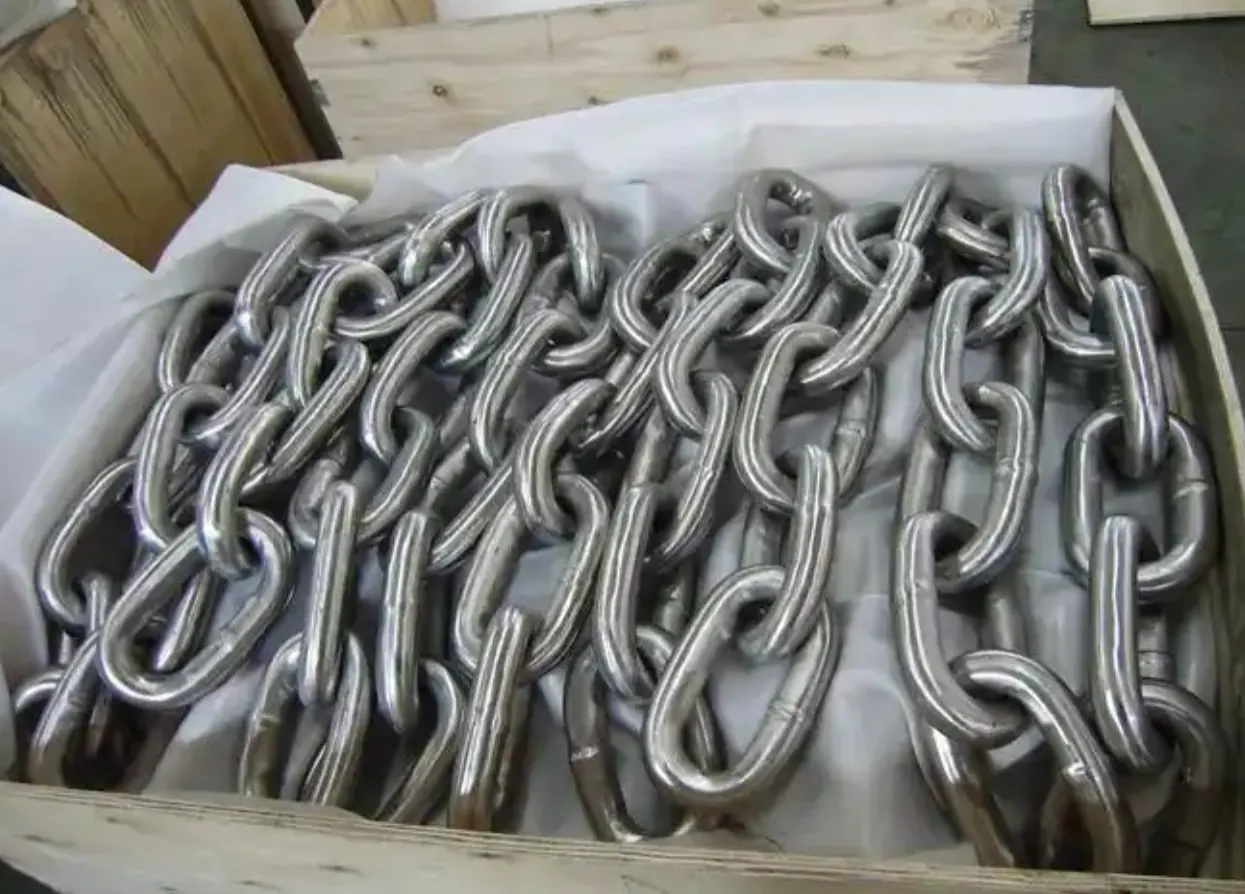
Bulk buyers should define how the chain will be handled after arrival. Continuous coils may suit cutting operations, while fixed lengths may reduce downstream labor. Reels can improve dispensing for smaller sizes. Heavy coils may require pallets or wooden cases and a defined maximum package weight.
Distributor labels can include product name, declared material, nominal size, length, batch reference and purchase order. Do not print a test or certification claim unless it is supported by the agreed product scope. When several similar sizes are shipped together, use clear package identification to prevent warehouse mixing.
Ask the supplier to confirm production and delivery lead time after technical review. Stainless raw-material availability, drawing approval, tooling, testing and packaging can affect schedule. Avoid unsupported promises such as guaranteed stock or fixed delivery without an approved specification.
How DIN 763 and DIN 766 Fit the Wider Chain Specification
A reliable chain order combines several layers of information. The DIN reference identifies a dimensional or product family. The material designation identifies the alloy. The drawing defines project dimensions and tolerances. The application statement describes the environment and mechanical interface. Testing and documentation define the evidence required for acceptance.
Leaving out any layer can cause a technically incomplete quotation. A supplier may price the nearest catalogue item while the buyer expects an equipment-matched chain. Conversely, an over-specified RFQ may demand unnecessary treatment or documents for a simple retaining chain. Good procurement does not maximize requirements; it makes every requirement clear and relevant.
When in doubt, ask for a drawing-based review. Share the information you know, label measurements taken from old samples and state what must be confirmed by engineering. This approach is more reliable than forcing a DIN designation onto an unknown chain.
Related Stainless Steel Chain Resources
Use these pages to build a complete specification without repeating the same question in one overloaded RFQ:
- Stainless steel welded link chain for the main product and OEM enquiry route.
- How to measure D, P and W for dimension references.
- Short link vs long link chain for geometry selection.
- SS304 vs SS316 chain for material selection.
- Stainless steel chain for marine use for chloride-exposure questions.
- Stainless steel rigging hardware for related connection products.
Send the standard, grade, D/P/W dimensions, total length, quantity, application, testing and packaging requirements through the Youjia Metals contact form. Unknown items can be marked for drawing review.
Final Buyer Decision Checklist
Choose DIN 763 when the project genuinely calls for a tested, non-calibrated long-link chain and the geometry suits the connection. Choose DIN 766 when the approved system requires calibrated chain and the proposed dimensions match the compatible equipment. Do not switch between them because one is cheaper or more available without reviewing the interface.
Before issuing the purchase order, confirm the declared standard, stainless grade, wire diameter, pitch, inside length, inside width, outside width, finished length, end arrangement and tolerance. Add the service environment, finish, inspection, testing, document and packaging requirements. Where equipment engagement matters, approve a drawing and trial process.
Finally, separate commercial decisions from technical approval. MOQ, lead time and packaging can be negotiated after the specification is stable. Safety, fit and compliance cannot be inferred from a product title. A complete RFQ gives the supplier enough information to quote the intended chain and gives the buyer a measurable basis for acceptance.
Frequently Asked Questions
What is the main difference between DIN 763 and DIN 766 chain?
DIN 763 is associated with tested, non-calibrated long-link round steel chain. DIN 766 is associated with calibrated, tested round steel link chain. The selection depends on geometry, equipment fit and the complete project specification.
Is DIN 766 always a short-link chain?
Do not use “short link” and “calibrated” as interchangeable terms. Confirm the declared standard and actual dimensions from the supplier drawing.
Does DIN 766 mean the chain is SS316?
No. DIN 766 is not a stainless material grade. Specify SS304, SS316 or another required material separately.
Can DIN 763 chain run on a windlass?
Do not assume so. A windlass requires chain geometry approved for that exact equipment. Confirm the manufacturer’s chain requirement and dimensions.
Is DIN 766 stainless steel chain suitable for lifting?
The DIN designation and stainless grade alone do not establish lifting suitability. Use only chain and assemblies approved, rated and documented for the applicable lifting requirement.
How should I measure a replacement chain?
Measure wire diameter, pitch, inside length, inside width, outside width and length over several links. Use original equipment documents where possible because worn links may not represent original dimensions.
Which grade is better for marine use, SS304 or SS316?
SS316 is generally more resistant to chloride-related pitting than SS304, but it is not corrosion-proof. Confirm the actual exposure, maintenance, geometry and engineering requirements.
What should I send for an OEM quotation?
Send the standard or drawing, material grade, all critical dimensions, total length, quantity, application, finish, testing, documentation, packaging and destination requirements.