
Precision Stamping and Fastener Solutions for the Electric Vehicle Industry
High-performance EV battery fasteners, custom busbars, and automotive hardware components engineered for the demanding requirements of electric vehicle manufacturing.
The Rise of the EV Industry: Precision Manufacturing for a New Era
As a hardware manufacturer with over 15 years of experience supplying the automotive and energy sectors, we’ve witnessed the electric vehicle revolution firsthand. The global EV market is projected to exceed 40 million units by 2030 — and behind every vehicle rolling off the production line are thousands of precision-engineered components that most people never see. We know this because we make them.
At Youjia Metals, our factory floor has evolved dramatically over the past decade to meet the demands of EV manufacturing. The components we produce today — EV battery fasteners, custom busbars, thermal management hardware, and specialized automotive hardware components — are fundamentally different from the parts we were making ten years ago. The tolerances are tighter, the materials are more specialized, and the quality requirements are exponentially more demanding.
Unlike traditional vehicles, electric vehicles rely heavily on high-voltage electrical systems, sophisticated battery management systems, and lightweight structural components. These systems require EV battery fasteners that can maintain electrical conductivity while withstanding extreme thermal cycling, vibration, and corrosive environments. In our production experience, a single failed connection in a battery pack can compromise vehicle safety, range, and reliability — which is why we’ve invested heavily in the processes and quality systems needed to prevent that from happening.
The transition to electric mobility has created entirely new categories of components that didn’t exist in traditional automotive manufacturing. Battery enclosures require specialized fastening systems that must be both electrically conductive and thermally stable. Power distribution units need custom busbars capable of handling hundreds of amps while maintaining minimal resistance. Charging ports and inverters demand precision stamping for electronics that can withstand thousands of connection cycles without degradation. We’ve developed dedicated production lines for each of these categories, and our engineers have accumulated deep process knowledge that we apply to every new project.
What makes EV manufacturing particularly challenging from our perspective is the intersection of multiple engineering disciplines. A battery connection system we produce must simultaneously address electrical engineering concerns (conductivity, resistance, insulation), mechanical engineering requirements (vibration resistance, thermal expansion management), and materials science challenges (corrosion prevention, weight optimization). This is exactly why EV battery fasteners and related components require manufacturing partners who understand these complex, multi-domain requirements — not just metal fabricators who can follow a drawing.
The industry’s push toward higher energy density batteries has intensified these challenges on our shop floor. As battery packs become more compact and powerful, the current densities within connection systems increase proportionally. This places enormous stress on automotive hardware components, requiring materials with exceptional conductivity and manufacturing processes that can maintain tight tolerances at scale. Our precision stamping for electronics capabilities are specifically optimized to meet these demanding specifications — we’ve built our processes around the unique needs of EV production, not the other way around.
From Our Factory Floor: The average electric vehicle contains approximately 30% more fasteners than a comparable internal combustion vehicle, with many of these being specialized EV battery fasteners designed for high-voltage applications. We’ve seen our EV-related orders grow by over 200% in the past three years, and we’ve expanded our production capacity accordingly to meet this demand.
Quality standards in the EV industry are extraordinarily stringent, and we’ve invested significantly to meet them. Our IATF 16949 certification is just the starting point — we’ve implemented statistical process control, advanced product quality planning (APQP), and production part approval processes (PPAP) that go far beyond traditional automotive requirements. Every high-conductivity materials shipment that enters our facility is tested and tracked, and every finished part is inspected against the specific requirements of each customer’s application.
Looking ahead, we’re preparing for the next wave of EV technologies. Solid-state batteries, wireless charging systems, and vehicle-to-grid (V2G) technologies will introduce new categories of automotive hardware components with unprecedented performance requirements. We’re already investing in the capabilities needed to manufacture these next-generation components, ensuring that our customers can rely on us as their EV programs evolve.
Critical Components We Manufacture for Electric Vehicles
Over the years, our production lines have evolved to cover the full spectrum of EV component categories. Each component type presents unique manufacturing challenges that we’ve learned to master through hands-on experience and continuous process improvement. Below, we share what we’ve learned producing each category — the pitfalls, the critical parameters, and the process know-how that makes the difference between a part that works and one that excels.
Battery Connection Systems and EV Battery Fasteners
The battery pack represents the heart of any electric vehicle, and its connections are among the most critical automotive hardware components we manufacture. EV battery fasteners must accomplish what seems contradictory: they must create extremely low-resistance electrical connections while simultaneously providing robust mechanical retention that can withstand years of thermal cycling, vibration, and mechanical stress. Getting this right is something we’ve refined through thousands of production runs.
Modern EV battery packs typically operate at voltages between 400V and 800V, with current flows during fast charging reaching 500A or higher. At these power levels, even minor increases in contact resistance generate significant heat — heat that can degrade connections over time and potentially create safety hazards. This is why EV battery fasteners we produce are engineered with such precision, often requiring surface finishes measured in micro-inches and contact pressures specified within narrow tolerances. Our quality team has developed proprietary inspection protocols specifically for these high-reliability connections.
In our experience, the materials science behind these components is where many suppliers fall short. While copper remains the primary conductor due to its excellent conductivity, the mechanical components often use specialized alloys that balance conductivity with strength and corrosion resistance. Some EV battery fasteners we produce incorporate silver plating to enhance conductivity and prevent oxidation, while others use proprietary coating systems designed to maintain performance across decades of service life. We work closely with our plating suppliers to ensure every batch meets our exacting specifications.
Beyond the electrical connections themselves, battery packs require extensive mechanical fastening systems that we also manufacture. Module-to-pack connections must maintain structural integrity during crash events while allowing for thermal expansion and contraction. Service access points need fasteners that can be removed and replaced multiple times without degradation. These real-world requirements have driven innovation in our precision stamping for electronics processes and related manufacturing capabilities.
Custom Busbars for Power Distribution
Custom busbars are one of our core product categories for the EV market. They serve as the backbone of electrical distribution in electric vehicles, carrying power from the battery pack to the electric motor, inverter, charging system, and auxiliary components. Unlike traditional wire harnesses, busbars offer superior current-carrying capacity, reduced voltage drop, and improved thermal management — all critical advantages in high-power EV applications that our customers consistently require.
The design of custom busbars for EV applications involves sophisticated engineering trade-offs that we navigate daily in our production engineering department. Cross-sectional area must be optimized to minimize resistance while managing weight and space constraints. Geometry must accommodate routing around other vehicle components while maintaining proper clearances for high-voltage safety. Connection points must be designed for reliable termination to batteries, inverters, and other high-current devices. We’ve developed standardized design guidelines based on our production experience that help our customers optimize their busbar designs for manufacturability.
Manufacturing custom busbars requires specialized capabilities in forming, punching, and plating that we’ve built over many years. The conductive elements are typically fabricated from high-purity copper or aluminum on our precision stamping lines, with forming operations creating the complex geometries needed to navigate the vehicle’s packaging constraints. Insulation systems — often multi-layer films or powder coatings — are applied in-house to provide reliable dielectric protection while withstanding the harsh automotive environment.
At Youjia Metals, our busbar manufacturing capabilities include precision punching of complex terminal patterns, CNC forming of three-dimensional geometries, and advanced plating processes for optimal conductivity and corrosion resistance. We work with high-conductivity materials including oxygen-free copper, tellurium copper, and specialized aluminum alloys to meet the specific requirements of each application. Our plating lines can apply silver, tin, or nickel coatings with thickness control accurate to ±0.5μm.
Power Electronics and Thermal Management Components
The power electronics that control electric vehicle drivetrains generate substantial heat that must be effectively managed to ensure reliable operation. This has created significant demand for specialized automotive hardware components that we produce to serve thermal management functions while maintaining electrical isolation and mechanical integrity.
Heat sinks, cold plates, and thermal interface materials represent a growing category of precision stamping for electronics in our EV production portfolio. These components often feature complex fin arrays, micro-channel geometries, and precision-machined mounting surfaces that require advanced manufacturing capabilities. The materials we process — typically aluminum alloys chosen for their thermal conductivity and light weight — must be formed with precision to achieve the required thermal performance. We’ve developed specialized tooling and process parameters specifically for these thin-wall aluminum components.
The integration of power electronics into vehicle systems has also driven demand for specialized enclosures and shielding components that we manufacture. These automotive hardware components must provide electromagnetic interference (EMI) shielding, environmental protection, and structural support while accommodating the thermal expansion characteristics of the electronics within. Our forming, joining, and finishing processes are optimized to maintain tight tolerances across these complex geometries.
Structural and Safety-Critical Fasteners
While much attention focuses on the electrical components of electric vehicles, the structural and safety-critical fasteners we produce remain critically important. However, EV applications often impose unique requirements that go beyond conventional automotive standards. The need for lightweight construction drives interest in high-strength materials and optimized designs. Crash safety requirements demand fasteners that can manage energy absorption and controlled deformation — requirements we’ve validated through extensive testing in our quality laboratory.
Battery pack enclosures present particularly challenging fastening requirements that we’ve solved for multiple customers. These structures must provide crash protection, fire resistance, and environmental sealing while allowing for service access and accommodating the significant weight of the battery modules. EV battery fasteners we produce for these applications often feature specialized head designs, thread-locking features, and corrosion-resistant coatings that go far beyond standard hardware specifications.
The transition to electric vehicles has also created new categories of structural connections in our production portfolio. Electric motors and inverters must be mounted securely while managing vibration and thermal expansion. Charging port assemblies require fasteners that can maintain alignment and sealing across thousands of insertion cycles. Each of these applications demands automotive hardware components engineered specifically for the EV environment — and engineered with the benefit of real-world manufacturing experience that we bring to every project.
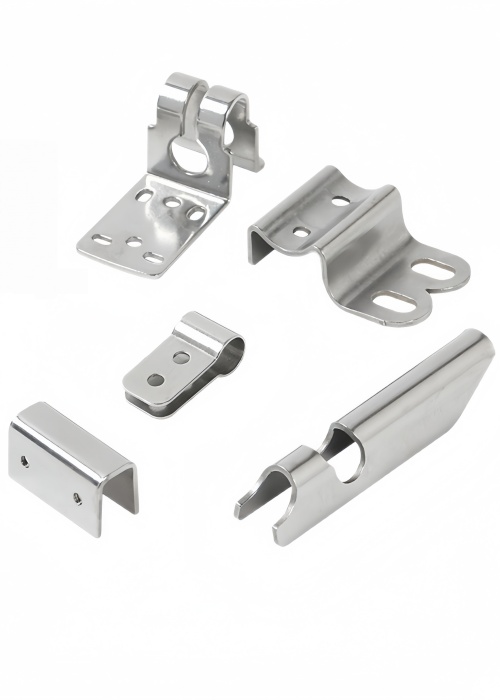
EV Critical Components Overview
The table below summarizes the key component categories, their primary functions, critical performance requirements, and the manufacturing processes we employ to deliver them at scale.
| Component | Primary Function | Key Requirement | Manufacturing Process |
|---|---|---|---|
| EV Battery Fasteners | Cell/module/pack electrical & mechanical connection | High Conductivity | Precision Stamping + CNC Machining |
| Custom Busbars | Power distribution (battery → motor → inverter) | Low Resistance | Precision Stamping + Forming + Plating |
| Busbar Terminals | High-current connection points (500A+) | Thermal Stability | Precision Stamping + Silver Plating |
| Heat Sinks & Cold Plates | Thermal management for power electronics | Lightweight | CNC Machining + Stamping |
| Shielding Enclosures | EMI protection for inverters & chargers | Corrosion Resistance | Precision Stamping + Welding |
| Structural Fasteners | Battery enclosure & chassis assembly | High Strength | Cold Forging + Thread Rolling |
| Charging Port Components | Charge inlet & connector retention | Vibration Proof | Precision Stamping + Insert Molding |
Quality Requirements: What We’ve Learned Manufacturing for EV Applications
The electric vehicle environment imposes extraordinary demands on component performance. Over our years of producing EV components, we’ve developed deep expertise in three critical quality dimensions: electrical conductivity for power efficiency, lightweight construction for range optimization, and vibration resistance for long-term reliability. These requirements intersect in complex ways that challenge conventional manufacturing approaches — and we’ve built our processes specifically to address these challenges.
High-Conductivity Materials and Electrical Performance
Electrical conductivity is paramount in EV applications, directly impacting vehicle range, charging speed, and thermal management. The resistive losses in electrical connections translate directly into wasted energy and unwanted heat generation. This is why high-conductivity materials are essential for critical components like custom busbars, EV battery fasteners, and power distribution elements that we manufacture every day.
Copper remains the material of choice for most high-current applications we process, with electrical conductivity of approximately 100% IACS (International Annealed Copper Standard). However, not all copper alloys are created equal — and we’ve learned this through extensive production experience. Oxygen-free high-conductivity (OFHC) copper offers superior performance for demanding applications, while tellurium copper provides improved machinability for complex component geometries. For applications where weight is critical, aluminum alloys with conductivity ratings of 60-65% IACS offer an attractive compromise between electrical performance and mass reduction.
The manufacturing processes we use to shape these materials can significantly impact their final conductivity. Work hardening from forming operations can increase strength but reduce conductivity. Heat treatment processes must be carefully controlled to optimize the balance between mechanical properties and electrical performance. Our expertise in precision stamping for electronics includes deep knowledge of how processing parameters affect material properties — knowledge we’ve accumulated through years of production data and process optimization.
Surface finish plays a surprisingly important role in electrical performance — something we learned early in our EV production experience. Microscopic surface roughness can reduce effective contact area and increase resistance. Oxidation and contamination create barriers to current flow that can degrade over time. This is why many EV battery fasteners and busbar connections we produce feature specialized plating — typically silver, tin, or nickel — applied on our in-house plating lines with precisely controlled processes that maintain conductivity while providing environmental protection.
From Our Production Data: A 10% reduction in connection resistance can improve vehicle range by 0.5-1% in typical EV applications. We’ve achieved this level of improvement for several customers through optimized plating processes and tighter contact pressure control — improvements that translate directly to competitive advantage in an industry where every kilometer of range matters.
Lightweight Design and Material Optimization
Weight reduction is a constant priority in electric vehicle design, as vehicle mass directly impacts energy consumption and range. Every kilogram saved extends driving range or allows for a smaller, less expensive battery pack. This pressure has driven innovation in the automotive hardware components we produce, pushing us to optimize designs and explore new materials that can maintain performance with reduced mass.
Aluminum has emerged as a key material for lightweight EV components in our production portfolio. With a density approximately one-third that of copper, aluminum offers significant weight savings for applications where conductivity requirements can accommodate its higher resistivity. Custom busbars in aluminum that we manufacture can achieve equivalent current-carrying capacity to copper designs with modest increases in cross-sectional area, resulting in net weight reductions of 40-50%. The challenge lies in managing connection technologies, as aluminum’s oxide layer and different thermal expansion characteristics require specialized termination approaches we’ve developed in-house.
Advanced high-strength steels (AHSS) and aluminum alloys have transformed the structural automotive hardware components we produce. These materials offer strength-to-weight ratios that enable significant mass reduction while maintaining crash performance and durability. Manufacturing these materials requires specialized equipment and expertise that we’ve invested in, as their higher strength makes forming and joining more challenging than conventional materials.
Design optimization plays an equally important role in weight reduction. We work with our customers’ engineering teams to identify material placements that maximize stiffness and strength while minimizing mass. For high-volume production, our precision stamping for electronics and metal forming capabilities remain the dominant manufacturing methods, and we’ve developed clever design approaches to achieve weight reduction within process constraints.
Vibration Resistance and Long-Term Reliability
Electric vehicles present unique vibration environments that challenge the long-term reliability of mechanical and electrical connections. The high-frequency vibrations from electric motors, combined with road-induced inputs and thermal cycling, create conditions where conventional fastening systems can degrade over time. Ensuring vibration resistance is therefore critical for the EV battery fasteners and other safety-critical connections we manufacture.
Thread-locking technologies have evolved significantly to address these challenges, and we’ve qualified multiple approaches for our customers. Traditional nylon patch systems have given way to more sophisticated approaches including pre-applied micro-encapsulated adhesives, deformed thread designs, and wedge-locking washers. Each approach offers different trade-offs between reusability, temperature resistance, and locking performance. We help our customers select the appropriate technology based on the specific vibration spectrum, temperature range, and service requirements of each application.
The design of bolted joints for vibration resistance involves careful attention to preload, clamped materials, and joint geometry. Proper preload ensures that the joint remains in compression under expected service loads, preventing the relative motion that causes loosening. Our engineering team works closely with customers to analyze these factors and specify automotive hardware components that will maintain integrity across the vehicle’s service life — we’ve seen what happens when these factors are overlooked, and we apply those lessons to every new project.
Electrical connections face additional challenges, as vibration can cause fretting corrosion — a degradation mechanism where microscopic motion between contacting surfaces generates wear debris and increases resistance. This is particularly concerning for EV battery fasteners and power connections we produce, where increased resistance generates heat that accelerates degradation. We address fretting through increased contact pressure, specialized contact geometries, and plating systems that resist wear and oxidation — solutions we’ve validated through extensive testing in our laboratory.
Environmental Resistance and Durability
Beyond the electrical and mechanical performance requirements, the EV components we manufacture must withstand harsh environmental conditions. Temperature extremes from -40°C to 150°C challenge material properties and joint integrity. Salt spray and humidity create corrosion risks that can degrade connections over time. Exposure to automotive fluids, including battery electrolytes and coolant chemicals, requires careful material selection and protective coatings — all of which we’ve addressed through years of production experience and environmental testing.
Corrosion protection for high-conductivity materials presents particular challenges in our production, as many protective coatings would compromise the electrical performance that makes these materials attractive. We’ve developed plating processes that provide environmental protection without significantly increasing contact resistance. In some cases, we apply noble metal plating — particularly silver — that provides both conductivity and corrosion resistance. Alternative approaches include selective plating that protects exposed surfaces while leaving contact areas uncoated.
Thermal cycling creates stress in components and joints due to differential thermal expansion. Battery packs experience significant temperature variation during fast charging and high-power discharge, creating repeated stress on EV battery fasteners and busbar connections we produce. We select materials with compatible expansion characteristics and design joints that accommodate movement without loosening or degrading electrical contact. Our experience with precision stamping for electronics and thermal management helps us guide customers toward designs that can withstand these demanding conditions — conditions we’ve validated through thermal cycling tests in our quality lab.
Why Choose Youjia Metals: Your EV Manufacturing Partner
In the rapidly evolving electric vehicle industry, selecting the right manufacturing partner can mean the difference between market leadership and costly delays. At Youjia Metals, we’ve built our reputation on delivering precision stamping for electronics and specialized automotive hardware components that meet the exacting standards of EV manufacturers worldwide. Our capabilities, quality systems, and industry expertise make us the ideal partner for your EV component needs.
Comprehensive Manufacturing Capabilities
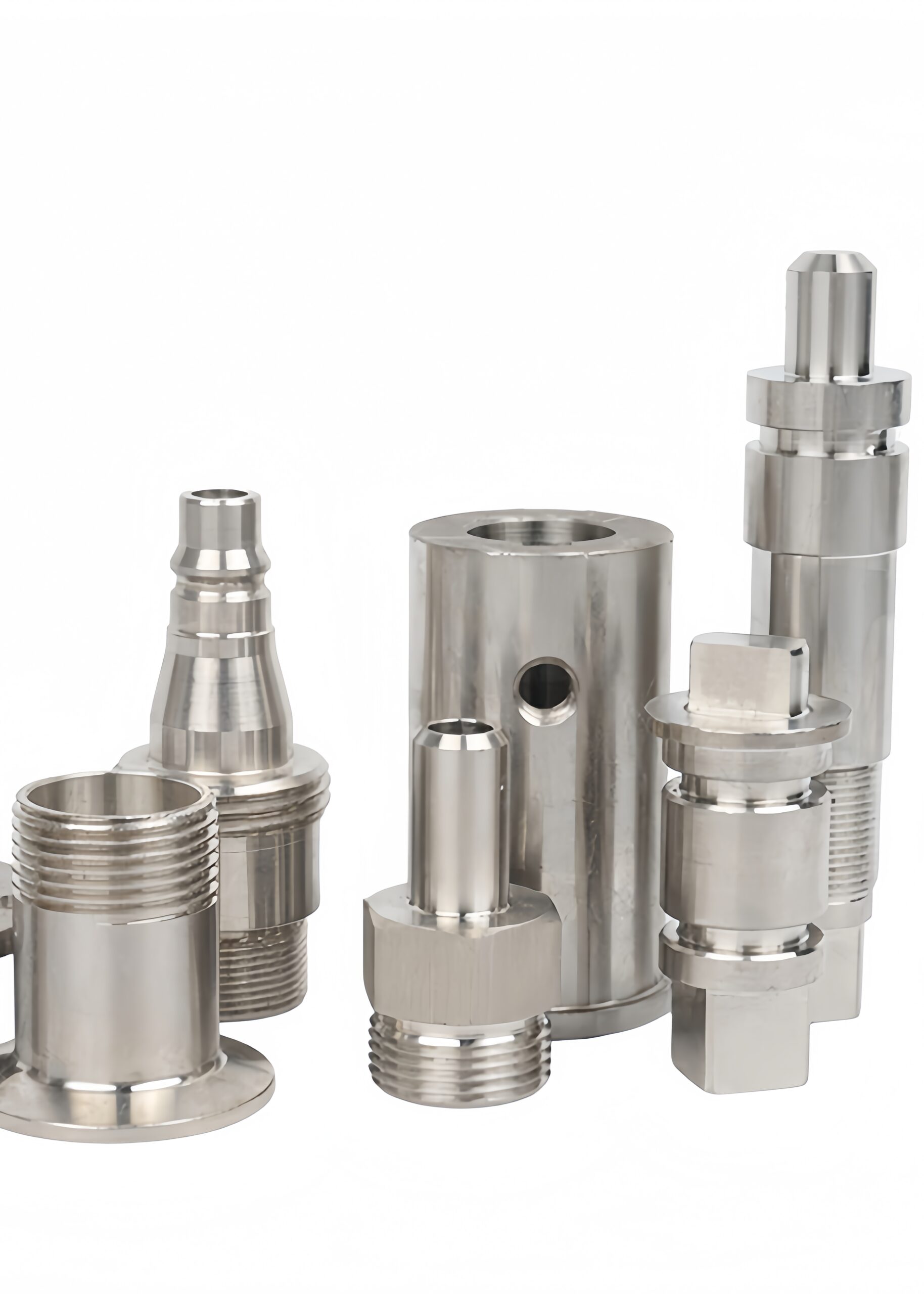
Our manufacturing portfolio spans the full range of processes required for automotive hardware components used in electric vehicles. From high-speed precision stamping that produces millions of consistent parts to CNC machining that creates complex geometries with tight tolerances, we have the equipment and expertise to handle your most demanding requirements. Our investment in advanced manufacturing technology ensures that we can scale with your production needs while maintaining the quality standards the EV industry demands.
For custom busbars and electrical distribution components, we offer specialized capabilities that go beyond conventional metal forming. Our precision punching equipment can create complex terminal patterns with tolerances measured in thousandths of an inch. CNC forming and bending operations create the three-dimensional geometries required to route power around vehicle structures. Automated plating lines apply silver, tin, nickel, or specialized coatings with precise thickness control and complete traceability.
Our expertise in high-conductivity materials processing sets us apart from general-purpose metal fabricators. We understand how copper, aluminum, and their alloys behave during forming, joining, and finishing operations. We know how to maintain conductivity through manufacturing processes that might degrade less carefully controlled materials. This expertise translates into components that deliver the electrical performance your EV systems require.
Quality Systems and Certifications
The EV industry demands quality assurance that goes far beyond simple inspection. Our IATF 16949 certification demonstrates our commitment to automotive quality standards, but our capabilities extend well beyond certification requirements. We’ve implemented advanced product quality planning (APQP) processes that identify and mitigate risks before production begins. Our production part approval process (PPAP) submissions provide the documentation and evidence that EV manufacturers need to qualify suppliers with confidence.
Statistical process control (SPC) monitors critical characteristics throughout production, enabling us to detect and correct variations before they result in non-conforming parts. Our metrology laboratory is equipped with coordinate measuring machines (CMM), optical comparators, and specialized electrical test equipment that can verify every dimension and performance characteristic specified for your components. For EV battery fasteners and other critical components, we can provide 100% inspection and complete traceability from raw material to finished part.
Material traceability is particularly important in the EV industry, where quality issues can have significant safety implications. Our ERP system tracks every lot of material from receipt through production and shipment, enabling rapid response in the unlikely event of a quality concern. Certificates of conformance, material certifications, and test reports are automatically generated and archived for complete documentation of every production lot.
Engineering Collaboration and Design Support
We view our customers as partners, not just buyers. Our engineering team is available to collaborate on design optimization, manufacturing feasibility, and cost reduction initiatives. Early supplier involvement (ESI) in your design process can identify opportunities to improve manufacturability, reduce cost, and enhance performance before designs are finalized. This collaborative approach is particularly valuable for precision stamping for electronics and other complex components where design decisions have significant manufacturing implications.
Design for manufacturing (DFM) reviews are a standard part of our new product introduction process. Our engineers analyze your drawings and specifications, identifying potential issues and suggesting improvements that can enhance quality and reduce cost. For custom busbars and electrical components, we can provide guidance on material selection, plating specifications, and connection technologies based on our experience with similar applications. This expertise helps you avoid costly redesigns and accelerates your time to market.
Prototyping capabilities enable rapid iteration during product development. We can produce small quantities of parts using production-equivalent processes, allowing you to validate designs before committing to hard tooling. This approach reduces risk and ensures that production parts will meet your requirements. For urgent needs, we can often turn prototype requests around in days rather than weeks.
Scalable Production and Supply Chain Excellence
The EV industry is characterized by rapid growth and unpredictable demand patterns. Our manufacturing systems are designed to scale with your production needs, from initial low-volume launches through high-volume mass production. Flexible manufacturing cells can be reconfigured quickly to accommodate design changes or demand fluctuations. Investment in automation ensures consistent quality at high volumes while maintaining cost competitiveness.
Supply chain management is critical in the EV industry, where production delays can have significant financial consequences. We’ve developed robust supply chains for high-conductivity materials, specialized coatings, and other critical inputs. Vendor-managed inventory (VMI) and just-in-time (JIT) delivery programs help our customers optimize working capital while ensuring uninterrupted production. Our logistics team can manage international shipments, customs clearance, and delivery scheduling to meet your production requirements.
Vertical integration provides control over critical processes and reduces supply chain risk. Where appropriate, we bring capabilities in-house rather than relying on external suppliers. This approach ensures quality control, protects intellectual property, and provides flexibility to respond to changing requirements. For processes that remain outsourced, we maintain rigorous supplier qualification and monitoring programs.
Proven Track Record in EV Applications
Our experience in electric vehicle manufacturing spans multiple applications and customer relationships. We’ve supplied EV battery fasteners for battery packs that have accumulated millions of miles in real-world service. Our custom busbars distribute power in vehicles from established OEMs and innovative startups alike. This track record demonstrates our ability to meet the quality, delivery, and cost requirements of demanding EV manufacturers.
Case studies from successful projects illustrate our capabilities. For one leading EV manufacturer, we developed a specialized fastening system that reduced assembly time by 30% while improving connection reliability. For another customer, we optimized a busbar design that reduced weight by 25% while maintaining electrical performance. These successes result from our technical expertise, manufacturing capabilities, and collaborative approach to customer relationships.
Looking forward, we continue to invest in capabilities that will be needed for next-generation EV technologies. Solid-state batteries, silicon carbide power electronics, and wireless charging systems will all require new categories of automotive hardware components. Our research and development programs, in collaboration with material suppliers and technology partners, position us to support these emerging requirements as the industry evolves.
Partner with Us: Whether you’re launching a new EV program, ramping production, or seeking to optimize existing components, contact our team to discuss how our capabilities in precision stamping for electronics, custom busbars, and EV battery fasteners can support your success in the electric vehicle market.