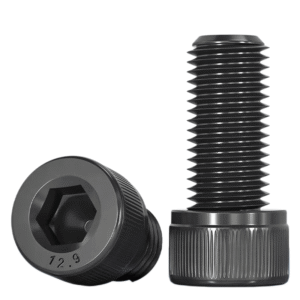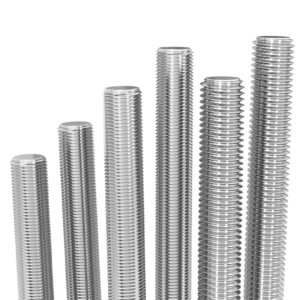
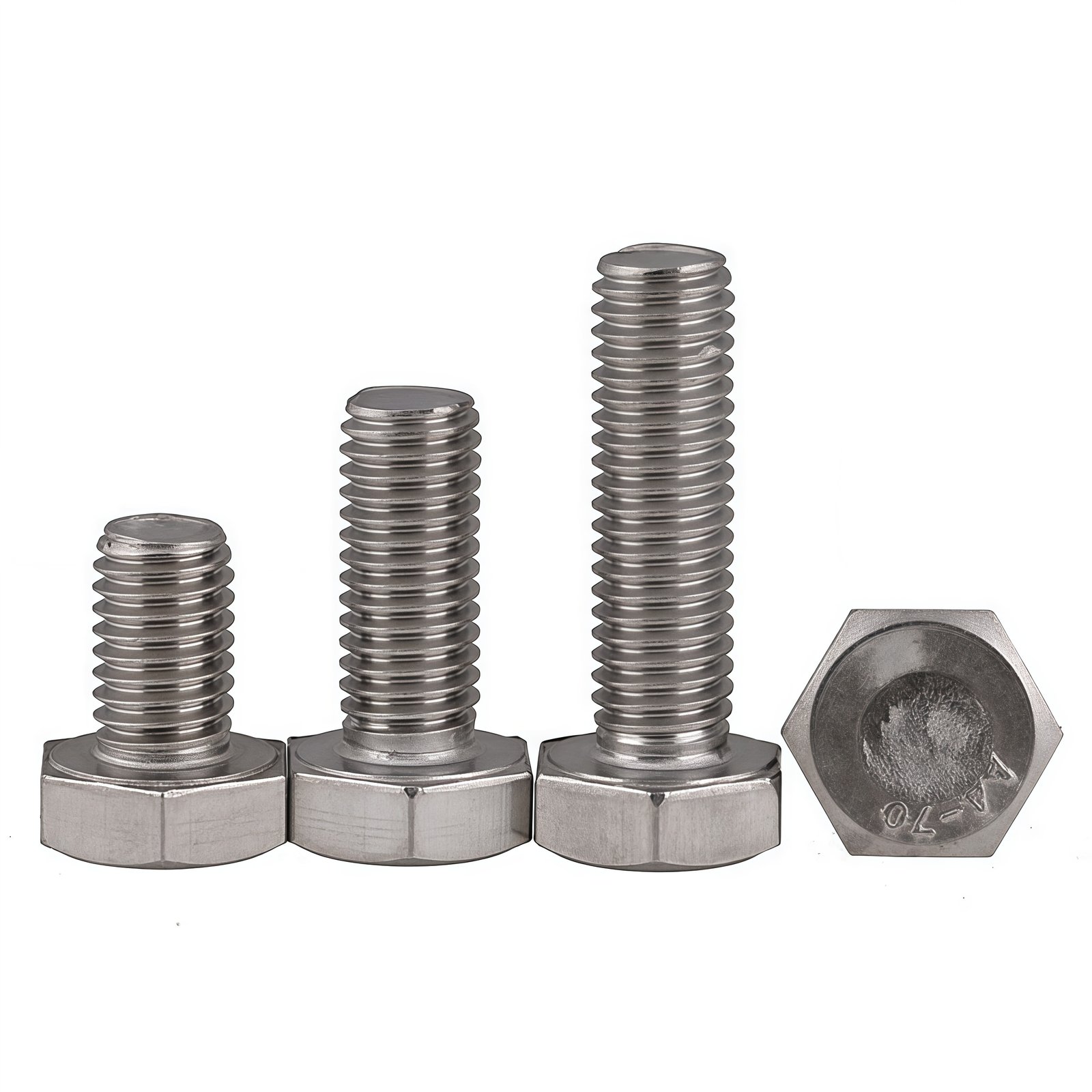
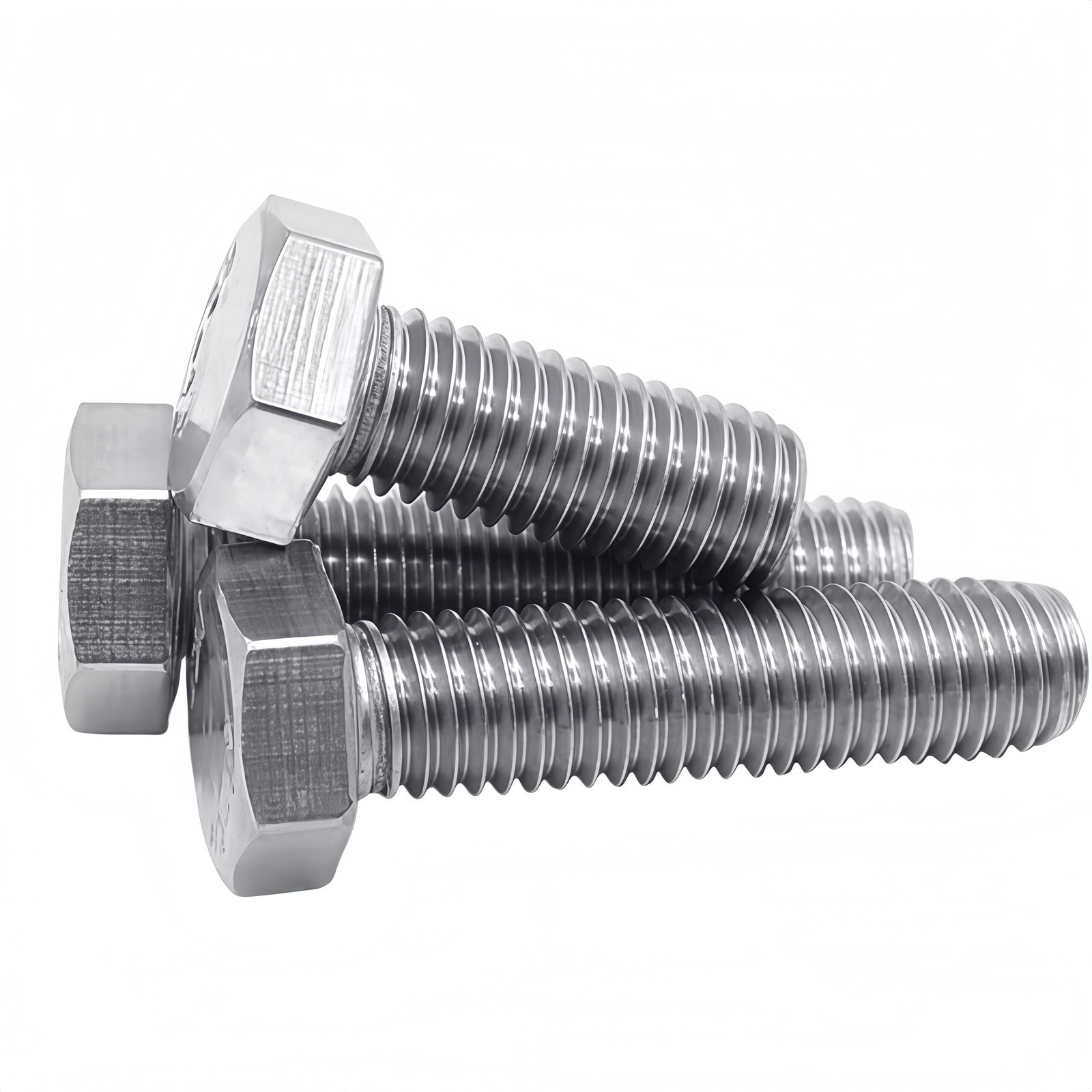
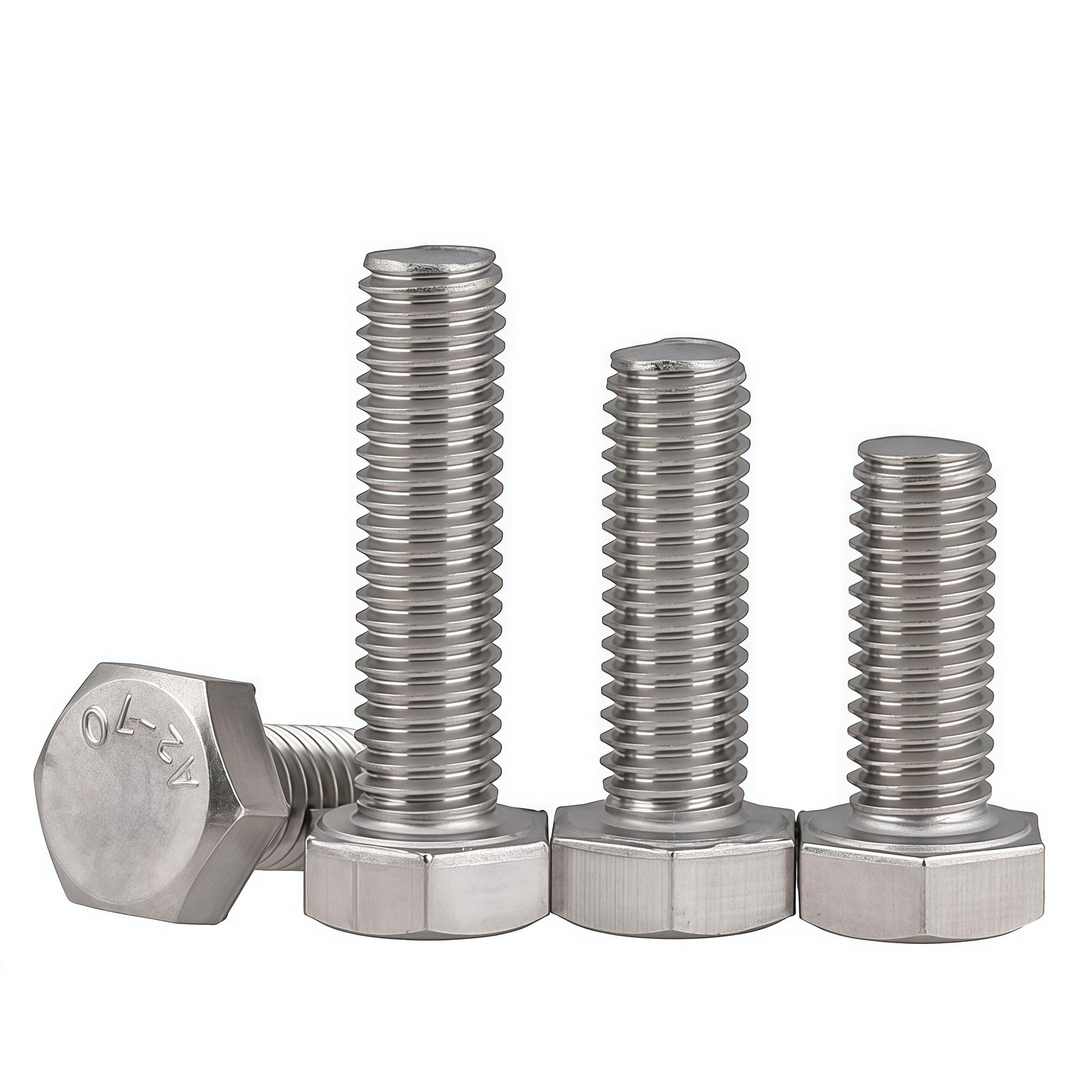
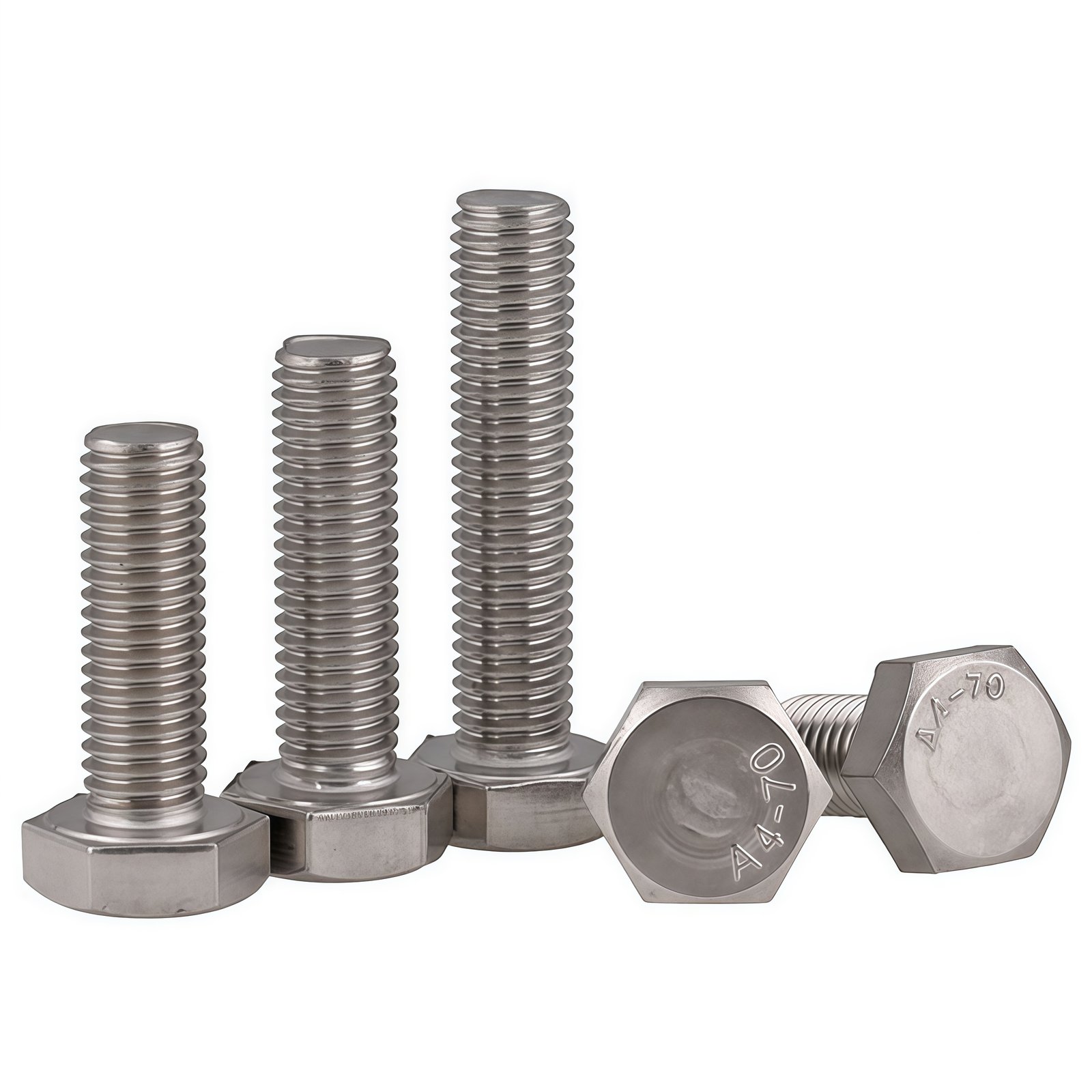
Fully Threaded Stainless Steel Hex Bolts
Youjia Metals supplies stainless steel hex-head bolts for machinery, equipment, construction hardware and general industrial assemblies. The current product range references DIN 933 full-thread geometry and M3–M12 sizes. Because DIN 933 has been superseded in many purchasing systems by ISO 4017, buyers should state the exact standard and edition required.
Material and Property Class
Requests may specify A2 stainless steel/SS304 and property class A2-70. Material grade and property class are related but not interchangeable: the order must define both when mechanical properties are required. A 700 MPa minimum tensile-strength designation is a property-class requirement, not a safe working load for the assembled joint.
SS316/A4 requests, other property classes, fine threads or non-standard materials require separate confirmation. Stainless steel resists many environments but is not corrosion-proof. Chlorides, chemicals, temperature, crevices and maintenance conditions must be reviewed.
Dimensions, Threads and Custom Lengths
- Confirm standard, thread size, pitch, overall length and thread length.
- State whether coarse or fine metric thread is required.
- Define across-flats, head height and any special head or marking requirement.
- For extra-long or non-standard bolts, provide a controlled drawing.
The product photographs do not establish a universal ±0.005 mm tolerance. Thread acceptance should reference the required tolerance class and gauges. Other dimensional tolerances must be stated on the drawing and reviewed for manufacturability.
Joint Design and Installation
Bolt selection requires the complete joint: mating nut or tapped hole, washer, grip length, clamp load, service load, vibration, temperature, lubrication and installation method. Do not derive tightening torque from tensile strength alone. Stainless threads can gall; approved lubrication and torque must be compatible with the design and friction assumptions.
For structural, lifting, pressure, vehicle or safety-critical use, the responsible engineer must define the applicable standard, validation and inspection plan. No supplier description alone establishes assembly capacity.
Inspection and Ordering Documents
Possible checks include dimensions, thread gauges, visual finish and agreed material/mechanical documentation. If mill certificates, property-class test reports, lot traceability, marking or coating/passivation records are required, include them before quotation.
Information Needed for a Quote
Send standard, size, pitch, length, material, property class, finish/passivation, quantity, application, required inspection documents, packaging and destination.
Request a quote or review bolts, nuts, washers, materials and quality documentation.