Solar Fasteners Buying Guide
A comprehensive guide to selecting the right solar fasteners for mounting systems. Explore types, materials, surface treatments, and how to choose the best supplier for custom fasteners in renewable energy projects.
Introduction: The Critical Role of Solar Fasteners in Renewable Energy
The global transition toward renewable energy has accelerated the demand for reliable solar fasteners that can withstand decades of environmental exposure while maintaining structural integrity. As solar installations expand from residential rooftops to utility-scale solar farms, the importance of selecting appropriate fastening solutions cannot be overstated. Solar fasteners serve as the critical connection points between panels, mounting rails, and support structures, directly impacting system safety, longevity, and overall performance.
Unlike conventional fasteners used in indoor applications, custom fasteners designed for solar applications must address unique challenges including thermal cycling, UV radiation, wind loads, and varying degrees of corrosion exposure. The selection process involves careful consideration of material compatibility, load requirements, environmental conditions, and installation efficiency. This comprehensive buying guide will walk you through the essential factors to consider when procuring fasteners for solar mounting systems.
The solar industry has evolved significantly over the past decade, with mounting systems becoming increasingly sophisticated and specialized. Modern solar fasteners must accommodate various rail profiles, clamping mechanisms, and grounding requirements while maintaining compatibility with different panel frame designs. Whether you are installing a small residential system or managing a large commercial project, understanding the nuances of solar fastener selection will help you make informed decisions that protect your investment and ensure code compliance.
At Youjia Metals, we manufacture high-quality custom fasteners specifically engineered for solar mounting applications. Our engineering team provides complimentary consultation to help you select the optimal fastener types, materials, and surface treatments for your specific project requirements.
Key Principle: Substandard fasteners can lead to catastrophic failures in solar installations, causing panel detachment, electrical hazards, and significant financial losses. Investing in quality solar fasteners from reputable suppliers ensures your solar infrastructure remains secure and operational throughout its 25+ year design life.
Types of Solar Fasteners
Solar mounting systems utilize a diverse range of fastener types, each engineered for specific connection points and load conditions. Understanding these variations is essential for proper system design and installation. The following sections detail the most common types of solar fasteners used in contemporary installations.
Solar Mounting Bolts
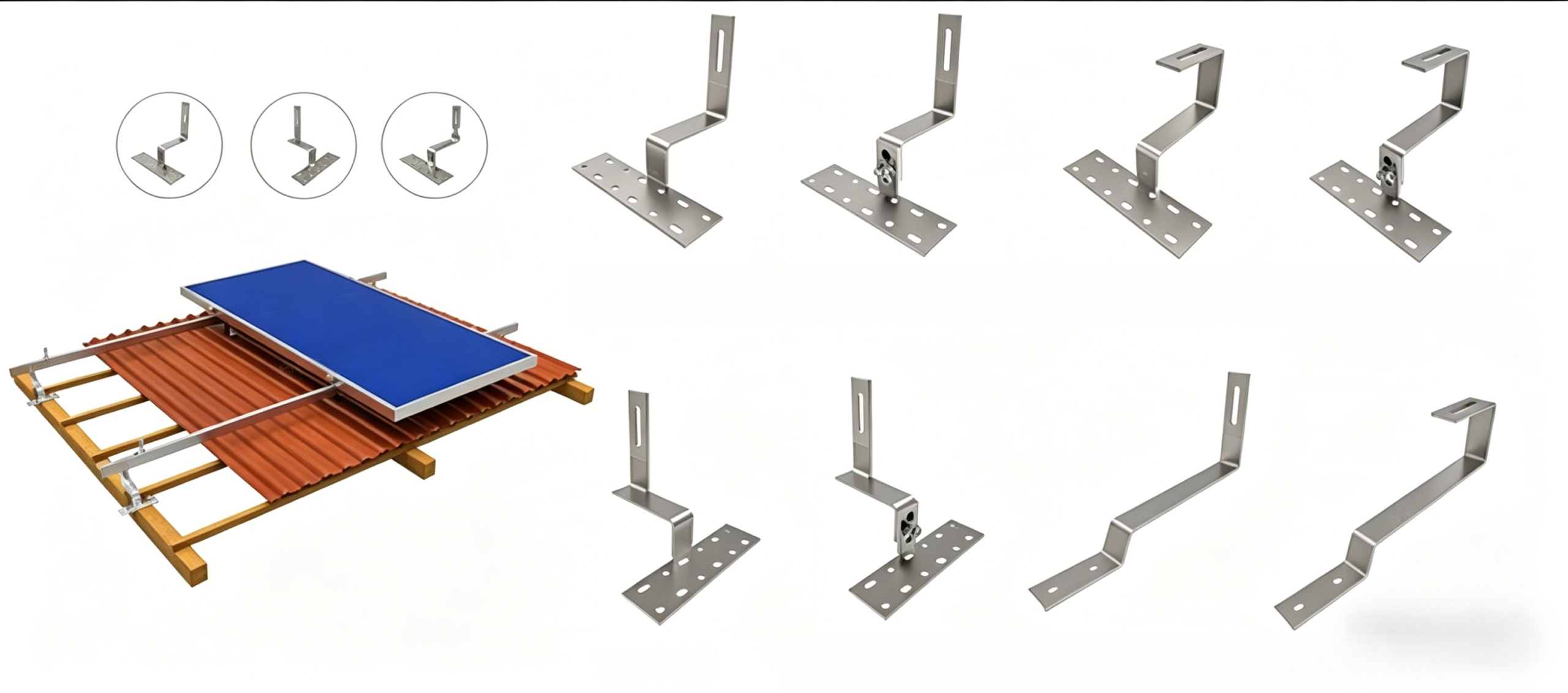
Solar mounting bolts represent the backbone of panel-to-rail and rail-to-structure connections. These specialized bolts typically feature hex heads for wrench engagement and are available in various lengths and thread configurations to accommodate different rail thicknesses and clamping requirements. High-quality solar mounting bolts incorporate features such as serrated flanges for enhanced grip, pre-applied thread-locking adhesive to prevent loosening from vibration, and optimized head designs for compatibility with standard solar tools.
The most common specifications for solar mounting bolts include M8 and M10 diameters with coarse threads for rapid installation. Lengths typically range from 20mm to 80mm depending on the specific mounting configuration. When selecting solar mounting bolts, consider factors such as the material thickness of both the panel frame and mounting rail, the required clamping force, and the environmental exposure conditions of the installation site.
Flange Bolts for Solar Applications
Flange bolts integrate a washer-like flange directly into the bolt head, distributing clamping force over a larger surface area and reducing the need for separate washers. In solar applications, flange bolts are particularly valuable for connections where space is limited or where simplified installation processes are desired. The integrated flange design also helps prevent galvanic corrosion by maintaining consistent contact pressure and reducing the risk of moisture ingress between components.
Solar-grade flange bolts often feature serrated or knurled flange undersides that bite into the mounting surface, providing resistance to rotation during tightening and enhanced vibration resistance. These fasteners are commonly used for rail splices, end clamp attachments, and structural connections where high clamping loads are required.
T-Bolts and Channel Nuts
T-bolts and channel nuts form the foundation of many modern solar rail systems, enabling rapid attachment of clamps and brackets without drilling or tapping. The T-shaped head slides into the rail channel and rotates 90 degrees to lock in place, while the threaded portion extends upward to accept nuts and washers. This design allows for infinite positioning along the rail length and simplifies field adjustments during installation.
When specifying T-bolts for solar applications, ensure compatibility with the specific rail profile being used, as channel dimensions vary between manufacturers. Quality T-bolts feature precise head dimensions that provide smooth insertion and rotation while maintaining secure retention under load. Some advanced designs incorporate anti-rotation features that prevent the bolt from spinning during tightening, significantly speeding up installation.
Hanger Bolts and Lag Screws
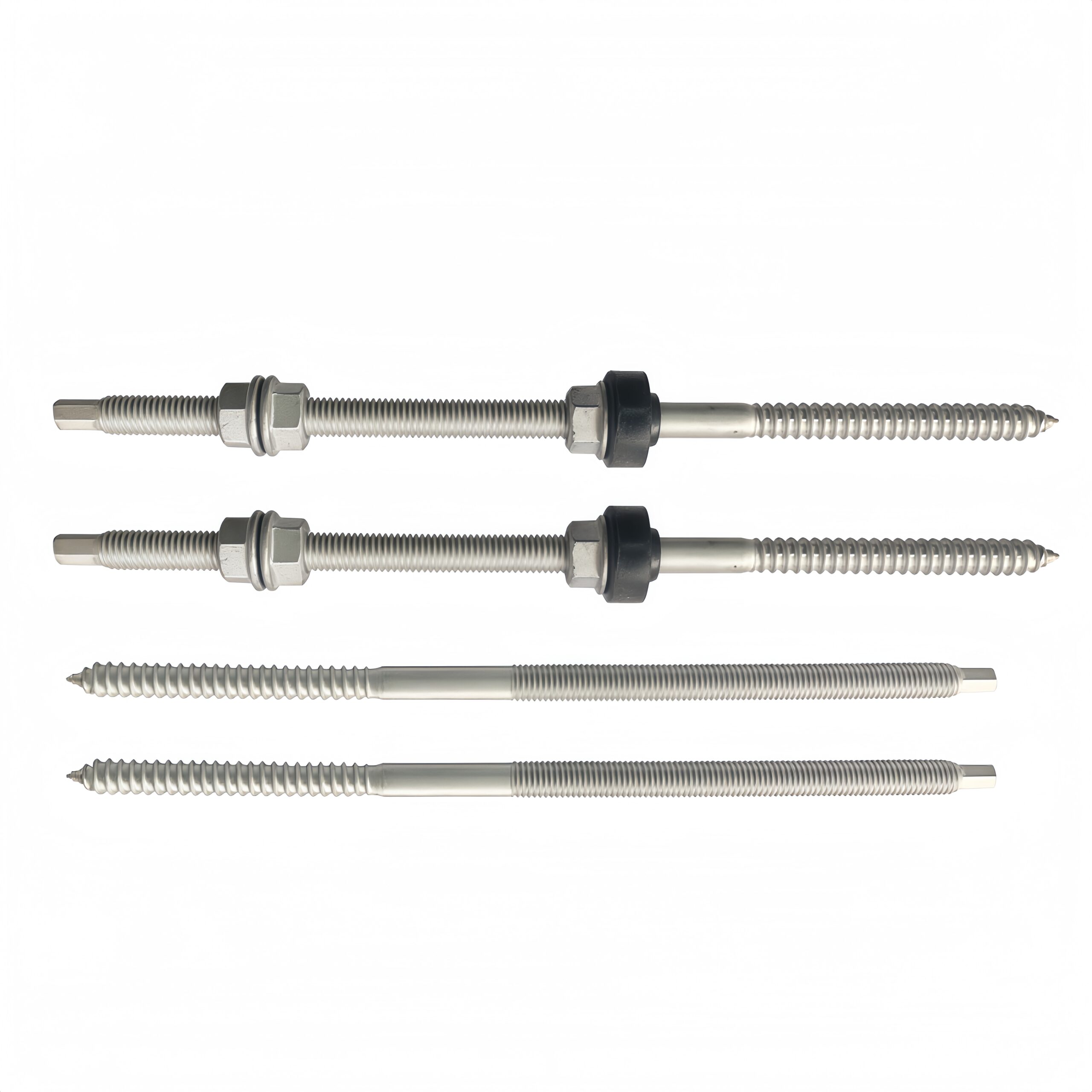
Hanger bolts feature machine threads on one end and wood or lag threads on the other, making them ideal for attaching solar mounting rails directly to wooden roof structures. These specialized custom fasteners eliminate the need for separate anchors or mounting plates in timber construction, reducing material costs and installation time. The machine-threaded end accepts standard nuts and washers for securing the mounting rail, while the lag-threaded end provides strong engagement with wood fibers.
For structural timber connections in solar installations, lag screws with hex heads offer higher load capacity and easier installation compared to traditional lag bolts. These fasteners are engineered to resist withdrawal forces from wind uplift while maintaining structural integrity over decades of service. When installing hanger bolts or lag screws, proper pilot hole sizing is critical to prevent wood splitting and ensure optimal holding power.
Custom Fasteners for Specialized Applications
Beyond standard fastener types, many solar projects require custom fasteners designed for unique mounting challenges. Custom solutions may include specialized clamp bolts with integrated grounding features, low-profile fasteners for aesthetic installations, or proprietary designs that streamline specific mounting system installations. Working with a supplier capable of producing custom fasteners ensures your project requirements are met precisely without compromising on quality or performance.
| Fastener Type | Primary Application | Key Benefits | Considerations |
|---|---|---|---|
| Solar Mounting Bolts | Panel-to-rail connections | High strength | Requires compatible washers |
| Flange Bolts | Rail splices, structural joints | Integrated washer | Limited size availability |
| T-Bolts | Channel rail systems | Infinite positioning | Rail-specific design required |
| Hanger Bolts | Wood structure attachment | Dual threading | Pilot hole critical |
| Lag Screws | Timber structural connections | High withdrawal strength | Requires pre-drilling |
Selection Tip: Always verify that your chosen fastener type is compatible with your specific mounting rail profile and panel frame design. Mismatched fasteners can lead to installation difficulties, reduced clamping force, and potential long-term reliability issues in solar installations.
Material and Surface Options
The material selection for solar fasteners directly impacts their corrosion resistance, mechanical performance, and service life. Solar installations face diverse environmental challenges ranging from coastal salt spray to desert heat, industrial pollution to freeze-thaw cycles. Understanding the properties of different materials and surface treatments enables informed decisions that balance performance requirements with budget constraints.
Stainless Steel Fasteners
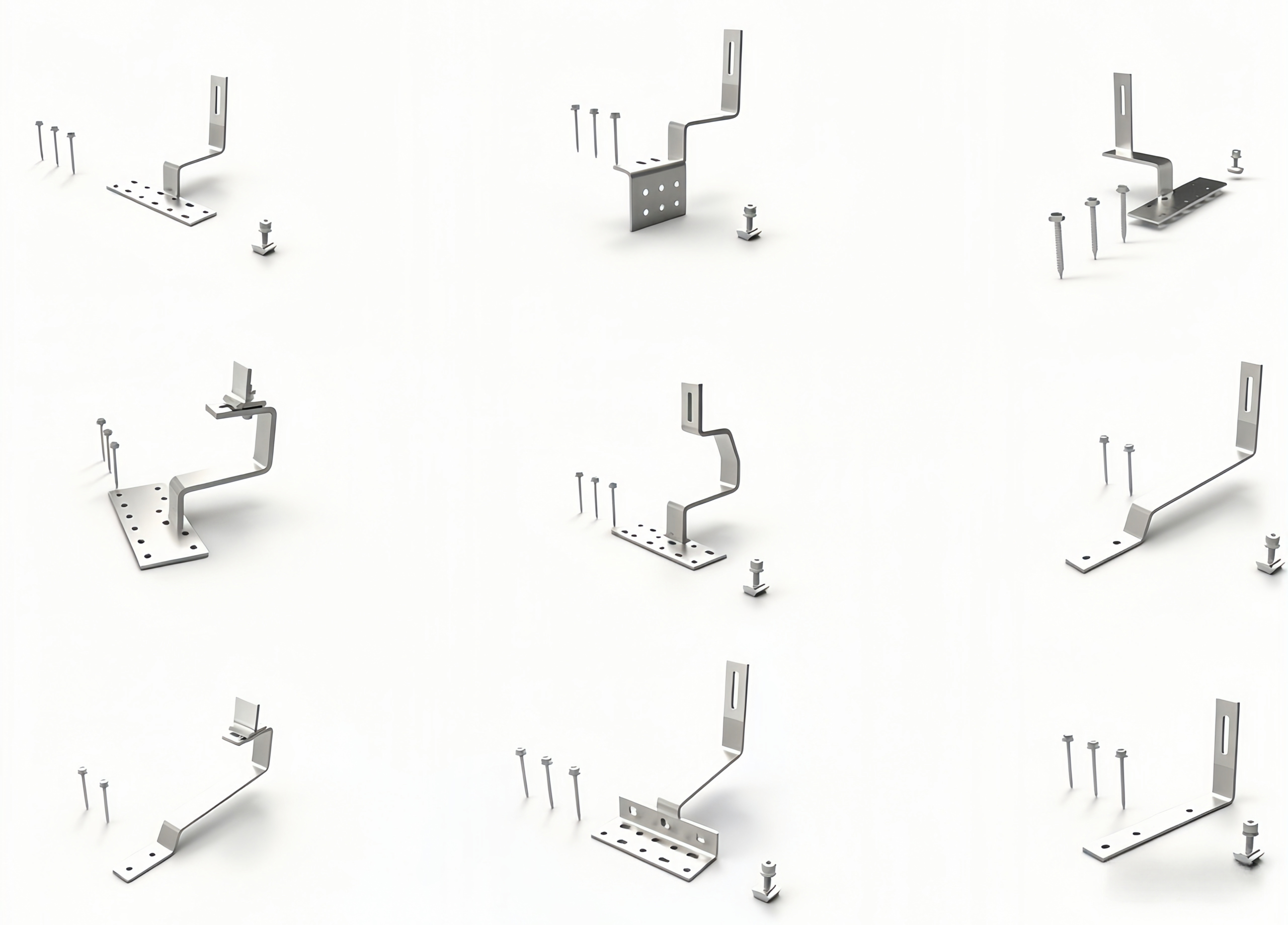
Stainless steel fasteners represent the premium choice for solar applications due to their exceptional corrosion resistance and minimal maintenance requirements. The two most common grades used in solar installations are SS304 and SS316, each offering distinct advantages depending on environmental conditions.
SS304 stainless steel provides excellent corrosion resistance in most atmospheric conditions and is suitable for the majority of inland solar installations. This austenitic grade contains 18% chromium and 8% nickel, forming a passive oxide layer that protects the underlying metal from rust and corrosion. SS304 fasteners are cost-effective for standard applications and offer design life exceeding 25 years in typical environments.
For installations in coastal areas, industrial zones, or other aggressive environments, SS316 fasteners provide superior performance due to the addition of 2-3% molybdenum. This element significantly enhances resistance to chloride-induced pitting and crevice corrosion, making SS316 the preferred choice for marine environments and areas with high salt exposure. While SS316 commands a price premium over SS304, the extended service life and reduced maintenance often justify the additional investment.
Carbon Steel Fasteners with Protective Coatings
Carbon steel fasteners offer a cost-effective alternative to stainless steel when properly protected with appropriate surface treatments. These fasteners provide high tensile strength and are readily available in a wide range of sizes and configurations. However, carbon steel requires protective coatings to prevent corrosion in outdoor solar applications.
Hot-dip galvanizing represents the most common protective treatment for carbon steel solar fasteners. This process involves dipping fasteners in molten zinc, creating a metallurgical bond that provides sacrificial corrosion protection. Hot-dip galvanized fasteners typically achieve 20+ year service life in moderate environments and are widely used in utility-scale solar installations where cost efficiency is paramount.
Mechanical galvanizing offers an alternative coating method that provides more uniform coverage on threaded components compared to hot-dip processes. This electrolytic deposition technique is particularly suitable for high-strength fasteners where hot-dip galvanizing might cause hydrogen embrittlement concerns. Mechanical galvanizing delivers consistent coating thickness and maintains precise thread tolerances required for solar mounting applications.
Advanced Surface Treatments
Beyond traditional galvanizing, several advanced surface treatments enhance fastener performance in demanding solar applications. Zinc-aluminum alloy coatings, such as those used in Geomet or Dacromet processes, provide superior corrosion resistance compared to pure zinc while offering a more environmentally friendly alternative to hexavalent chromium passivation.
Ceramic-based coatings and fluoropolymer finishes provide additional protection in extreme environments while offering low friction coefficients that facilitate installation. These advanced treatments are particularly valuable for fasteners in concentrated solar power (CSP) installations or other high-temperature applications where standard coatings might degrade.
Material Compatibility Considerations
When selecting materials for solar fasteners, consider galvanic compatibility with the mounting rails, panel frames, and structural components they will contact. Dissimilar metals in contact can create galvanic cells that accelerate corrosion of the less noble material. Best practices include using compatible materials throughout the system or employing isolation measures such as nylon washers or dielectric barriers when mixing materials is unavoidable.
Aluminum mounting rails paired with stainless steel fasteners represent a common and generally compatible combination, as stainless steel is more noble than aluminum and will not accelerate aluminum corrosion. However, the reverse configuration — aluminum fasteners in stainless steel components — should be avoided in wet environments due to accelerated aluminum corrosion.
| Material / Coating | Corrosion Resistance | Cost Level | Best Applications |
|---|---|---|---|
| SS316 | Excellent | Premium | Coastal, marine, industrial |
| SS304 | Very Good | Moderate | General outdoor, inland |
| Hot-Dip Galvanized | Good | Economical | Utility-scale, moderate climate |
| Mechanical Galvanized | Good | Moderate | High-strength applications |
| Zinc-Aluminum Alloy | Very Good | Moderate | High-temperature, aggressive environments |
Material Recommendation: For most inland solar installations, SS304 stainless steel fasteners offer the best balance of corrosion resistance and cost. For coastal or industrial environments, upgrade to SS316. For utility-scale projects with budget constraints, hot-dip galvanized carbon steel provides reliable performance at the lowest cost.
How to Choose the Right Supplier
Selecting the right supplier for your solar fastener requirements is as critical as choosing the fasteners themselves. A reliable supplier partnership ensures consistent quality, timely delivery, technical support, and competitive pricing throughout your project lifecycle. The following criteria will help you evaluate potential suppliers and establish relationships that support your business objectives.
Quality Certifications and Standards Compliance
Reputable solar fastener suppliers maintain comprehensive quality management systems certified to ISO 9001 standards. This certification demonstrates a commitment to consistent processes, continuous improvement, and customer satisfaction. Beyond general quality management, look for suppliers with specific industry certifications such as IEC 61215 for photovoltaic module safety or UL 1703 for flat-plate photovoltaic modules and panels.
Material certifications provide assurance that fasteners meet specified chemical and mechanical properties. Request material test reports (MTRs) or mill test certificates that document the composition and performance characteristics of the materials used. For critical applications, consider suppliers offering PPAP (Production Part Approval Process) documentation, which provides comprehensive evidence of manufacturing capability and quality control.
Environmental compliance has become increasingly important in the solar industry. Verify that your supplier adheres to RoHS (Restriction of Hazardous Substances) directives and REACH regulations, ensuring that custom fasteners do not contain prohibited substances. These certifications are particularly important for projects in the European Union and other jurisdictions with strict environmental standards.
Manufacturing Capabilities and Capacity
Assess your supplier’s manufacturing capabilities to ensure they can meet your volume requirements and technical specifications. In-house manufacturing capabilities provide better control over quality, lead times, and customization options compared to distributors who rely on external manufacturers. Look for suppliers with diverse equipment including cold heading machines, thread rolling equipment, CNC machining centers, and heat treatment facilities.
Capacity planning is essential for large-scale solar projects with tight schedules. Evaluate your supplier’s production capacity, current utilization rates, and ability to scale output to meet your delivery requirements. A supplier with excess capacity and flexible manufacturing can accommodate rush orders and volume fluctuations without compromising quality or delivery performance.
Customization capabilities are valuable when standard fasteners do not meet your specific requirements. Suppliers with in-house engineering and tooling capabilities can develop custom fasteners tailored to your mounting system designs. This capability reduces lead times for custom parts and enables rapid iteration during product development phases.
Technical Support and Engineering Services
The complexity of solar mounting systems often requires technical collaboration between fastener suppliers and system designers. Choose suppliers who offer engineering support including load calculations, material selection guidance, and design optimization recommendations. This technical partnership can identify opportunities to reduce costs, improve performance, or simplify installation through fastener specification optimization.
Application engineering support helps ensure that selected fasteners are appropriate for specific installation conditions. Experienced suppliers can advise on corrosion protection strategies, torque specifications, and installation best practices based on their field experience with similar projects. This expertise reduces the risk of installation errors and premature failures.
Supply Chain Reliability and Geographic Coverage
Evaluate your supplier’s supply chain resilience and ability to maintain consistent delivery performance. Diversified sourcing strategies, safety stock policies, and robust logistics networks help mitigate risks from material shortages, transportation disruptions, or geopolitical factors. For international projects, consider suppliers with regional distribution centers or manufacturing facilities near your installation sites.
Lead time consistency is critical for project scheduling in the solar industry. Request historical delivery performance data and inquire about the supplier’s inventory management practices. Suppliers maintaining strategic inventory of common solar fastener specifications can offer shorter lead times and respond quickly to urgent requirements.
Pricing Structure and Total Cost of Ownership
While unit price is an important consideration, evaluate suppliers based on total cost of ownership rather than purchase price alone. Factors such as quality consistency, delivery reliability, technical support, and warranty coverage significantly impact the overall value proposition. A slightly higher unit price from a reliable supplier often delivers lower total costs through reduced inspection requirements, fewer field failures, and minimized project delays.
Volume pricing and long-term agreement structures can provide cost advantages for ongoing solar projects. Discuss pricing tiers, annual volume commitments, and contract terms that align with your procurement strategy. Transparent pricing policies without hidden fees or unexpected surcharges indicate a supplier committed to fair business practices.
Industry Experience and References
Solar industry experience demonstrates a supplier’s understanding of the unique requirements and challenges specific to renewable energy applications. Request case studies or references from similar projects to validate the supplier’s capabilities and track record. Speaking with existing customers provides insights into the supplier’s strengths, weaknesses, and overall reliability that may not be apparent from marketing materials.
Participation in industry associations such as the Solar Energy Industries Association (SEIA) or similar regional organizations indicates commitment to the solar sector and awareness of industry developments. Suppliers actively engaged in the solar community are more likely to stay current with evolving standards, technologies, and best practices.
| Evaluation Criteria | What to Look For | Why It Matters |
|---|---|---|
| Quality Certifications | ISO 9001, IEC 61215, MTRs | Consistent quality |
| Manufacturing Capability | In-house production, cold heading, CNC | Quality control |
| Technical Support | Engineering consultation, load analysis | Optimized solutions |
| Supply Chain | Strategic inventory, global logistics | Reliable delivery |
| Environmental Compliance | RoHS, REACH certification | Regulatory compliance |
| Industry Experience | Solar project references, SEIA membership | Domain expertise |
Supplier Selection Checklist: Before committing to a solar fasteners supplier, verify: (1) ISO 9001 certification and material traceability; (2) In-house manufacturing capabilities; (3) Technical support and engineering services; (4) Supply chain reliability and lead time consistency; (5) Competitive pricing with transparent terms; (6) Solar industry experience and references. The right supplier partnership adds value far beyond the physical products.
Conclusion: Key Takeaways for Solar Fastener Procurement
The selection of appropriate fasteners is a critical decision that impacts the safety, longevity, and performance of solar energy systems. This buying guide has explored the essential considerations for procuring solar fasteners, from understanding different fastener types and materials to evaluating suppliers and managing total cost of ownership.
- Fastener Type Selection: Match the fastener type to your specific mounting system requirements. Solar mounting bolts are the workhorse of most installations, while T-bolts offer flexibility in channel rail systems. Custom fasteners provide tailored solutions for non-standard applications.
- Material and Coating: Choose materials based on environmental exposure. SS304 for general outdoor use, SS316 for coastal and industrial environments, and hot-dip galvanized carbon steel for cost-sensitive utility-scale projects. Always consider galvanic compatibility between connected materials.
- Supplier Partnership: Select suppliers with proven solar industry experience, comprehensive quality certifications, in-house manufacturing capabilities, and responsive technical support. The lowest unit price rarely delivers the best total value.
- Quality Assurance: Insist on material test reports, dimensional inspection data, and coating thickness verification. Quality fasteners from reputable suppliers pay dividends through reduced maintenance, extended service life, and minimized risk of costly failures.
- Long-Term Thinking: Solar installations are designed for 25+ year service lives. Fastener decisions made today will impact system performance for decades. Invest in quality materials and establish supplier relationships that will support your projects throughout their lifecycle.
As the solar industry continues to evolve with new mounting technologies, higher efficiency panels, and more challenging installation environments, the role of fasteners remains fundamental to system integrity. Investing in quality fasteners from reputable suppliers pays dividends through reduced maintenance, extended service life, and minimized risk of costly failures. By applying the knowledge gained from this guide, you can approach solar fastener procurement with confidence and achieve optimal outcomes for your renewable energy projects.
At Youjia Metals, we manufacture premium custom fasteners for solar mounting systems, backed by ISO 9001 quality management, comprehensive material certifications, and expert engineering support. Our team is ready to help you specify the optimal fastener solutions for your next solar project.