
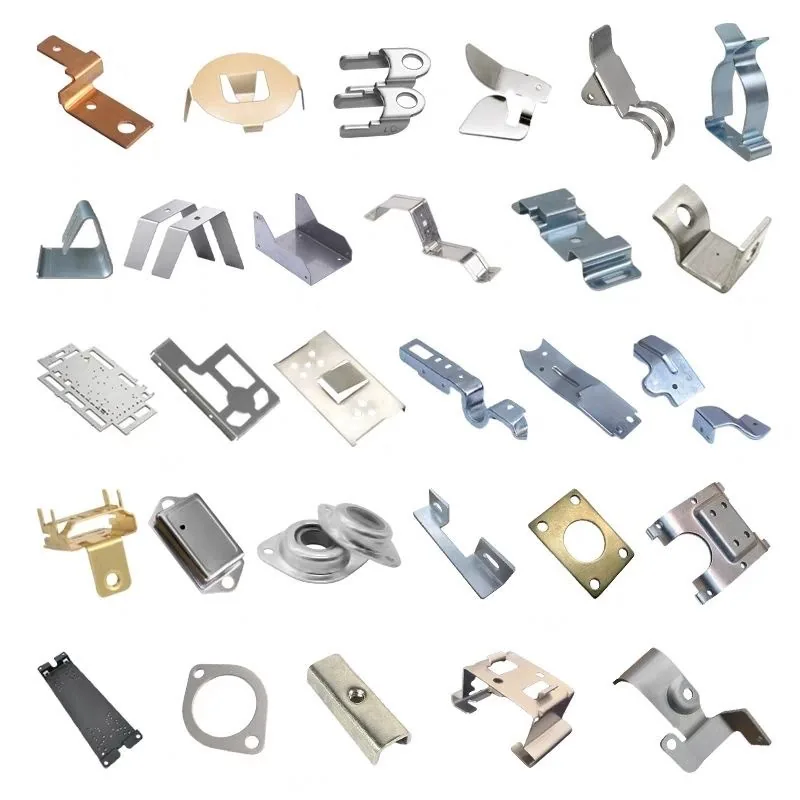
Progressive Die Stamping vs Single-Stage Tooling: How Buyers Choose
A practical comparison for custom metal parts. Understand how part geometry, quantity planning, drawing maturity and approval requirements shape a tooling discussion.
Clarify the part function, material and critical interfaces.
Review geometry, volumes, changes and handling needs.
Compare like-for-like tooling and production assumptions.
Confirm drawings, samples and release records before production.
The Buyer Decision Is Not Just “Which Tool Costs Less?”
When buyers request custom stamped parts, the first discussion often starts with a drawing and an expected quantity. That is useful, but it rarely answers every manufacturing question. A supplier must also understand whether the part will be made from strip or blanks, whether it has pierced holes, slots, bends, tabs, drawn features or secondary work, and whether the design is stable enough for a dedicated tool concept. The decision between a progressive die and a single-stage approach should be treated as part of that review.
A better starting question is: what does the part need to accomplish, and what supply plan is being considered? A small clip, electrical contact, bracket, shield or mounting plate may have very different requirements even when each one begins as flat sheet metal. One may need several related features in a repeat pattern. Another may be a developing design where a later revision is likely. One buyer may plan recurring releases; another may only know an initial trial quantity. These facts change the conversation.
Progressive die stamping vs single-stage tooling is therefore a purchasing decision about information, not a label to choose in isolation. The buyer does not need to prescribe a tooling layout before receiving an engineering review. Instead, provide the drawing revision, material or application requirement, expected order pattern, part function, critical interfaces and any known secondary operations. Ask the supplier to explain the proposed route and the assumptions behind it.
This approach helps prevent a common quotation problem: two suppliers quote different scopes, but the buyer compares the final figures as if the scope were identical. A clear request makes it easier to see whether the proposal includes tool design, tryout, samples, inspection approach, finishing, packing or later support. It also gives both sides a way to flag missing details before the project reaches a decision point.
What Is Progressive Die Stamping?
In progressive die stamping, material commonly advances through a series of stations. As the strip moves, stations can perform operations such as piercing, blanking, forming, trimming or final cut-off. The part remains associated with the strip for part of the route while multiple operations are carried out in sequence. The actual arrangement must be developed for the project; it depends on geometry, material, feature sequence, carrier support, handling needs and inspection requirements.
From a buyer’s perspective, the important point is that progressive tooling is planned around a repeatable sequence. The tool concept may need to account for how the part is located from station to station, how formed features are supported, how holes and slots relate to later bends, and how the finished part is separated. Those decisions are engineering and tooling questions, not assumptions that can be fully answered from a product photo.
A progressive route can be worth discussing when a part has a stable design and recurring production needs. It may also be relevant for components with a number of related features that benefit from an organized sequence. But suitability should not be stated as a guarantee based only on a high quantity. The part may need review for its overall size, shape, material behavior, form complexity, feature locations, handling, secondary processes and quality expectations.
Buyers should avoid wording that forces an unsupported conclusion, such as “this must be progressive tooling” when the drawing and quantity plan have not yet been reviewed. A more useful RFQ statement is: “Please review whether progressive die stamping is appropriate for this part and state the key assumptions.” That leaves room for a supplier to explain why the route fits the part, or why a different process deserves consideration.
To understand how individual pierced and formed features are reviewed before a tooling route is proposed, see our guide to metal stamping holes, slots and bends. Feature relationships are one of the inputs that influence a tooling discussion.
What Is Meant by Single-Stage Tooling?
Single-stage tooling is a broad purchasing term. It can refer to a route where a part is made through individual operations rather than a multi-station progressive sequence. A project may use a blanking operation, a forming operation, a secondary process or more than one tool, depending on the component and the production plan. The right description should come from the supplier’s process review, because “single-stage” does not tell the buyer exactly what is included.
This approach can be relevant when a design is still changing, when a part has a simpler feature set, when the order plan is not yet established, or when the engineering review points to a different handling route. It can also be useful for development work where the buyer wants to confirm fit, function and material behavior before authorizing a more dedicated tooling program. None of those situations automatically make one option better; they simply create questions worth discussing early.
For example, a flat mounting plate with a small number of holes and bends may be evaluated differently from a compact contact clip with several precise relationships between slots, tabs and formed faces. A larger formed cover may need its own review because handling and shape are different from a thin strip-fed part. The buyer should send the functional and dimensional requirements, then ask which route offers the clearest path to drawing confirmation and supply planning.
When to ask about flexibility
Ask when the drawing is likely to change, the quantity plan is uncertain, or a physical sample is needed to confirm assembly before the next tooling decision.
When to ask about a repeat route
Ask when a stable part is expected to be supplied over recurring orders and the feature sequence can be evaluated as a connected manufacturing plan.
The goal is not to apply a generic “low volume” or “high volume” cutoff. Program timing, batch pattern, revision likelihood, material availability, part complexity, delivery needs and approval method all matter. Giving a supplier the real purchasing context makes the response more useful than assigning a process from a spreadsheet alone.
Geometry and Feature Sequence Drive the Technical Review
Tooling is shaped by what the part actually contains. A drawing should show holes, slots, bend directions, tabs, formed returns, mounting surfaces, functional edges and any interfaces with a mating part. It should also identify which dimensions control assembly and which areas are cosmetic. These inputs help a supplier consider operation order and support requirements without guessing at the intent.
A hole may appear straightforward in a flat view, but its final relationship to a bend can affect the review. A slot may provide adjustment or allow another component to pass through. A small tab may become an engagement feature after forming. A return flange can create stiffness, clearance or a retaining action. Each feature should be considered together with the finished part orientation, not as an isolated shape.
In a progressive concept, the sequence needs to preserve adequate support and location as operations advance. In another approach, features may be evaluated through separate stages. The buyer does not need to design the station sequence, but should make the functional relationships clear enough for the supplier to propose one. A formed view, cross-section, mating sketch or sample photograph often answers questions that a single flat outline cannot.
| Part feature | What to show | Why it matters to the review |
|---|---|---|
| Pierced hole or hole pattern | Reference dimensions, mating hardware and finished orientation. | Shows which location controls assembly after forming. |
| Slot or adjustment opening | Length, width, motion direction and usable range. | Distinguishes functional adjustment from simple clearance. |
| Bend or return | Direction, angle, critical face and mating condition. | Clarifies final geometry and possible feature interaction. |
| Tab or contact area | Engagement face, required position and any secondary operation. | Connects the outline to function and inspection. |
Our metal stamping design guide provides a broader overview of drawing-based considerations. For a live RFQ, the project drawing and assembly details should always take priority over general examples.
Quantity, Batches and Program Life: Give the Supplier the Full Picture
A single requested quantity is helpful, but it may not describe the actual program. A buyer can make the tooling conversation clearer by separating the first order, expected batch size, estimated annual range and expected program life if known. These are planning inputs, not promises. If the quantities are preliminary, label them as estimates and explain what is confirmed versus what is still under review.
Why does this matter? A project with one initial trial order and no defined follow-on plan may be reviewed differently from a project with a stable drawing and recurring releases. A program with seasonal orders may have different packing and delivery questions from one with frequent small releases. A component that is still undergoing fit tests may need a clear change-control path before a dedicated tool decision is finalized. Buyers get better answers when they share these realities.
Do not assume that a higher quantity automatically means the same tooling solution for every part. Geometry, material, thickness, tolerances, finishing, insert work, handling, inspection and part size still need review. Likewise, a smaller initial order does not tell the full story if the buyer expects future production once a design is confirmed. Ask the supplier to state how the proposed route relates to the program information provided.
It is also valuable to distinguish production quantity from sample quantity. A sample can be used for fit, functional testing, visual approval or internal purchasing approval. State what the sample is meant to confirm. If a critical dimension or mating interface needs review, identify it in the drawing. That keeps the sample discussion connected to the part’s actual use instead of treating it as a generic pre-production step.
Tooling Scope, Records and Ownership Questions
“Tooling included” is not a complete scope statement. Before approving a custom metal stamping project, a buyer should understand what the proposed tooling package covers and what documentation supports the next steps. The answer will differ by project, but the questions themselves are consistent: What design inputs are needed? What will be reviewed before build? What samples or trial outputs are expected? How are drawing changes handled? What inspection information is required for the critical features?
Tool ownership and storage should be discussed in the commercial agreement rather than inferred from a generic web article. If the buyer has a policy on ownership, maintenance, transfer, access to records, modification approval or end-of-program disposition, bring it to the quotation stage. These are contractual and project-specific matters. A supplier should be able to clarify its own process and document it appropriately.
Revision control is just as important. A revised hole pattern, bend direction, material change or finish requirement can affect a tooling review. Use a dated drawing revision and mark changed areas when possible. Ask how design changes will be evaluated and documented before they are released. This protects both the buyer and supplier from comparing an old drawing to a new part expectation.
For inspection-focused purchasing questions, our first article inspection guide can help you organize a practical sample discussion without assuming a particular industry certification or report format.
Drawing Review and Sample Approval Before the Next Commitment
A productive drawing review should identify missing information, not hide it. The supplier may ask for material grade or operating environment, thickness, finish, quantity planning, mating part data, cosmetic faces, packaging needs, destination, or a clearer formed view. These questions do not indicate failure; they indicate that the part is being evaluated as a real manufacturing request.
Buyers can speed up the review by sending a PDF drawing and, where available, a 3D model. Include the part’s intended application in plain language. State whether a dimension affects assembly, whether a bend face is visible, whether an edge contacts another part, and whether a hole pattern locates a mating component. If there is a sample, give the supplier photographs that show the installed orientation as well as standalone views.
Before a sample route proceeds, agree on what will be evaluated. Common areas can include visual condition, functional fit, critical feature location, formed orientation, finish and packing. Avoid declaring unsupported technical values simply to make the list look complete. If a tolerance has not been validated, state that it is subject to drawing or assembly confirmation. If a test is required, identify the actual standard, method or customer requirement rather than relying on an unverified claim.
This is especially important for custom hardware components, where the relevant question may be a mounting relationship rather than a nominal overall size. You can view related drawing-based components in the Custom Hardware Parts category, then use your specific drawing and application for the supplier review.
Have a Cost Conversation Without Guessing at Numbers
Buyers naturally want to understand the cost effect of tooling choices. A useful way to approach that conversation is to ask what project factors are expected to influence the proposal. These may include part geometry, material, thickness, number and type of features, finishing, secondary operations, expected quantity plan, inspection needs, packaging and any requested samples. The supplier can then explain the scope using the actual drawing rather than generic cost claims.
Be cautious with broad statements such as “progressive tooling always has the lowest cost” or “one operation is always cheaper.” Such claims skip the information that makes a quotation meaningful. A simple flat part and a complex formed component do not require the same review. A program with stable recurring releases is different from a design that is still changing. A part that needs finishing, assembly or special packing may have important supply requirements outside the stamping operation.
When comparing quotations, make a written list of assumptions. Are the suppliers quoting the same drawing revision? Is material included in the same way? Does the scope include samples, inspection, finishing, packing and delivery terms? Is the buyer comparing a tool proposal, a piece price, or both? Are revisions and future release quantities addressed? This comparison method helps prevent a low initial figure from obscuring missing scope.
Material and finish requirements also belong in this review. If corrosion resistance, appearance, conductivity or a later coating process is relevant, include it early. You can use our metal stamping materials guide and surface finish guide to prepare questions, but the final selection should be confirmed against the application and project requirements.
RFQ Checklist for a Tooling Review
A complete request does not need to be over-engineered. It should simply allow the supplier to understand the part, the purchasing plan and the points that need confirmation. Start with a current drawing, then add the functional context. If information is unknown, state that it is open for review rather than filling in a guess.
| Include in the RFQ | What it enables |
|---|---|
| Current drawing revision and, where available, a 3D model | Review of geometry, feature relationships and formed condition. |
| Material / thickness preference or operating environment | Relevant material and process discussion. |
| First order, batch expectation and estimated program pattern | Context for a proposed supply and tooling route. |
| Application and mating-part information | Understanding of functional holes, slots, bends and interfaces. |
| Critical dimensions, appearance requirements and finish | Clearer inspection and acceptance discussion. |
| Sample, packing and destination requirements | A more complete quotation and next-step plan. |
Use the metal stamping RFQ checklist to organize the request. Then send the drawing, quantity plan, material information, application and questions through our contact form for a project-specific review.
Frequently Asked Questions
Is progressive die stamping right for every high-quantity part?
No. Quantity is an important planning input, but the part’s geometry, material, thickness, feature sequence, handling needs, finish, secondary operations and approval requirements should also be reviewed before a tooling route is proposed.
What information should I send before asking for a tooling quotation?
Send the current drawing revision, material or operating environment, quantity plan, application, critical interfaces, finish requirements and any sample or packing needs. State what is confirmed and what requires review.
Can a supplier review a part before I decide on a tooling type?
Yes. A drawing review is the appropriate place to ask whether a progressive, staged or other route is suitable. The supplier can explain the assumptions and any missing information needed for the decision.
Should I give a fixed annual volume if the program is uncertain?
Provide the best available range and label it as preliminary. It is more helpful to explain first order, expected batches and likely program direction than to give an unsupported fixed figure.
What should a sample approval discussion cover?
It should cover the drawing revision, the intended function, critical fit or appearance points, any required inspection information, and the authorization route for changes before the next production commitment.
Ask for a Tooling Recommendation Based on the Actual Part
The most useful answer is not a generic process label. It is a clear recommendation connected to the drawing, part function, material, quantity planning, acceptance priorities and any open questions. Give the supplier enough information to review the real project, compare the proposed scope carefully, and agree on the next drawing or sample milestone before authorizing a commitment.
Send your drawing for a custom metal stamping tooling review →